Volcano
The volcanoes of Hawaii Island: 3 Live Cameras
A 24-hour video feed of Kilauea's Halemaumau crater, plus Mauna Loa and a national park camera. Hawaii is 19 hours behind Japan, so a Japanese morning is a Hawaiian afternoon.
What you can see
Three cameras on Hawaii Island, with three different characters.
Kilauea's Halemaumau crater is a video feed published by the U.S. Geological Survey, running inside the crater around the clock. When it is active you can see lava glowing red directly, which makes it the camera with the most movement on this site. When activity stops, it is a black pit.
Mauna Loa is also USGS. It is an enormous shield volcano with very gentle slopes, and in 2022 it erupted for the first time in about 38 years.
Hawaii Volcanoes National Park is a National Park Service camera, showing the volcano as park scenery rather than monitoring it. The park is also a World Heritage site.
Cameras you can watch now: 3
1 video, 2 still. Tap one to open it in the camera list.
-
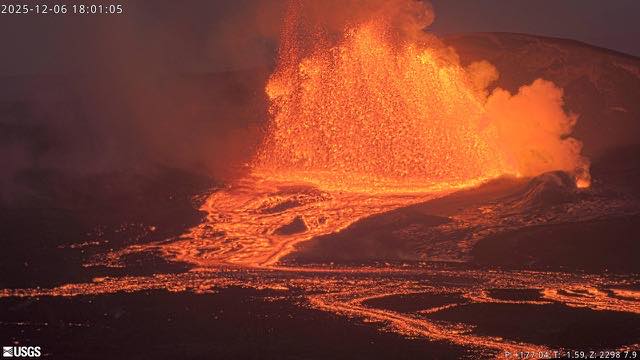 Sample December 2025
Kilauea, Halemaumau Crater
Hawaii Island · Volcano
Kilauea has been erupting since December 2024. Lava fountains every few days to few weeks, and a smouldering crater in between. A Hawaiian Volcano Observatory camera. It watches Halemaumau from the northwest caldera rim, and staff change the aim and zoom as activity shifts.
-
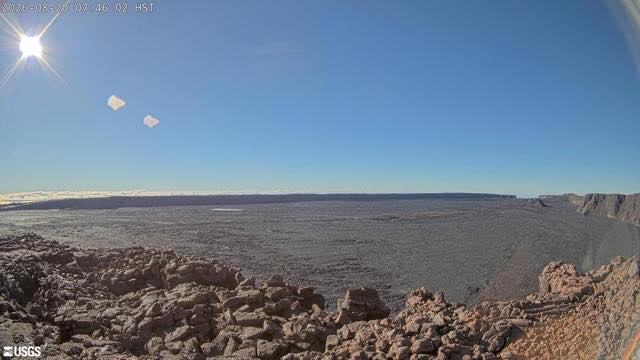 Sample August 2026
Mauna Loa
Hawaii Island · Volcano
One of the largest shield volcanoes on Earth by volume. Its slope is so gradual that on screen it barely reads as a mountain at all.
-
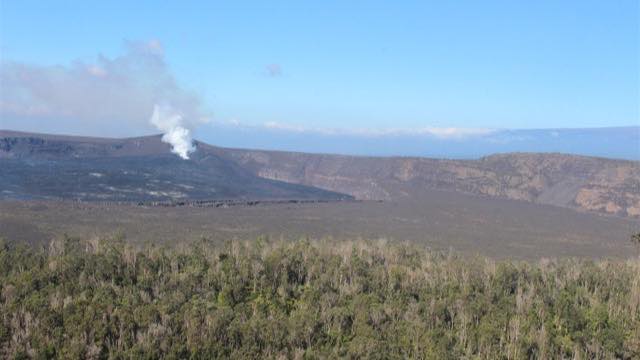 Sample August 2026
Hawaii Volcanoes National Park
Hawaii Island · Volcano · World Heritage
A World Heritage park containing Kilauea and Mauna Loa. What the camera shows changes day to day with the state of the eruption.
When to watch
Mind the time difference. Hawaii is 19 hours behind Japan, so noon in Japan is 5 p.m. the previous day in Hawaii. To catch the still cameras in daylight, open them between about 1 a.m. and 1 p.m. Japan time — a Japanese morning is the Hawaiian afternoon.
The Kilauea crater camera, though, is better at night. The red of the lava reads more clearly the darker it is, so aim for Hawaiian night, roughly 2 p.m. to 1 a.m. Japan time. It is video, so there is no refresh to wait for.
Hawaii Island is tropical and changes little through the year. What decides whether it is worth watching is not the season but the volcano.
If it isn't showing
Only the Kilauea crater camera is video; the other two are stills. Mauna Loa and the national park show almost nothing moving while activity is quiet. Opened from Japan, the crater camera is much the surer bet, because it runs around the clock.
Nineteen hours of difference make the right moment to open these harder to judge than anywhere else on the site. How to line an overseas camera up with its own daylight is set out in Which cameras are in daylight now.
Every American camera is on the United States page, and the Park Service ones are gathered under US and Korean National Parks. The other World Heritage volcano on this site is New Zealand's Tongariro National Park.
Where to find The volcanoes of Hawaii Island
Agencies publishing the cameras on this page
- U.S. Geological Survey (U.S. government work) — Official site
- U.S. National Park Service (U.S. government work) — Official site
The footage belongs to each agency. This site is an unofficial guide, and each sample frame was copied once per camera under that agency's terms of use.