Region
Shizuoka Live Cameras in Japan — 5 official webcams
Mount Fuji on three cameras — Lake Tanuki, erosion control and volcano monitoring — plus the Higashi-Izu volcano group and Yumigahama. One mountain, three reasons for a lens.
What you can see
Three of the five involve Mount Fuji — but not as three views of one thing. Different agencies put them there for different purposes. Fuji from Lake Tanuki (Ministry of the Environment) is the classic reflection shot; the Fuji sabo cameras (Ministry of Land, Infrastructure, Transport and Tourism) watch slope collapse at Osawa-kuzure and elsewhere; the Meteorological Agency's Fuji watches volcanic activity. The two that are not there for tourism show you the mountain as it actually is, which is not the version on the postcards.
The other two are the beach at Yumigahama in southern Izu and the East Izu volcano group — a scatter of small monogenetic vents on land and under the sea. In 1989 an undersea eruption off Ito built the Teishi Knoll.
5 cameras in Shizuoka
All 5 are still images. Tap one to open it in the camera list.
-
 Sample August 2026
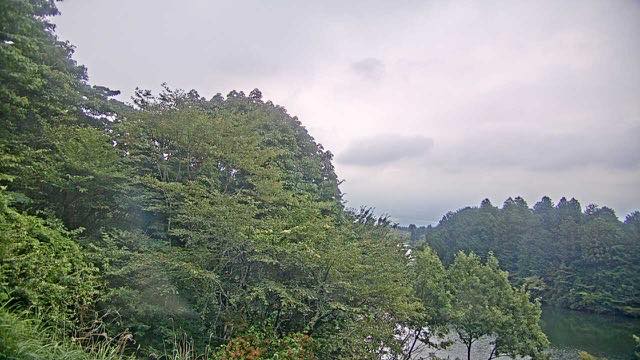
Mount Fuji from Lake Tanuki
Fujinomiya, Shizuoka · Nature
The classic head-on view of Fuji across the water. On a windless morning the whole mountain is mirrored in the lake.
-
 Sample August 2026
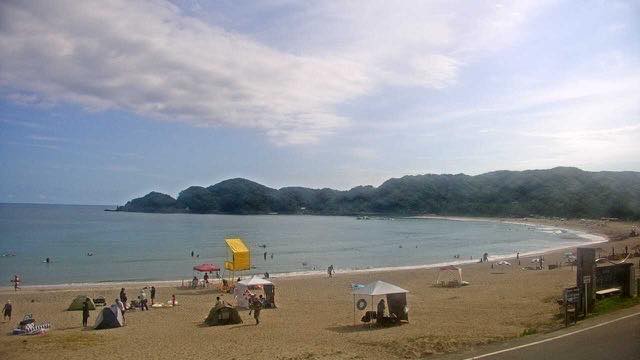
Yumigahama Beach, Minami-Izu
Minami-Izu, Shizuoka · Sea
A bow-shaped stretch of sand in a sheltered cove. Busy with swimmers in summer; the rest of the year only the waves and the pines move.
-
 Sample August 2026
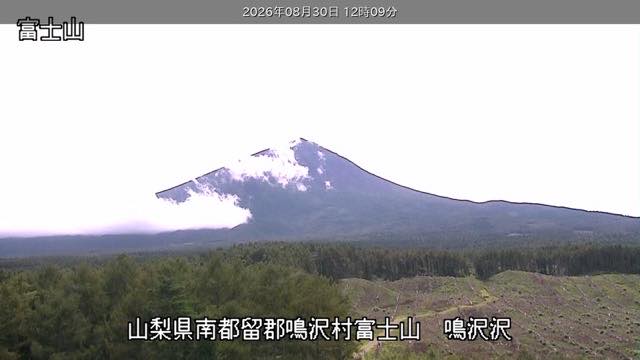
Mount Fuji erosion-control cameras
Fuji, Shizuoka · Volcano · Nature
Cameras watching the slopes of Fuji, including the Osawa landslide scar. Not built for sightseeing, which is exactly why the mountain looks unstaged.
-
 Sample August 2026
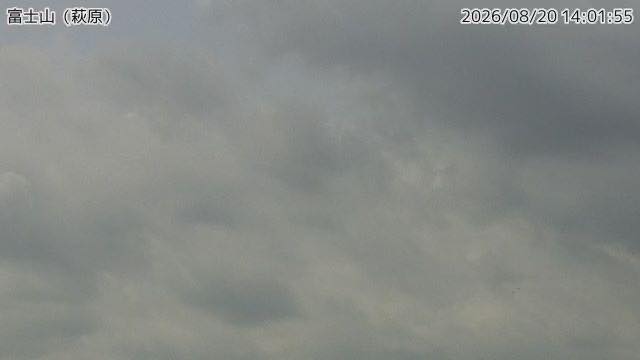
Mount Fuji (JMA camera)
Shizuoka / Yamanashi border · Volcano · Nature
This site also carries the ministry's erosion-control cameras on Fuji; this one was placed by the Meteorological Agency to watch the volcano. Different purpose, different aim.
-
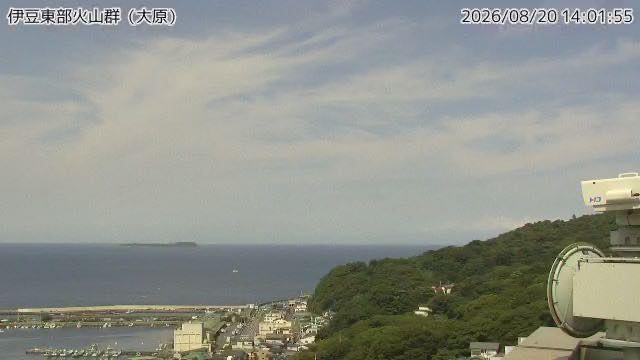 Sample August 2026
Izu East volcano group
Ito, Shizuoka · Volcano · Sea
A cluster of monogenetic volcanoes with small craters scattered on land and under the sea. A 1989 submarine eruption off Ito built the Teishi Knoll.
When to watch
Mount Fuji from Lake Tanuki is the classic head-on view across water. On a windless morning the mountain lands whole on the surface. If you want the inverted reflection, the window is just after sunrise, before the wind gets up.
Fuji shows itself best when the air is dry, from November through February. In summer there is too much moisture, and there are stretches where it only appears in the early morning. Snow usually starts capping it between late September and October and lingers into around June.
The erosion-control camera was installed by the ministry to watch for landslides, the Meteorological Agency camera to watch volcanic activity. Neither is there for the view, which is exactly why the three framings differ so much.
Closer looks at cameras here
- Mount Fuji4
- Lake Tanuki1
- The Izu Islands7
- JMA Volcano Watch Cameras49
- First Snowcap16
- Yumigahama Beach1
- The Kuroshio Coast3
Agencies publishing the cameras on this page
- Japan Meteorological Agency — volcano surveillance cameras (PDL 1.0) — Official site
- Ministry of Land, Infrastructure, Transport and Tourism (PDL 1.0) — Official site
- Ministry of the Environment — Internet Nature Institute (PDL 1.0) — Official site
The footage belongs to each agency. This site is an unofficial guide, and each sample frame was copied once per camera under that agency's terms of use.