Region
Aomori Live Cameras in Japan — 4 official webcams
Three monitored volcanoes — Iwaki, Hakkoda and Towada — and the swans of Mutsu Bay. Mountain and sea sit close here: a crater lake and a coastal wintering ground, same afternoon.
What you can see
Three of the four are volcanoes under constant watch by the Japan Meteorological Agency; the fourth is a waterbird camera from the Ministry of the Environment. The three volcanoes show completely different things. Mount Iwaki is a lone cone rising from the Tsugaru plain, Jigokunuma on Mount Hakkoda looks straight into a steaming, sulphurous fumarole field, and Towada is the lake that filled the caldera. Mountain, ground and water — three faces of the same volcanic process, which is the easiest way to hold them in your head.
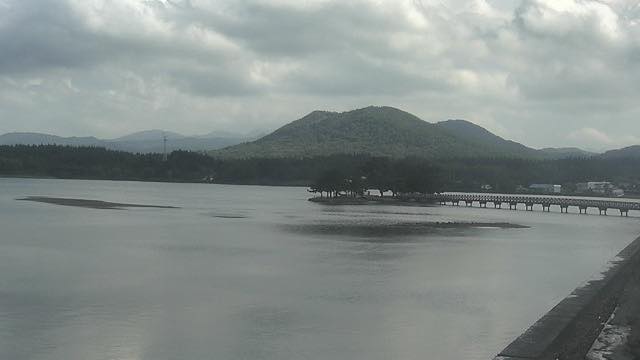
Kominato beach is unusual: the swans gather on the sea, not on a lake. It is a shallow shore on Mutsu Bay, and the birds line up along the water's edge.
4 cameras in Aomori
All 4 are still images. Tap one to open it in the camera list.
-
 Sample August 2026
Swans at Kominato beach
Hiranai, Aomori · Wildlife · Sea
A shallow shore on Mutsu Bay, long known as a swan arrival site. The numbers build as winter comes on.
-
 Sample August 2026
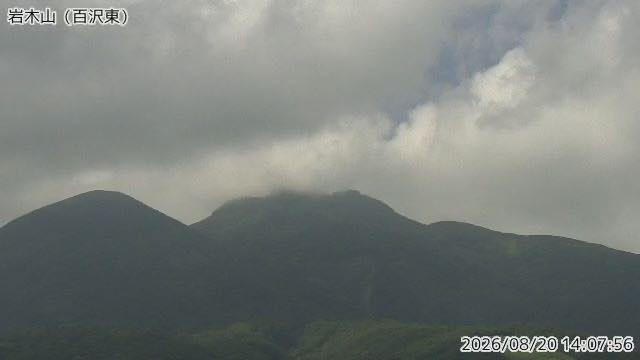
Mount Iwaki
Hirosaki, Aomori · Volcano · Nature
A free-standing peak visible from anywhere on the Tsugaru plain. Its long, spreading flanks above the apple orchards are a familiar sight.
-
 Sample August 2026
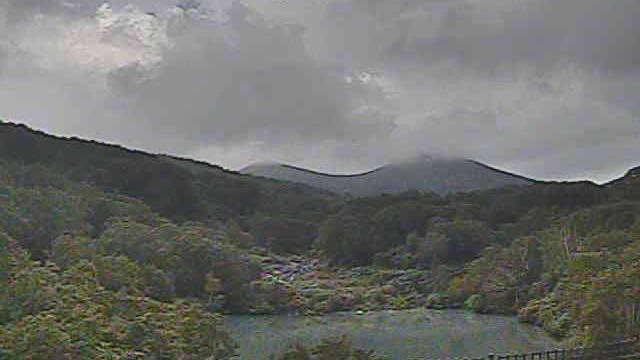
Jigokunuma, Hakkoda
Aomori · Volcano · Nature
A pond beside Sukayu hot spring, clouded by steam and hot water. Sulphur hangs in the air, and in winter snow and steam mix together.
-
 Sample August 2026
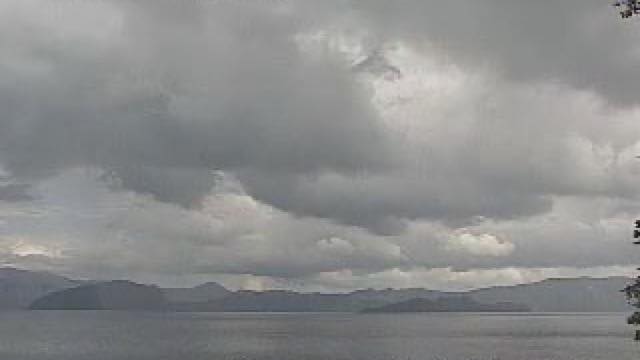
Towada
Aomori / Akita border · Volcano · Nature
Lake Towada is itself the scar of an enormous crater. It produced one of the largest eruptions in Japanese history in the Heian period; today it is simply a quiet lake.
When to watch
The swans at Kominato beach gather on the sea rather than on a lake, which is unusual. The shallow shore of Mutsu Bay fills with white birds along the waterline. They are winter visitors: most arrive around October, peak between December and February, and head north again in March. Waterbirds generally fly out to feed in the morning and return at dusk, so around sunrise and sunset are the times to watch.
Jigokunuma on Hakkoda is a fumarole field that smells of sulphur; Towada is a caldera lake that is itself the volcano. Two cameras on the same category of thing that show you completely different views — worth opening side by side.
Closer looks at cameras here
- Lake Towada2
- JMA Volcano Watch Cameras49
- Mount Iwaki1
- The Volcanoes of Tohoku8
- Mount Hakkoda1
- Wintering Swans6
- Autumn Leaves16
- First Snowcap16
- Volcanic lakes11
- Snow23
- Geothermal Areas16
Agencies publishing the cameras on this page
- Japan Meteorological Agency — volcano surveillance cameras (PDL 1.0) — Official site
- Ministry of the Environment — Internet Nature Institute (PDL 1.0) — Official site
The footage belongs to each agency. This site is an unofficial guide, and each sample frame was copied once per camera under that agency's terms of use.