Region
Miyagi Live Cameras in Japan — 2 official webcams
The Okama crater lake on Mount Zao, and the geese and ducks of Izunuma. One camera on a pool of emerald water, one on a flock that lifts off en masse on winter mornings.
What you can see
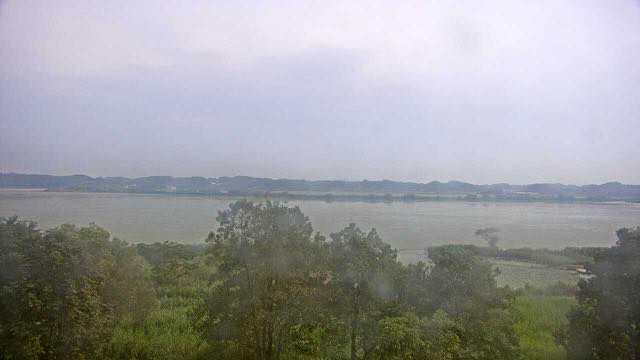
One waterbird camera from the Ministry of the Environment, one volcano camera from the Japan Meteorological Agency. Izunuma is a shallow Ramsar-listed marsh, and water and sky take up most of the frame; outside the goose season it is simply a quiet stretch of water.
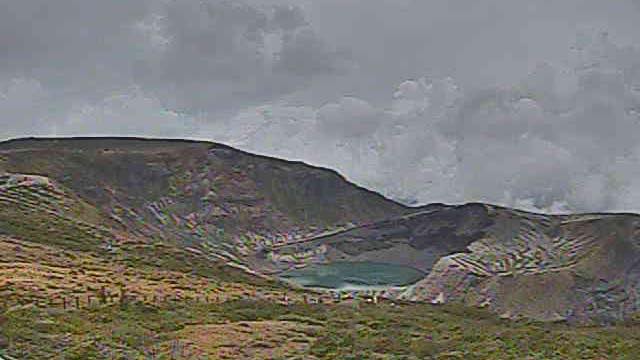
Okama on Mount Zao is a crater lake, and the camera sits over on Mount Katta. Being up on the ridge, the weather turns fast — visible and whited-out swap places within a single day. Whether it is clear is something you find out by opening it.
The three sit in one prefecture at wildly different heights. Izunuma is a shallow marsh on lowland a few metres above sea level; Katta-dake, where the Zao camera stands, is over 1,700 m. That is a gap of roughly 1,700 m. Open both at the same hour of the same day and it is perfectly ordinary for one to show water and reed beds while the other is above the cloud. Within a single prefecture you can put a lowland wetland and a crater lake on a ridge side by side.
2 cameras in Miyagi
All 2 are still images. Tap one to open it in the camera list.
-
 Sample August 2026
Geese and ducks at Izunuma
Kurihara, Miyagi · Wildlife · Nature
A shallow Ramsar-listed marsh. Greater white-fronted geese and ducks gather in winter, and it is known for the mass dawn departure.
-
 Sample August 2026
Okama, Mount Zao
Miyagi / Yamagata border · Volcano · Nature
Okama sits small in the middle of the frame, beyond the ridge in front. The view is from the Katta side, so when cloud drops the green water disappears. Updated every two minutes by the Japan Meteorological Agency.
When to watch
Izunuma is a shallow Ramsar-listed marsh, and what makes it worth watching is sheer number rather than any single bird. Waterfowl, greater white-fronted geese above all, crowd in for the winter, and the mass dawn departure from the roost is what the place is known for. It happens around sunrise — roughly 6:30 a.m. in winter, though weather shifts it, so open a little early and wait.
On Mount Zao, the colour of the water in the Okama crater is the whole point, but the Zao Echo Line closes in winter and the camera spends more days under fog and snow. For the colour, come on a clear day between early summer and autumn.
Closer looks at cameras here
- Okama, Mount Zao1
- JMA Volcano Watch Cameras49
- Izunuma1
- Wintering Swans6
- Autumn Leaves16
- First Snowcap16
- Volcanic lakes11
Agencies publishing the cameras on this page
- Japan Meteorological Agency — volcano surveillance cameras (PDL 1.0) — Official site
- Ministry of the Environment — Internet Nature Institute (PDL 1.0) — Official site
The footage belongs to each agency. This site is an unofficial guide, and each sample frame was copied once per camera under that agency's terms of use.