Region
United States Live Cameras — 89 official webcams
41 cameras from explore.org, 27 from the National Park Service, 18 from the Alaska Volcano Observatory and more — 89 in all. 33 are in Alaska, and 44 are live video, more than any country but Japan.
What you can see
There are 89 in all: 41 from explore.org, 27 from the National Park Service (NPS), 18 from the Alaska Volcano Observatory (AVO), two from the United States Geological Survey (USGS) and one from the Fish and Wildlife Service (USFWS). The agency behind a camera tells you plainly what it is for.
All 41 explore.org cameras are live video, and most of them follow animals. At Brooks Falls brown bears wait for sockeye salmon climbing the falls, and four cameras cover black bears fishing Anan Creek from different angles. Elsewhere: puffins on Seal Island, California condors at Big Sur, the nightly bat flights out of Carlsbad Cavern and Bracken Cave, and sandhill cranes gathering on the Platte River. The provider forbids reproducing their images, so this site carries no sample frames for them.
The 27 NPS cameras exist to show the parks, and the names are ones you will know — Grand Canyon, Yosemite and the rest. Each card links to that park's own camera list, so one park can hold several: Isle Royale has ten.
The eighteen AVO cameras take one Alaskan volcano each. They are instruments, not scenery: the eruption at Great Sitkin that began in July 2021 is still going, with lava slowly filling the summit crater, and Mount Cleveland has an infrared camera as well, so the heat of the crater can be read after dark. Semisopochnoi sits at 179 degrees east, just short of the date line.
The USGS pair, Kilauea and Mauna Loa, are Hawaiian Volcano Observatory cameras whose aim and zoom are changed by staff as activity changes. The USFWS bald eagle nest watches a tree on the grounds of a training centre from three angles, continuously.
44 are live video and 45 are stills. 41 of the video cameras are explore.org; the other three are Old Faithful, Kilauea and the bald eagle nest.
89 cameras in United States
44 video, 45 still. Tap one to open it in the camera list.
-
 Stream cover
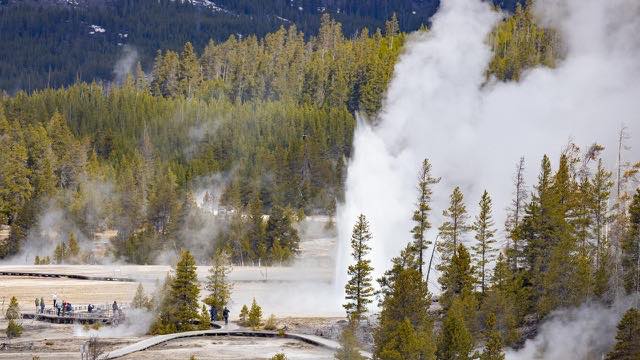
Old Faithful Geyser
Wyoming · Nature
A geyser that erupts on an almost dependable schedule. Between eruptions there is only quiet steam, and the waiting is half the attraction.
-
 Sample October 2026
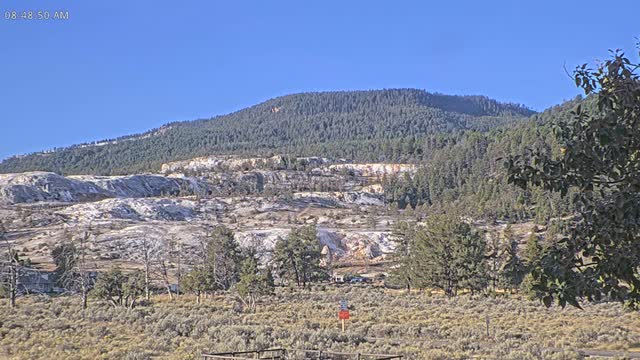
Mammoth Hot Springs
Wyoming · Volcano · Nature
A white hill built up in steps out of limestone carried by hot water. When the water finds a new path the dry terraces fade to grey, so the pattern shifts from year to year.
-
 Sample October 2026
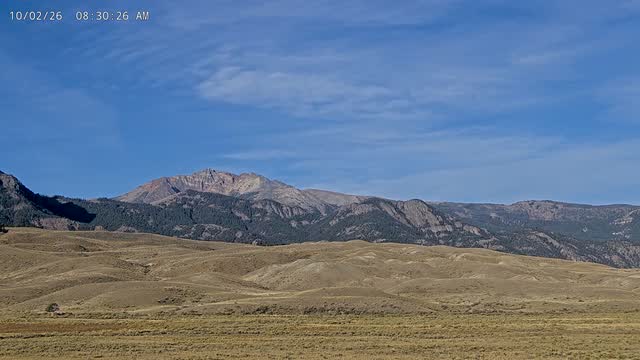
Electric Peak
Wyoming · Nature
A 3,343 m peak at the northern edge of the park, seen head on across dry grassland. Early in the day the low light picks out every fold in the slope.
-
 Sample October 2026
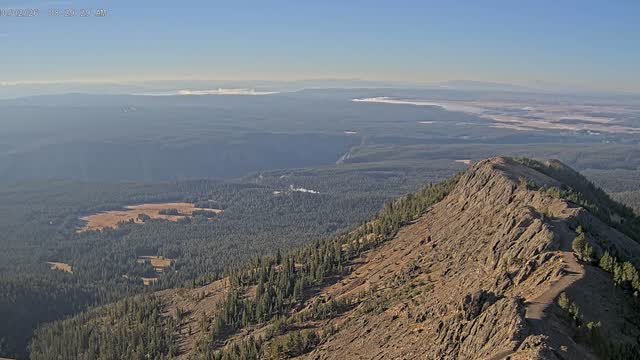
Mount Washburn
Wyoming · Nature
Looking south-west from the fire lookout on the 3,122 m summit. On clear days the view reaches the floor of the caldera and Yellowstone Lake.
-
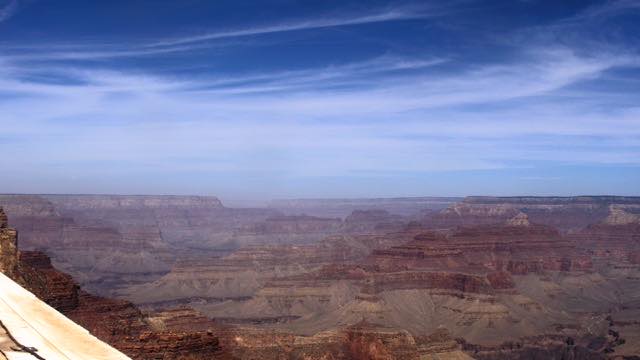 Sample August 2026
Grand Canyon
Arizona · Nature
Two billion years of rock cut into a canyon. Around sunrise and sunset the walls turn red, and the place looks like somewhere else entirely.
-
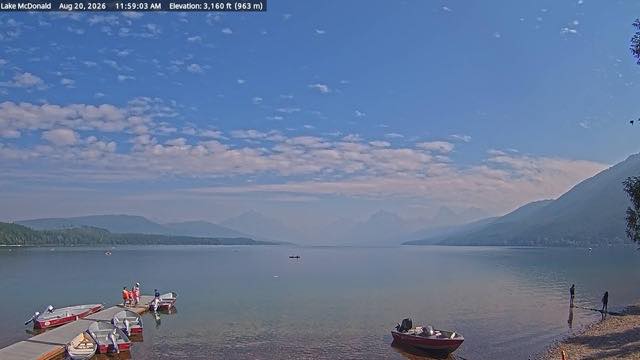 Sample August 2026
Glacier National Park
Montana · Nature
Sharp glacier-carved peaks and lakes. Snow lingers near the summits even in summer, and on clear days the ridgelines run a long way back.
-
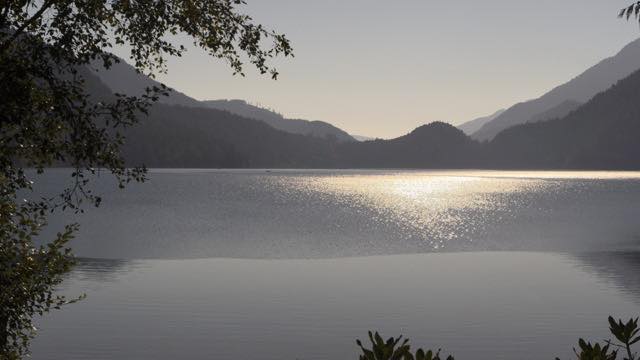 Sample August 2026
Olympic National Park
Washington · Nature
Temperate rainforest, mountains and coast in one park. Fog is common here, so whether it is clear is something you find out by looking.
-
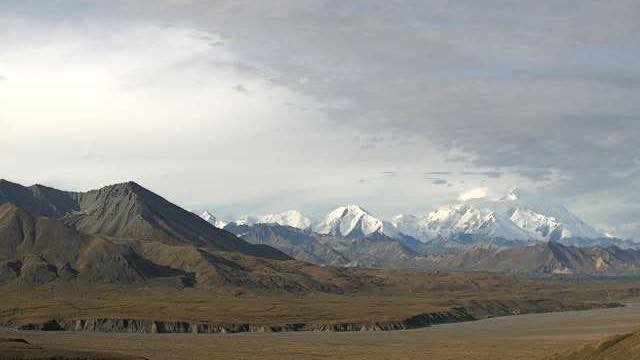 Sample August 2026
Denali National Park
Alaska · Nature
Vast tundra below the highest peak in North America. Long days in summer, dim ones in winter — and the mountain clears the cloud on few of them.
-
 Sample August 2026
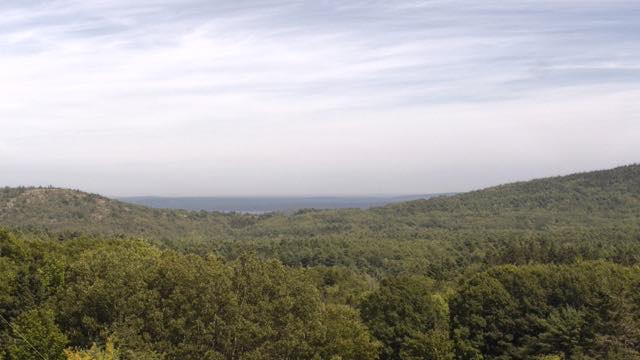
Acadia National Park
Maine · Nature
Rocky coastline meeting low mountains on the east coast. One of the first places in the continental United States to get the morning sun.
-
 Sample December 2025
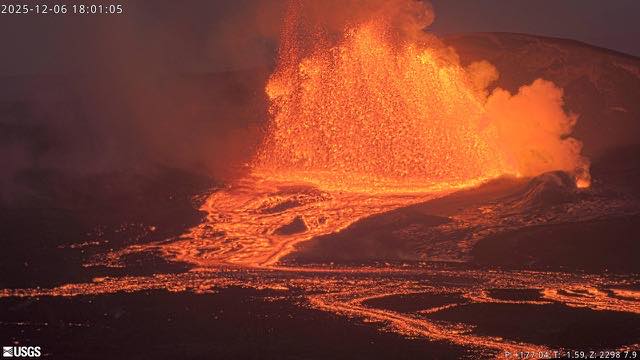
Kilauea, Halemaumau Crater
Hawaii Island · Volcano
Kilauea has been erupting since December 2024. Lava fountains every few days to few weeks, and a smouldering crater in between. A Hawaiian Volcano Observatory camera. It watches Halemaumau from the northwest caldera rim, and staff change the aim and zoom as activity shifts.
-
 Sample August 2026
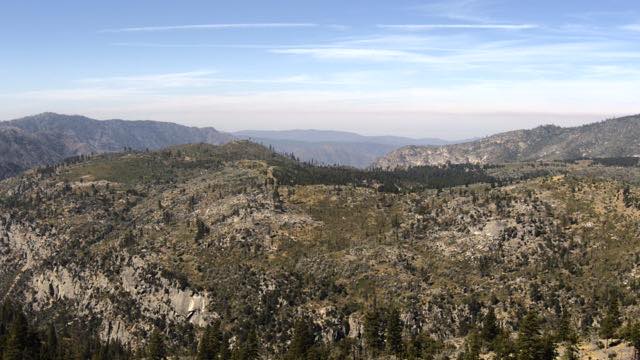
Yosemite National Park
California · Nature · World Heritage
A huge granite valley carved by ice. As the sun moves, hard shadows travel across the faces of Half Dome and El Capitan.
-
 Sample August 2026
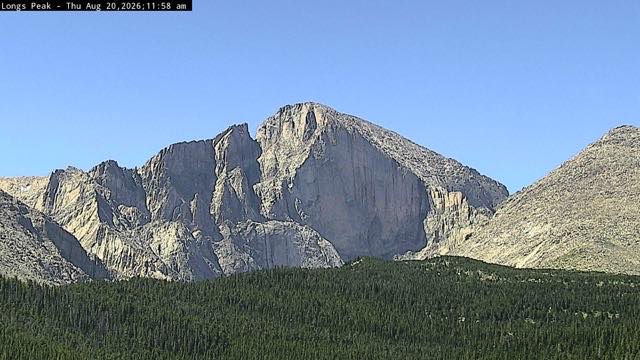
Rocky Mountain National Park
Colorado · Nature
A mountain park with a road over a 3,000-metre pass. Snow holds on the ridges through midsummer, and thunderheads build most afternoons.
-
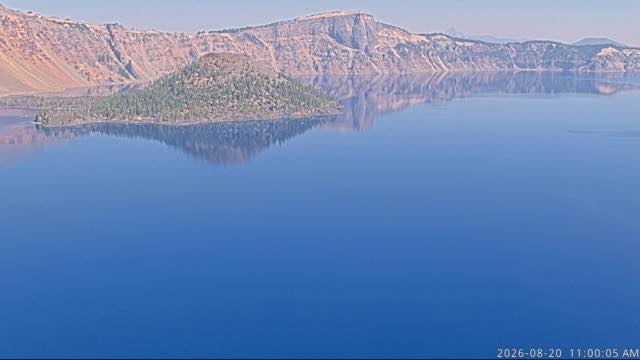 Sample August 2026
Crater Lake National Park
Oregon · Nature · Volcano
A caldera left by a collapsed volcano, filled with water. Famous for a blue that looks bottomless, and for some of the heaviest snowfall in the country.
-
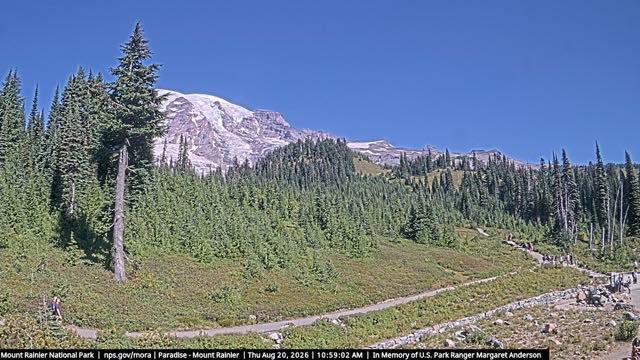 Sample August 2026
Mount Rainier National Park
Washington · Volcano · Nature
An enormous glaciated stratovolcano above forest and meadows. The days when the summit clears the cloud are limited.
-
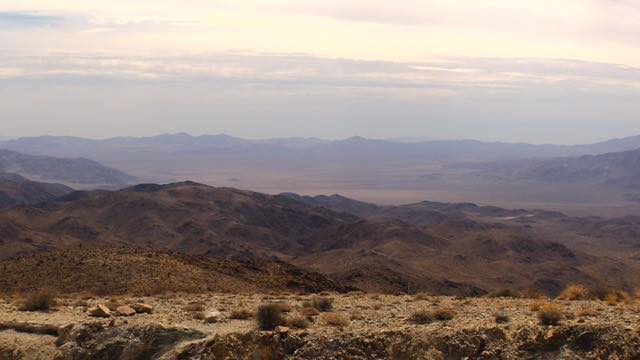 Sample August 2026
Joshua Tree National Park
California · Nature
Dry country where two different deserts meet. Strange trees and rounded boulders, and a wide swing between day and night temperatures.
-
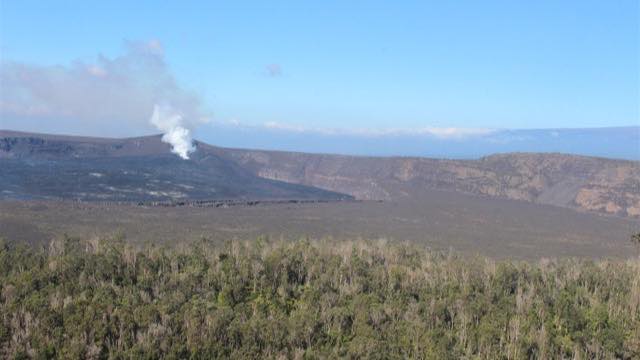 Sample August 2026
Hawaii Volcanoes National Park
Hawaii Island · Volcano · World Heritage
A World Heritage park containing Kilauea and Mauna Loa. What the camera shows changes day to day with the state of the eruption.
-
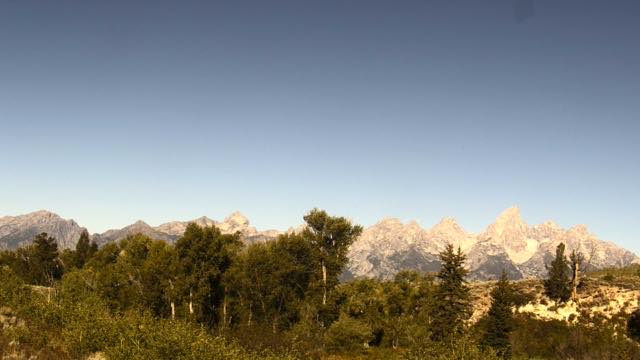 Sample September 2026
Grand Teton National Park
Wyoming · Nature
A wall of rock that rises more than 2,000 m straight out of the plain, seen head on. Wildlife sometimes wanders into the meadow in the foreground.
-
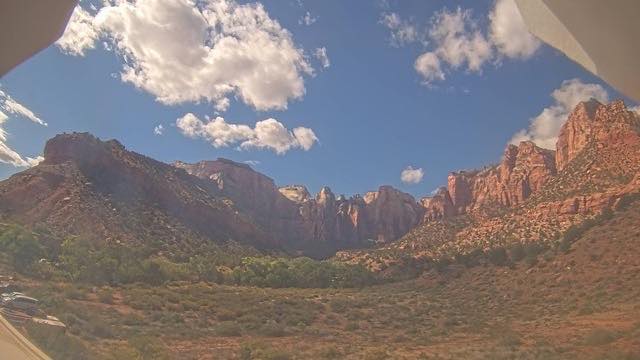 Sample September 2026
Zion National Park
Utah · Nature
Looking up the canyon from park headquarters. The sandstone cliffs known as the Temples and Towers of the Virgin all fit into one frame.
-
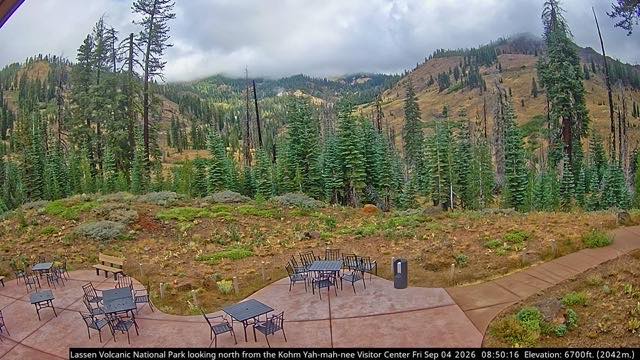 Sample September 2026
Lassen Volcanic National Park
California · Volcano · Nature
A camera facing north from the visitor center. On cool days you can see steam rising from the Sulphur Works hydrothermal area at the foot of Mt. Diller, to the left.
-
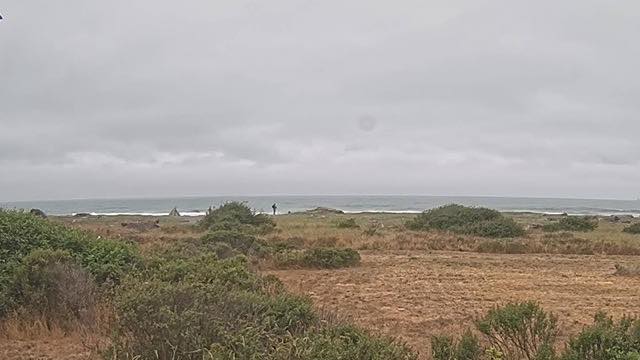 Sample September 2026
Redwood National and State Parks
California · World Heritage · Nature · Sea
The forest of the tallest trees on earth. Four cameras — shoreline, prairie and a lookout — each refreshing about once a minute. It is a foggy coast.
-
 Sample September 2026
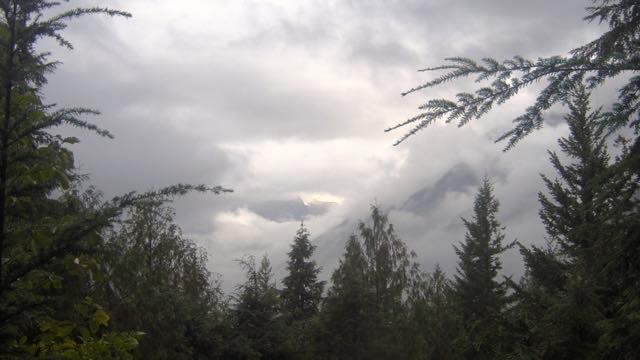
North Cascades National Park
Washington · Nature
The Picket Range seen from just outside the visitor center — a row of sharp, glacier-hung peaks.
-
 Sample September 2026
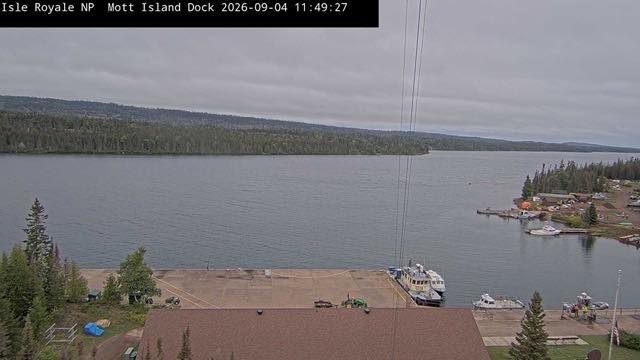
Isle Royale National Park
Michigan · Nature · Wildlife
An island park in Lake Superior. Ten cameras on the ridge, the harbors and the dock. Moose sometimes swim across the water.
-
 Sample September 2026
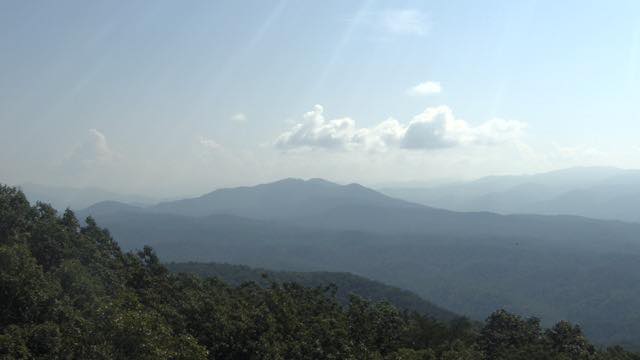
Great Smoky Mountains National Park
Tennessee · World Heritage · Nature
Four cameras set high up to measure air quality. The blue haze the mountains are named for hangs differently every day.
-
 Sample September 2026
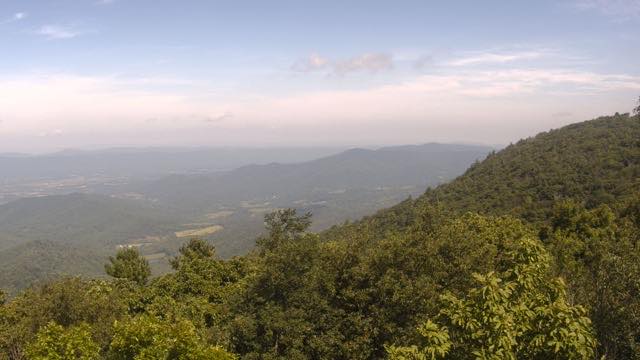
Shenandoah National Park
Virginia · Nature
Along Skyline Drive, the ridge road of the Blue Ridge Mountains. It faces down into the valley and refreshes every fifteen minutes.
-
 Sample September 2026
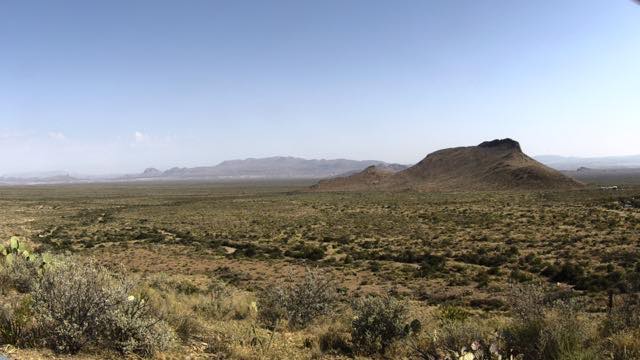
Big Bend National Park
Texas · Nature
A wide view over the Chihuahuan Desert. On a clear day peaks 130 km away are plainly visible. It refreshes every fifteen minutes.
-
 Sample September 2026
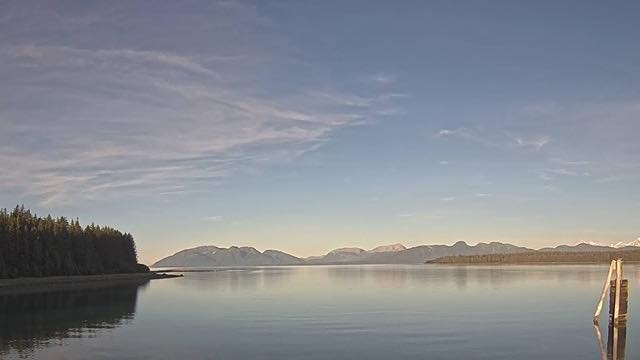
Glacier Bay National Park
Alaska · World Heritage · Nature · Sea · Wildlife
An inlet that was buried under ice 250 years ago. Now it is a sea of sea otters and humpback whales, covered by four cameras including one on the dock.
-
 Sample September 2026
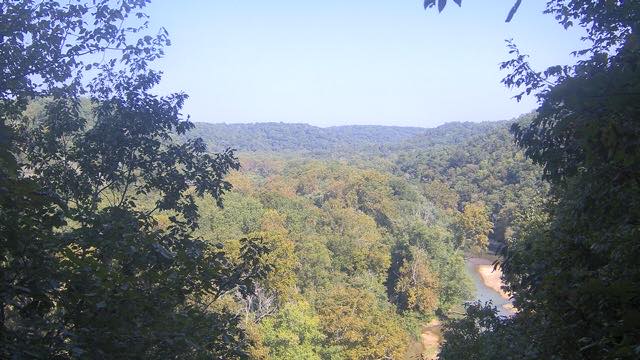
Mammoth Cave National Park
Kentucky · World Heritage · Nature · River
The park that holds the longest cave in the world. The camera stands above ground on the Green River bluffs facing north, and posts air quality alongside the view.
-
 Sample September 2026
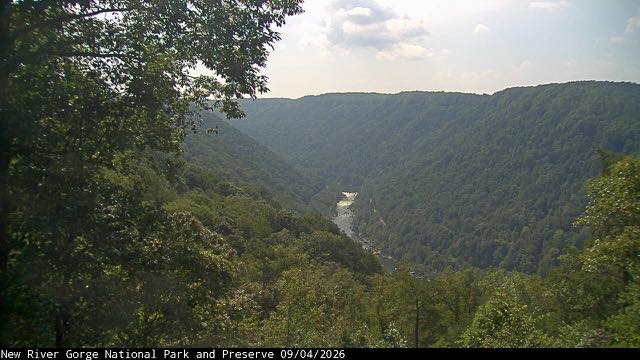
New River Gorge National Park
West Virginia · Nature · River
A gorge cut by one of the oldest rivers in the Appalachians. From the visitor center overlook the whole valley lies below.
-
 Sample August 2026
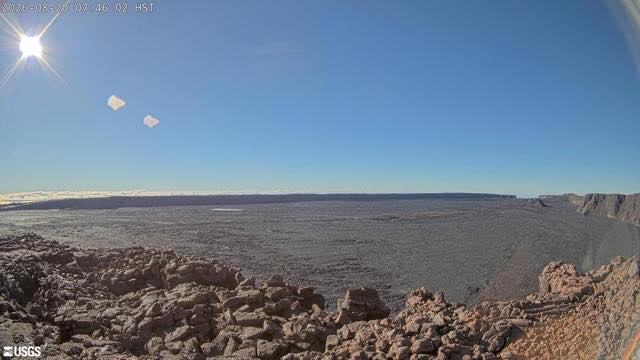
Mauna Loa
Hawaii Island · Volcano
One of the largest shield volcanoes on Earth by volume. Its slope is so gradual that on screen it barely reads as a mountain at all.
-
Still image
Mount Spurr
Alaska · Volcano
A 3,374 m volcano visible from Anchorage on clear days. Earthquake swarms have kept recurring since the 1992 eruption.
-
 Sample September 2026
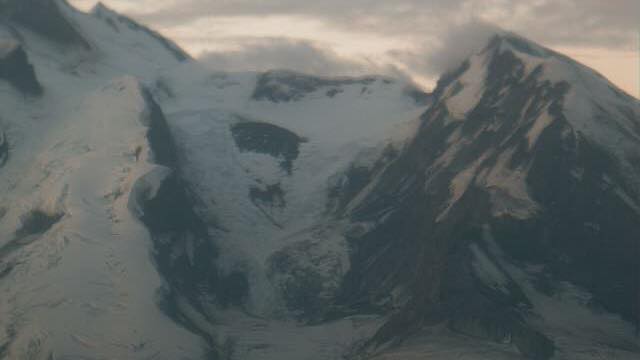
Mount Redoubt
Alaska · Volcano
A 3,108 m cone. Its ice-filled summit crater is breached to the north, and the Drift Glacier flows out through the gap.
-
Still image
Mount Augustine
Alaska · Volcano · Sea
An island in lower Cook Inlet that is a single volcano from shore to shore. Its summit dome has collapsed at least eleven times in the past 2,000 years.
-
 Sample September 2026
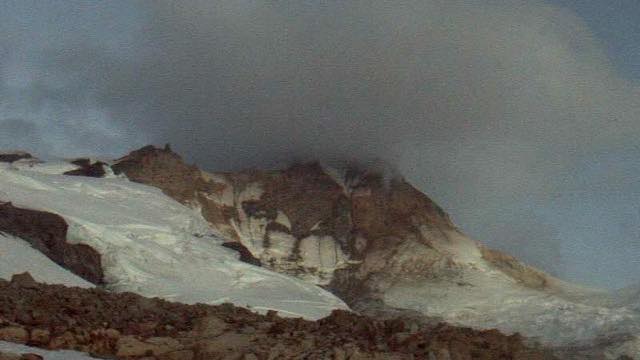
Mount Iliamna
Alaska · Volcano
A 3,053 m stratovolcano with glaciers radiating from the summit. There is no record of an eruption, yet steam keeps rising from its flank.
-
Still image
Mount Katmai
Alaska · Volcano
In 1912 the largest eruption of the twentieth century broke out right beside it. The summit dropped away, and a caldera holding a lake is what remains.
-
 Sample September 2026
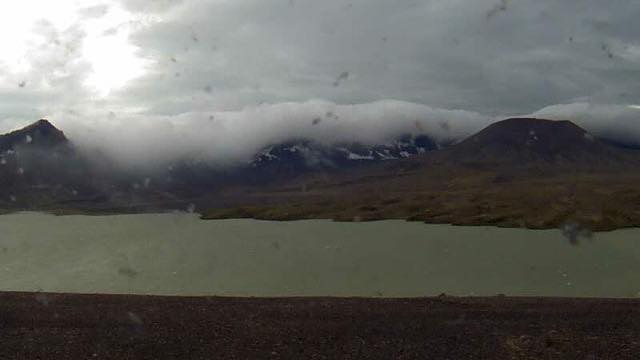
Mount Aniakchak
Alaska · Volcano
An ice-free caldera 10 km across and up to 1 km deep, still whole. The rim walls it in so completely that the inside can have its own weather.
-
Still image
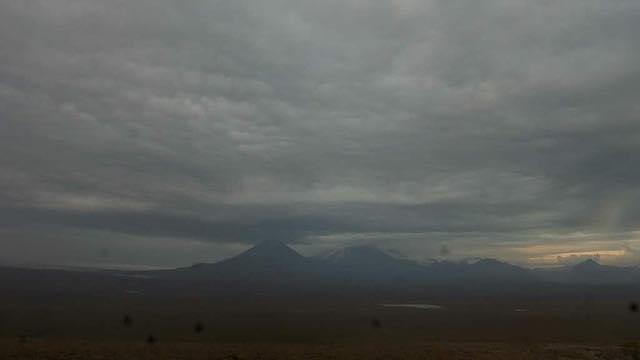
Mount Veniaminof
Alaska · Volcano
Inside a caldera filled by an icefield stands an active cone rising some 330 m above the ice. Ice and fire share the frame.
-
 Sample September 2026
Mount Pavlof
Alaska · Volcano
One of the most frequently erupting volcanoes in Alaska. A 2,518 m cone with its vents high on the north and east sides.
-
Still image
Mount Shishaldin
Alaska · Volcano
At 2,857 m the highest peak in the Aleutians, and a nearly symmetrical cone. A steady wisp of steam usually rises from the small summit crater.
-
Still image
Mount Akutan
Alaska · Volcano
An island volcano with a cinder cone over 200 m tall growing inside its caldera. Three small sulphur-lined craters sit on the cone's summit.
-
 Sample September 2026
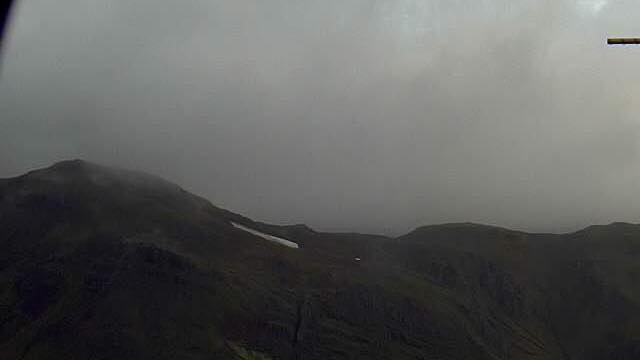
Mount Makushin
Alaska · Volcano
An 1,800 m volcano on the same island as Dutch Harbor, one of the busiest fishing ports in the United States. Its summit carries an icefield of about 40 km².
-
Still image
Mount Okmok
Alaska · Volcano
The camera looks in from the rim of a caldera 10 km across. Young cinder cones and lava flows are scattered over its floor.
-
Still image
Mount Cleveland
Alaska · Volcano
A 1,730 m cone that makes up the whole western half of an uninhabited island. It is reported to lose its snow faster than neighbouring peaks, apparently from its own heat.
-
Still image
Mount Cleveland, infrared camera
Alaska · Volcano
The same mountain in infrared. Heat shows up as light and dark, so the warmth of the crater can be read even after dark.
-
Still image
Great Sitkin
Alaska · Volcano
An eruption that began in July 2021 is still going. Lava has slowly filled the summit crater, and there has not been a single explosion.
-
Still image
Semisopochnoi
Alaska · Volcano
A volcanic island at 179 degrees east, just short of the date line. Three young cones are growing inside its 8 km caldera.
-
Still image
Mount Tanaga
Alaska · Volcano
An 1,806 m volcano 100 km west of Adak. Three edifices stand in a row, and the last known eruption was in 1914.
-
 Sample September 2026
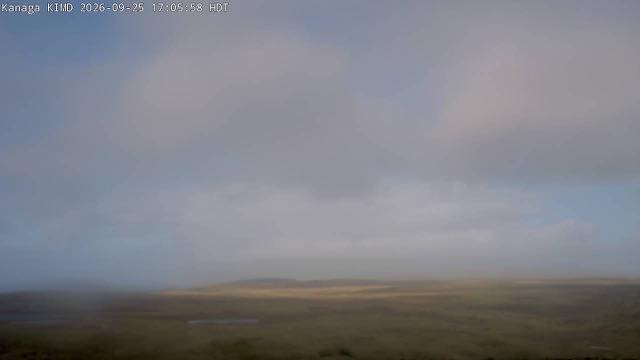
Mount Kanaga
Alaska · Volcano
A symmetrical 1,307 m cone. Its summit crater is about 200 m across and 60 m deep, with active fumaroles inside.
-
 Sample August 2026
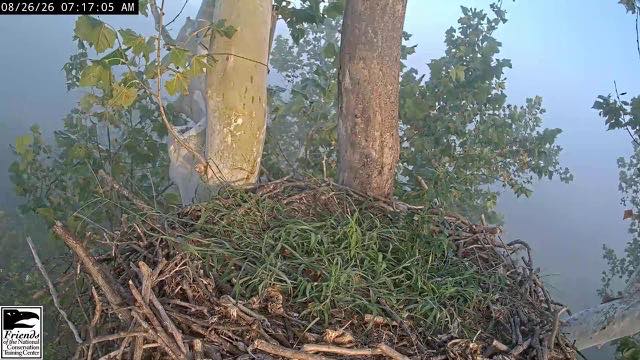
Bald eagle nest
West Virginia · Wildlife · Nature
A sycamore on the grounds of a Fish and Wildlife Service training centre. The nest used for 22 years came down in an April 2025 windstorm, and the pair rebuilt about fifteen feet lower in the same tree. Three cameras run continuously. Chicks are there from winter into early summer; after they fledge it is an empty nest and a tree.
-
Live video, late June-July
Brown bears at Brooks Falls (Katmai)
Alaska, Katmai National Park · Wildlife · River
Sockeye salmon leap the falls while brown bears compete for the best fishing spots. The largest and most successful bears catch and eat more than thirty salmon, over 120 pounds, in a day. The operator gives late June and July, during the sockeye migration, as the time bears are most abundant. Bald eagles, gulls and the occasional wolf come for the same feast.
-
Live video, Sept-Oct
Lower Brooks River, at Naknek Lake
Alaska, Katmai National Park · Wildlife · River
Looking over the spot where the Brooks River meets Naknek Lake. In early summer it is a favourite of mothers with cubs avoiding the crowd at the falls. In September and October, as the salmon spawn and die, the lower river becomes an important place for bears to fish before hibernation.
-
Live video, September
The Riffles, below Brooks Falls
Alaska, Katmai National Park · Wildlife · River
A hundred yards downstream of Brooks Falls, this stretch is used by mothers with playful cubs and by wary sub-adults. They fish, eat and play close to the camera. In September the riffles are packed with spawning salmon.
-
Live video
Katmai from Dumpling Mountain
Alaska, Katmai National Park · Nature · Volcano
A camera on the alpine tundra near the summit of Dumpling Mountain, 744 metres up. The whole of the Brooks River and much of the surrounding country is in one frame. Clear lakes and thick spruce forest fill the lowlands, and on the horizon the active volcanoes bordering the Valley of Ten Thousand Smokes are steaming.
-
Live video
Brooks River watch (two angles)
Alaska, Katmai National Park · Wildlife · River
Near the outlet of the Brooks River, this camera switches between two angles, Lower River North and Lower River East, following both the migrating salmon and the bears fishing for them. The audio on the lower river cameras is a pre-recorded loop; live audio is off for privacy.
-
Live video
Naknek River at King Salmon
Alaska, King Salmon · River · Wildlife
The Naknek River runs through the town of King Salmon just outside Katmai National Park. Thirty-five miles long, it empties into Bristol Bay and drains one of the most productive salmon watersheds on Earth. In spring, once the ice breaks, watch for beluga whales chasing small fish and for migrating swans, geese and ducks. Sunrises and sunsets are worth it all year.
-
Live video, July-August
Anan Creek black bears 1 (Tongass)
Alaska, Wrangell · Wildlife · River
A camera on a prime fishing spot where bears gather. Some carry the fish back into the forest, others eat right there on the bank. The operator says bears begin arriving in June, peak from July through August, and are sometimes seen in early spring or as late as October. Bald eagles, ravens and crows share the feast.
-
Live video, July-August
Anan Creek black bears 2 (fishing styles)
Alaska, Wrangell · Wildlife · River
Waiting on the bank, wading out to where the salmon are thickest, sitting in the cave for fish to swim past: this angle shows how differently each bear fishes, and how they jockey for the good spots. Bears peak from July through August. Bald eagles, ravens and otters come too, and wolves have been seen over the years.
-
Live video, July-August
Anan Creek fishing hole 4
Alaska, Wrangell · Wildlife · River
Looking down on a fishing hole where bears gather. Mothers sometimes send their cubs up the tree above it for safety, and bears will line up and wait their turn. They arrive from June and peak from July through August. Bald eagles, ravens and crows join in, which is much of what makes Anan Creek so busy.
-
Live video, July-August
Anan Creek, the forest side
Alaska, Wrangell · Wildlife · Nature
Bears coming and going: checking whether fishing hole 4 is free, or heading into the forest with a salmon in their mouth. Some like to lounge on the tree stump near the deck. They arrive from June, peak from July through August, and turn up as early as spring and as late as October.
-
Live video, autumn to spring nights
Aurora over Fairbanks
Alaska, Fairbanks · Nature
A camera at the Large Animal Research Station of the University of Alaska Fairbanks, facing the northern sky. The aurora in interior Alaska can be very active from autumn through early spring, usually late at night into the early morning, and visible whenever the sky is clear.
-
Live video
Muskox pasture
Alaska, Fairbanks · Wildlife
A view of the muskox pasture at the Large Animal Research Station of the University of Alaska Fairbanks, which keeps males and females of various ages. Depending on the season the camera also takes in the pen outside the calf barn.
-
Live video
Mendenhall Glacier and Nugget Falls
Alaska, Juneau · Nature
The Mendenhall Glacier and Mendenhall Lake, with Nugget Falls nearby. Mountain goats sometimes appear on the slope above the falls or higher on Mount Bullard: nannies with kids stay lower, billies tend to be alone and pick higher ground. They live here year-round on lichen and vegetation and grow a thick coat every autumn.
-
Live video
Castle Rock peregrine falcons (Mississippi)
Wisconsin, Fountain City · Wildlife · River
A peregrine falcon eyrie on Castle Rock, the rock tower above the Mississippi River. It is one of the earliest historic eyries the falcons returned to after the Raptor Resource Project's cliff releases in the late 1990s; they began nesting here again in 2002 and have raised many young. The river valley and the city of Winona are in view.
-
Live video
Great Spirit Bluff peregrine falcons
Minnesota, La Crescent · Wildlife · River
A camera on a cliff face overlooking Lock and Dam No. 7 on the Mississippi River. The family known as the Great Spirit Bluff falcons nests on this cliff, and the angle is inside the scrape, so the adults' comings and goings and the chicks' growth are right there.
-
Live video
Mississippi Flyway
Wisconsin, Brice Prairie · Wildlife · River
The Mississippi is one of North America's great migration corridors, and this stream looks out over the river at Brice Prairie, Wisconsin. The operator lists pelicans, cranes, ducks and eagles among what turns up. Run by the Raptor Resource Project.
-
Live video
Hog Island osprey nest (boat house)
Maine, Bremen · Wildlife · Sea
From a camera on the boat house roof, out over the Audubon ornithology camp on Hog Island, where more than two hundred species of bird live. The nest belongs to Skiff, a long-time resident. The question each season is whether he and his new mate can raise a brood on this rugged stretch of the Maine coast.
-
Live video
Black guillemots on Seal Island
Maine, Seal Island · Wildlife · Sea
A camera inside a black guillemot burrow on Seal Island, Maine. Like their puffin cousins they spend most of their lives at sea and come ashore once a year to nest in rock crevices and shallow burrows. This pair can be watched close up as they fish and raise their chicks.
-
Live video
Puffin burrow on Seal Island
Maine, Seal Island · Wildlife · Sea
Seal Island lies twenty-one miles off the coast of Maine. This camera looks inside a burrow where puffins nest and breed through spring and summer. The stream is sometimes affected by the tide, glare off the sea surface, or heavy fog, but it usually comes back quickly.
-
Live video
Puffin loafing ledge on Seal Island
Maine, Seal Island · Wildlife · Sea
Overlooking the loafing ledge on Seal Island, twenty-one miles off the Maine coast. It is a prime spot for puffins to gather, chosen because there are exit routes in every direction if a hawk or a gull attacks.
-
Live video
Burrowing owls on a former weapons depot
Oregon, Hermiston · Wildlife
In north-central Oregon, on land that was once a US Army weapons depot and is now being restored as wildlife habitat with the Confederated Tribes of the Umatilla Indian Reservation. A network of artificial burrows built from repurposed materials has brought a population of three or four breeding pairs in the early 2000s back to more than a hundred nesting pairs, with over four hundred chicks banded in 2024 alone.
-
Live video
Long-eared owl nest
Montana, Missoula · Wildlife
Overlooking a long-eared owl nest in Missoula, Montana, this camera shows from the inside how the species raises its young in the grasslands and open forests of North America, Europe and parts of Asia. Run by the Owl Research Institute.
-
Live video
Osprey nest at Charlo
Montana, Charlo · Wildlife
Near the treetop home of Charlo's great horned owl family, an osprey pair called Charlie and Lola have built a nest on a raised platform overlooking an open field. The camera follows them through the season. Run by the Owl Research Institute.
-
Live video
Mission Mountains and Ninepipe wetlands
Montana, Charlo · Nature · Wildlife
The Mission Mountain Range seen from a lodge inside the Ninepipe Wildlife Management Area, bordering the Ninepipe National Wildlife Refuge. Several species of waterfowl and raptors pass through, and painted turtles bask on sunny afternoons. The National Bison Range is visible across the valley.
-
Live video
California condor sanctuary (Big Sur)
California, Big Sur · Wildlife · Nature
Ventana Wildlife Society's condor sanctuary in Big Sur, two miles east of the Pacific and surrounded by US Forest Service land. The society has released captive-bred condors here since 1997 and at San Simeon since 2015. Researchers put out stillborn calves so that newly released birds have a clean, lead-free food supply, and a fence keeps scavengers such as coyotes out. Golden eagles and other birds come in too.
-
Live video
Condor nest (Castle Nest)
California, Big Sur · Wildlife · Nature
A camera at a California condor nest watched by the Ventana Wildlife Society in Big Sur. The species was down to a handful of wild birds in the 1980s, and its numbers are still being rebuilt one monitored nest at a time.
-
Live video
Bald eagles at Two Harbors, Catalina
California, Catalina Island · Wildlife · Sea
A bald eagle nest on the cliffs of Catalina Island off southern California, above the settlement of Two Harbors. The backdrop is the rugged Channel Islands landscape meeting the sea.
-
Live video
Fraser Point bald eagle nest
California, Santa Cruz Island · Wildlife · Sea
A nest on The Nature Conservancy's land on Santa Cruz Island. The Fraser Point pair moved here from their historic nest in 2023. They are part of a bald eagle restoration project on the California Channel Islands that has run for more than forty years, managed by the Institute for Wildlife Studies.
-
Live video
Sauces bald eagle (Channel Islands NP)
California, Santa Cruz Island · Wildlife · Sea
Santa Cruz Island is the largest island in Channel Islands National Park, off southern California. This camera looks into the snug nest of a bald eagle family there.
-
Live video
Summit of Mount Diablo, Santa Cruz Island
California, Santa Cruz Island · Nature · Sea
A camera at the top of Mount Diablo, also called Devil's Peak, the highest point on California's Channel Islands. From 2,429 feet above the ocean: sunsets, breaking waves, curious island foxes and soaring eagles.
-
Live video
Chesapeake Bay osprey (Kent Island)
Maryland, Kent Island · Wildlife · Sea
A close look at the daily life of Tom and Audrey, an osprey pair on Kent Island, Maryland. Because osprey eat almost nothing but fish, they are treated as an indicator species for the health of Chesapeake Bay as a whole.
-
Live video
Baltimore peregrine falcons (33rd floor)
Maryland, Baltimore · Wildlife · City
A camera on the 33rd floor of the Transamerica tower in downtown Baltimore, where the peregrine pair Boh and Barb have nested for years and raised brood after brood above the skyline. Mating, laying, stooping on prey and feeding the young all play out over the season.
-
Live video, Aug-Sept
Carlsbad Cavern entrance (bat flight)
New Mexico, Carlsbad Caverns National Park · Nature · Wildlife
Perched above the natural entrance, this camera shows the mouth of the cave, the winding trail down into it, and the spot where the bats pour out each night. Carlsbad Cavern is one of the most famous caves on Earth and home to several hundred thousand Brazilian free-tailed bats. They are present year-round, but numbers peak in August and September as migratory bats arrive and pups born in the cave take their first flights.
-
Live video, evenings
Bracken Cave bat emergence
Texas, San Antonio · Wildlife
Nearly twenty million Mexican free-tailed bats spend the summer in Bracken Cave, and in the evening they pour out in spiralling swarms. The operator gives 19:00 to 21:00 local time as the window. Run by Bat Conservation International.
-
Live video, dawn and dusk
Sandhill cranes on the Platte (Rowe Sanctuary)
Nebraska, Gibbon · Wildlife · River
Audubon's Rowe Sanctuary offers one of the closest views of the sandhill crane migration on Nebraska's Platte River. The five-mile stretch this camera covers is one of the most densely populated crane roosts in the world, with 100,000 to 200,000 birds at the peak. Groups stay about three weeks once they arrive, and early morning and evening are the times to watch. The morning liftoff comes either in small groups as the sun rises or, more often, as tens of thousands leaving at once in a cloud.
-
Live video
Sacramento National Wildlife Refuge pond
California, Willows · Wildlife · Nature
A seasonal wetland pond filled with migrating waterfowl and raptors. The refuge complex covers nearly 35,000 acres of habitat, and snow geese, mallards and other ducks, pelicans and more pass through.
-
Live video
Redwoods and the Smith River
California, Crescent City · Nature · River
Jedediah Smith Redwoods State Park, surrounded by some of the tallest trees on the planet. The camera pans along the Smith River; watch for river otters and bald eagles, and the occasional angler or kayaker.
-
Live video
Underwater at Catalina (Blue Cavern reserve)
California, Catalina Island · Sea · Wildlife
A camera under the dock of the Wrigley Marine Science Center, in the Blue Cavern Marine Protected Area off Catalina Island. Eelgrass and elk kelp beds, the seam where sandy bottom meets rocky reef kelp forest, and the deep water of the channel are home to hundreds of species of fish, shellfish, marine mammals and seabirds.
-
Live video
Feeding station in the Huachuca Mountains
Arizona, Cochise County · Wildlife
A bird feeding station in mid-elevation oak grassland in the Huachuca Mountains of southeastern Arizona. Run by the Southeastern Arizona Bird Observatory.
-
Live video
Herons and spoonbills over an alligator swamp
Florida, St. Augustine · Wildlife
Looking over the swamp at the alligator park in St. Augustine, Florida, where native herons, egrets, roseate spoonbills and wood storks roost and raise their young. With hundreds of alligators swimming below the oak branches, the chicks are safe from climbing predators such as raccoons, opossums and feral cats. Alligators bask in the sun in view as well.
-
Live video
Underwater at Silver Springs (manatees)
Florida, Silver Springs State Park · Wildlife · River
A 180-degree underwater camera set in the spring at Silver Springs State Park, looking into a world of manatees, alligators and a variety of fish and birds.
When to watch
Time zones dominate here. Between roughly midnight and 4 a.m. Japan time, almost every camera from the mainland to Hawaii is in daylight. Open them during the Japanese day and most are dark.
The thirty-three Alaskan cameras are worth thinking about separately. Anchorage runs seventeen hours behind Japan on summer time and eighteen in winter, so the Japanese evening lands on the Alaskan morning. In summer the night barely arrives and any hour is bright; in winter the daylight is short.
The explore.org animal cameras are all about season. The brown bears at Brooks Falls gather from late June through July, when the sockeye run; the black bears of Anan Creek in July and August; the Carlsbad bats in August and September; the Fairbanks aurora on autumn-to-spring nights. Each card copies the window the provider itself states. Cameras with no season given have something to watch at any time of year.
For the volcano cameras it comes down to cloud. The Aleutians are cloudy and foggy, and the observatory's daily records are full of the line that the camera could see nothing through the cloud. Expect to open them several times before catching a clear one.
Old Faithful erupts at intervals of anywhere from tens of minutes to about two hours. The bald eagle nest has no season and no hour — the only question is whether anything is home. The USGS and AVO cameras are monitoring instruments, not sightseeing.
Closer looks at cameras here
- Kilauea1
- The volcanoes of Hawaii Island3
- US and Korean National Parks28
- Subjects That Keep You Waiting3
- Aurora2
- Brooks Falls Bears and Salmon5
- Anan Creek Black Bears4
- Bird Feeders4
- Puffins and Guillemots3
- Bison and Musk Oxen3
- Bald Eagles3
- Peregrine Falcons3
- Ospreys3
- Owls2
- California Condors2
- Coral and Kelp3
- Migration Flyways3
- Bat Emergences2
- Florida Waters2
- Alaska Ice and Volcanoes2
- Wide Views of the US3
- Appalachian Parks3
- Cascades and Redwoods4
- Desert Parks, USA3
- Parks With No Roads2
- Rocky Mountain Parks3
- Mammoth Cave1
- Cook Inlet Volcanoes4
- Alaska Peninsula Volcanoes4
- East Aleutian Volcanoes4
- West Aleutian Volcanoes6
- Ice-Clad Volcanoes4
- Volcanic lakes11
- Snow23
- Glaciers12
- Geothermal Areas16
- Seas of Clouds and Fog13
- Sunrise and Sunset13
Agencies publishing the cameras on this page
- Alaska Volcano Observatory (Free to use with credit) — Official site
- U.S. Fish and Wildlife Service (U.S. government work) — Official site
- U.S. Geological Survey (U.S. government work) — Official site
- U.S. National Park Service (U.S. government work) — Official site
- explore.org (Deep links and embeds OK, no image reuse) — Official site
The footage belongs to each agency. This site is an unofficial guide, and each sample frame was copied once per camera under that agency's terms of use.