Region
Hiroshima Live Cameras in Japan — 9 official webcams
Nine river live streams from the transport ministry: the Ota, the Gono and the Ashida — the rivers of Hiroshima city, Miyoshi and Fukuyama — all open at once.
What you can see
All nine are river live streams from the Chugoku bureau of the transport ministry. Each holds one fixed point, so there is nothing to wait for — the place is there the moment you open it.
Three sit in the Ota system, the river that built Hiroshima's delta: below Asa Bridge, on the reach just before the city; Shinkawa Bridge on the Nenotani, the tributary that joins around Kabe; and the drainage gate on the Misasa. That gate is where it is decided, when the main stem rises, whether the tributary's water goes out or is held back.
Across the north of the prefecture runs the Gono, which leaves here for Shimane and the Sea of Japan. Bishamon Bridge crosses it upstream, and two cameras sit on the Basen, which joins the main stem at Miyoshi. The Miyoshi basin is low ground where rivers gather, and is known for its fog.
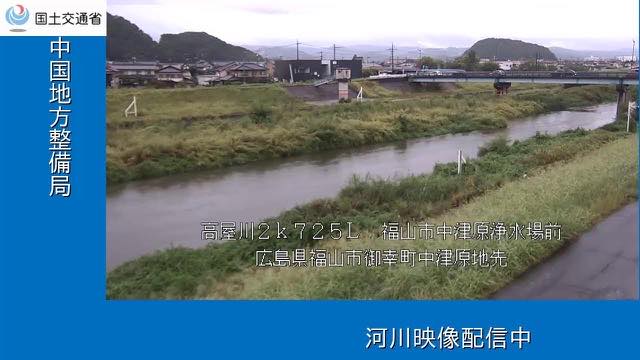
In the east the Ashida has one camera near its mouth, after the river has passed through the middle of Fukuyama, and one upstream at Fuchu. Its tributary the Takaya is filmed in front of a water treatment plant, so a river that drinking water is taken from is shown plainly.
The nine together lay out the shape of the prefecture. The Ota and the Ashida go to the Inland Sea; the Gono crosses the border hills to the Sea of Japan. Rain that fell on one prefecture, running off to two different seas, one frame at a time.
9 cameras in Hiroshima
All 9 are live video. Tap one to open it in the camera list.
-
 Stream cover
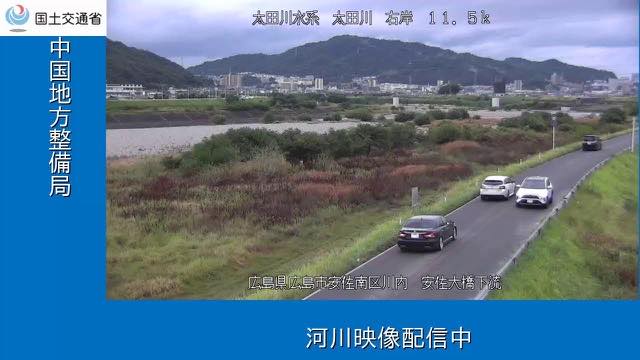
Ota River below Asa Bridge
Hiroshima · River
The Ota, the river that built Hiroshima's delta, seen below Asa Bridge on the reach just before it enters the built-up city.
-
 Stream cover
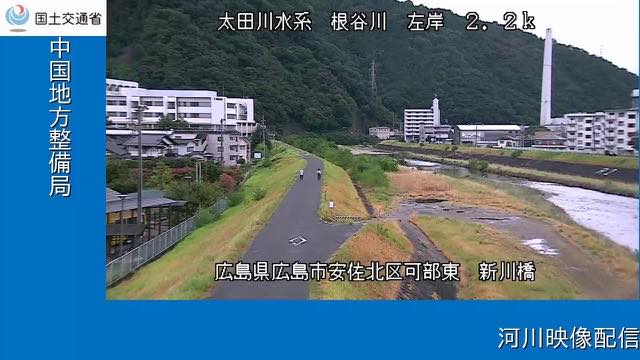
Nenotani River, Shinkawa Bridge
Hiroshima · River
A watch camera on Shinkawa Bridge over the Nenotani River, a tributary that joins the Ota around Kabe.
-
 Stream cover
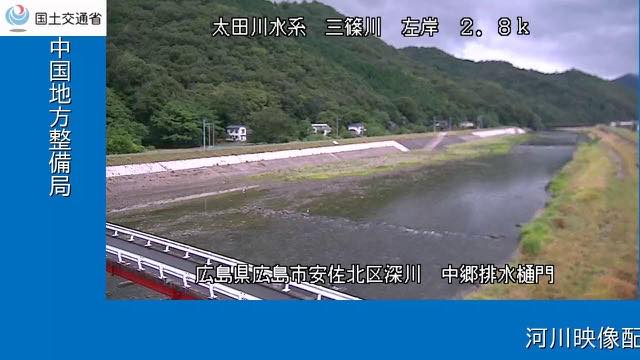
Misasa River drainage gate
Hiroshima · River
A drainage sluice on the Misasa River, in the Ota system. When the main stem rises, this is where it is decided whether the tributary's water goes out or is held back.
-
 Stream cover
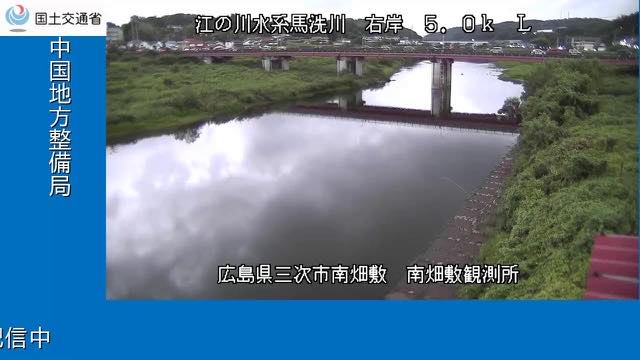
Basen River gauge
Hiroshima · River
A water-level station on the Basen River, which joins the Gono at Miyoshi. The Miyoshi basin is low ground where rivers gather, and is known for its fog.
-
 Stream cover
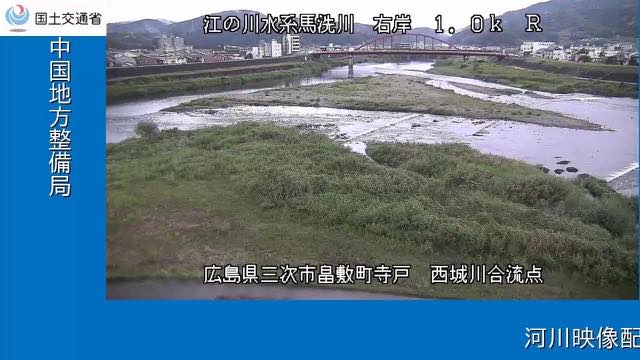
Basen River, second camera
Hiroshima · River
Another camera on the Basen River. With the gauging station on the same river it gives two views of this tributary before it reaches the Gono.
-
 Stream cover
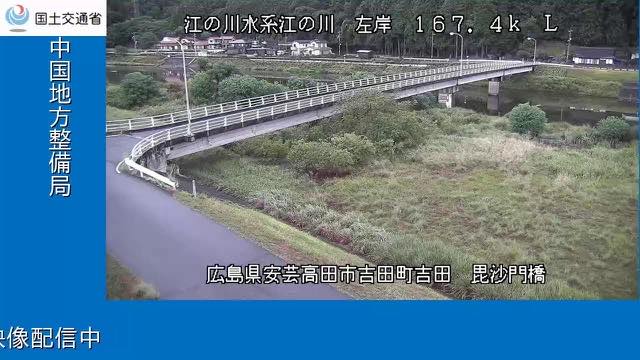
Gono River, Bishamon Bridge
Hiroshima · River
A camera on Bishamon Bridge, which crosses the upper Gono on the Hiroshima side. From here the river runs down to the north-east and gathers its tributaries at Miyoshi.
-
 Stream cover
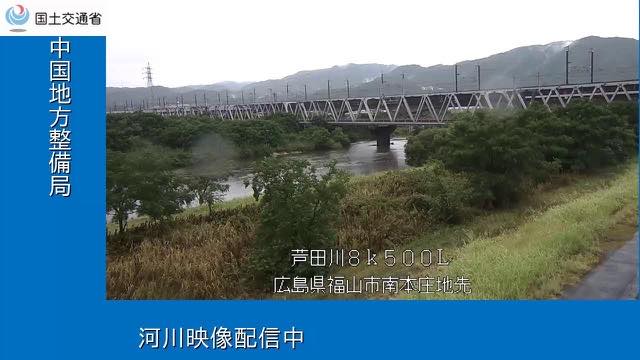
Ashida River in Fukuyama
Hiroshima · River
The Ashida River near its mouth, after it has passed through the middle of Fukuyama on its way to the Seto Inland Sea.
-
 Stream cover
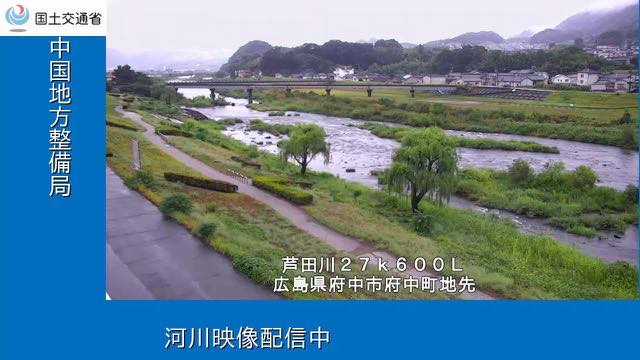
Ashida River in Fuchu
Hiroshima · River
The upper Ashida River, on the reach that runs through the town of Fuchu.
-
 Stream cover
Takaya River at the waterworks
Hiroshima · River
The Takaya River, which joins the Ashida, in front of a water treatment plant. A river that drinking water is taken from, shown plainly.
When to watch
The nine move most from June to July, in the rainy season, and from August to September, when the typhoons come. The rains of July 2018 hit the Inland Sea side of the Chugoku region hardest, and landslides struck in many parts of Hiroshima prefecture.
The rivers answer at different speeds. Tributaries like the Nenotani and the Takaya drain smaller areas and rise first, while the main stem of the Gono takes time for rain that fell upstream to arrive. Put three frames side by side just after the rain stops and the gap is visible.
Agencies publishing the cameras on this page
- MLIT river live streams (Government Standard Terms 2.0) — Official site
The footage belongs to each agency. This site is an unofficial guide, and each sample frame was copied once per camera under that agency's terms of use.