The sea
Sea cameras are not only showing you the sea
Of the 450 cameras on this site, 62 face the sea. But only 9 of them are watching the sea itself. The rest look across the water at an island volcano, or wait for animals that come in from the sea. A camera like Kurushima Strait, where the current shows up on screen, is the exception rather than the rule.
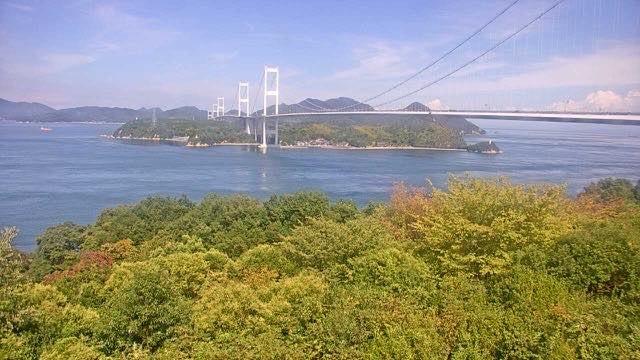
Only 9 are watching the water
The 62 cameras are spread over 12 countries and sea areas — 24 in Japan, 38 abroad. Of those, 9 carry no other subject than the sea. These 9 are what most people mean by a sea camera. Higashi-Harima coast is the one feed from Japan's river bureau that points at a beach instead of a river; what you watch there is wave height and tide level.
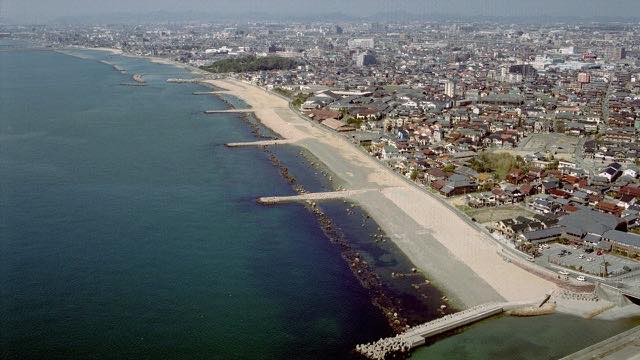
The other Japanese ones look at beaches and inlets. Yumigahama Beach fills with swimmers in summer, and for the rest of the year only the waves and the pines move. Ago Bay from Mount Yokoyama looks down on a ria coast with pearl rafts strung thin across the water, and Echizen watches a fishing harbour on the Sea of Japan, where a rough winter day puts the swell straight on screen.
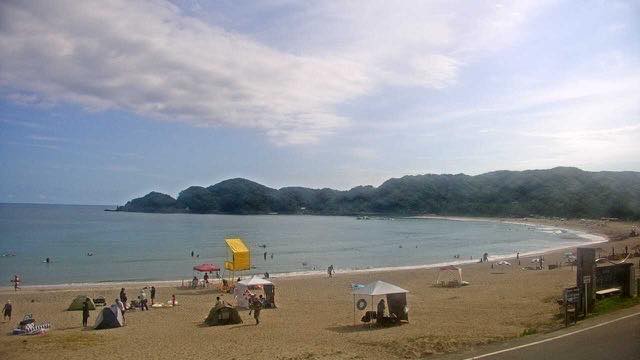
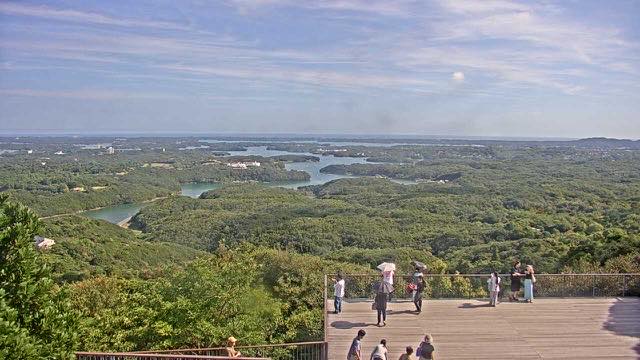
In Korea, Hagampo and the Jiri and Cheongseon shore face the Yellow Sea, where the tidal range is wide enough that the beach runs far out when the water drops. Taiwan's Houbihu and Chuanfanshi beach sit on the coral water off Kenting. How to read the tide is set out in Tides.
16 of them look across the sea at a volcano
16 of the sea cameras are also volcano cameras. The 12 Japanese ones belong to the Meteorological Agency's continuously monitored volcanoes: the sea is in frame because the volcano is an island. Izu Oshima looks from the northwest rim into the caldera of Mount Mihara, and Satsuma Iwojima catches the white plume that rises from Mount Iwo without stopping. Open one looking for a seascape and you get a mountain.
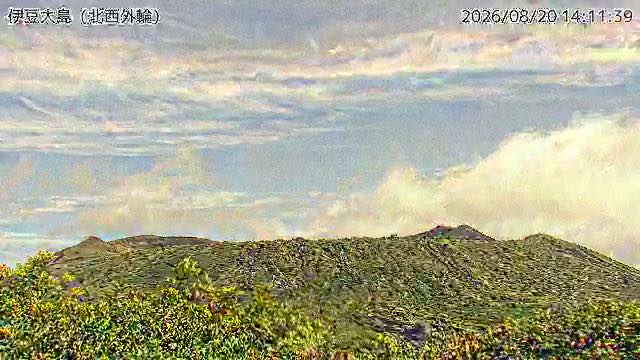
Some of them have the crater on the far side of the water. New Zealand's Whakatane coast watches Whakaari (White Island) out at sea, and whether the island is visible at all comes down to the day's visibility. Iceland's Surtsey keeps watch on an island born from an undersea eruption, closed to people so that the way life settles on bare lava can be followed from the outside.
Island volcano cameras lose the mountain even on clear days: the island is surrounded by water, so damp air runs straight into it. As the subject pages say, the Izu Islands are best in winter, and the Satsunan Volcanic Islands clear up from November to March. How volcano cameras work in general is in What volcano cameras are looking at.
19 are waiting for an animal
19 of them are also wildlife cameras. They are not showing you the sea; they are waiting for something that lives in it. 17 of the 62 come from explore.org, and most of those belong here.
- Orcas. Hanson Island and the rubbing beach at Robson Bight in Canada. The rubbing beach is where orcas come to rub against the small stones; the feed's own season is July to September (Orcas).
- Seabirds. On Seal Island in Maine, the puffin burrow is inside the nest and the loafing ledge looks down on the rocks (Puffins and Guillemots).
- Penguins. At Stony Point in South Africa, African penguins come back from the sea and walk up to nests set among the rocks and low scrub.
- Winter migrants. Kominato beach is a shallow shore on Mutsu Bay where the swans build up towards winter (When to watch the bird cameras).
Some of them are under the water
Kushimoto Marine Park films coral and fish directly from under the water, in the warm sea the Kuroshio brings up. Abroad, the Utila coral camera sits at 8 m and the Catalina camera under a pier in a kelp bed (Coral and Kelp).
Underwater cameras are not decided by the weather but by how cloudy the water is. A day with a swell, or the day after rain, goes milky; a calm day is clear. At Kushimoto the run-off comes down off the land, so skip the days after rain. Deeper down, the Okeanos Explorer streams whatever its remotely operated vehicle is lighting up on the seafloor — only while the ship is out on a cruise.
30 video feeds, 32 stills
Sea cameras split almost evenly: 30 video and 32 stills. Anything that moves as fast as a wave does not survive a still. Kurushima Strait updates once an hour, so the moment the current is actually running never lands in the frame; you read it off the pattern on the surface and the way the ships line up. If you want the waves themselves, pick a video camera.
A few are at their best late in the day. The Seto Inland Sea from Mount Washu faces west to southwest, so around sunset the water lights up and the islands drop into silhouette. In Portugal, the feed's own big-wave season at Nazaré runs from October to March.
Where to start
The full list of 62 is on Sea. There are also pages for one stretch of water at a time: The Seto Inland Sea, The Kuroshio Coast, The Izu Islands, Kenting, Tides and Sunrise and Sunset.
Cameras abroad show nothing while it is night there. Which cameras are in daylight now tells you where it is light. If you open one and see nothing at all, What is happening when a live camera shows nothing explains why, and How we handle the camera images covers the sources and the terms.