Lakes
Lake cameras often don't show the lake
22 cameras on this site have a lake or a pond in their name or their location. We opened the sample frame of every one of them, and only 17 actually have water in the picture. The other 5 stand on the shore of a lake and point somewhere else. Some, like Lake Kussharo from Bihoro Pass, are almost all water; others carry a lake in their title and show not a drop of it. The reason is simple: most of these cameras were put there to watch the mountain beside the lake, not the lake.
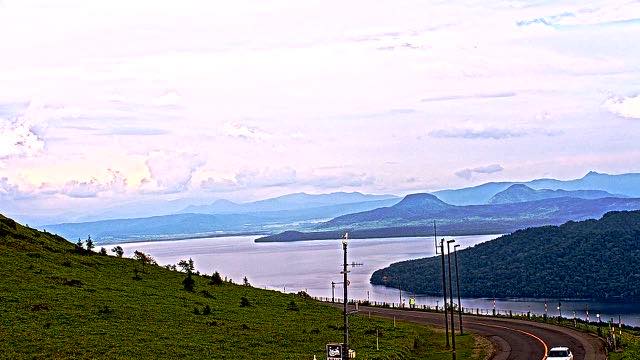
The 17 that do show water
13 are in Japan and 4 abroad. This site has no "lake" category, because the cameras were installed for different reasons — volcano monitoring, bird counts, national park information — and so they never gather in one place. Still, once there is water on screen, the way you read it is the same. On a windless morning the far shore is mirrored in the surface; as soon as a breeze comes up the reflection breaks and the water turns grey. A lake camera changes with the wind more than with the weather.
Lakes that freeze, lakes that don't
Two cameras in Hokkaido show opposite winters. Lake Kussharo freezes over, and when conditions line up the ice cracks and rises in a long ridge. Lake Shikotsu is deep enough that it barely freezes at all: everything around it turns white while the water stays black. Both lakes were made by volcanoes, both are in the same prefecture, and their winter pictures have nothing in common. Lake Yunoko in Oku-Nikko freezes too, setting a white surface against the old-growth forest around it. Times of day for watching them are in Volcanic lakes.
Cameras that show water in order to show birds
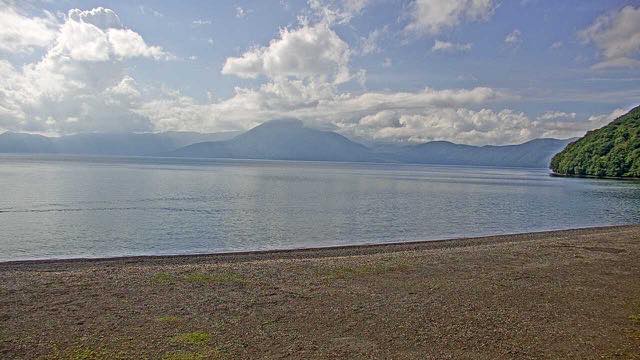
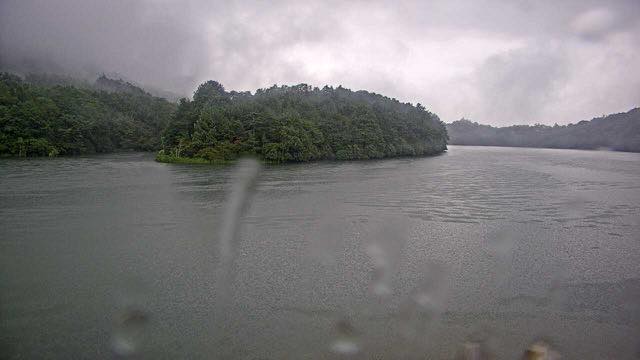
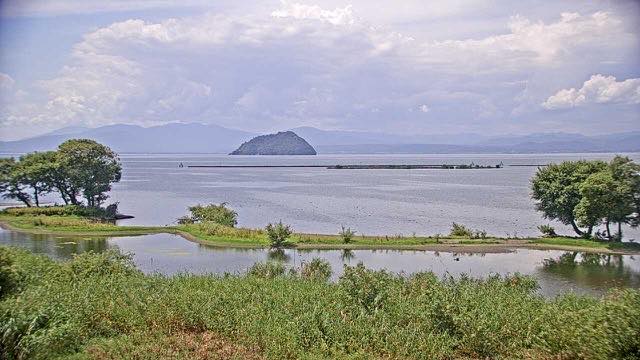
Lake Kutcharo, Lake Biwa, Izunuma and Lake Mikata are not about the lake but about the birds that winter on it. Outside the season you will see nothing but open water. Which month and which hour to open them is in When to watch the bird cameras. These four are framed closer to the water than any other lake camera here, so even out of season they are the best place to watch the colour of the surface and the way the waves build.
Water that collected in a crater
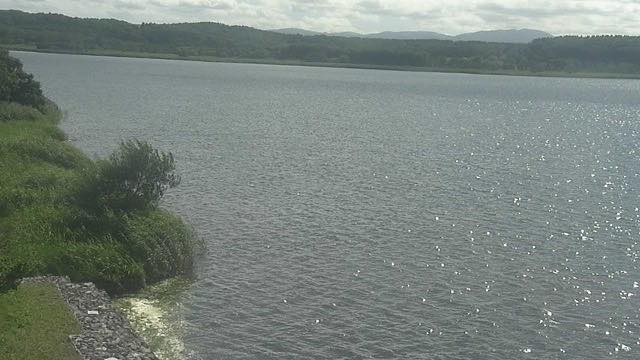
Some of them are lakes made a different way. Okama on Mt. Zao is water standing in a crater; the higher the sun, the deeper the green, because light reaches further into it. Towada is a lake that is itself the scar of an enormous eruption. Jigoku-numa on Mt. Hakkoda is a hot pond, and the colder the day, the whiter and thicker the steam. When the steam seems to grow, it is usually the temperature. Lake Towada from Hakka Pass, Renge-numa in Ura-Bandai and Ozenuma are watched less for the water than for the colour of the shore, so in autumn it is easier to start from Autumn Leaves.
The 4 abroad
Crater Lake sits in the caldera of a collapsed volcano. No river runs into it — only snowmelt and rain — so nothing arrives to cloud it, and that is why the screen goes a single blue. Glacier National Park looks out from the shore of Lake McDonald, water standing in a valley a glacier cut, and Isle Royale National Park looks out from a dock on an island in Lake Superior. Lake Mývatn is a shallow Icelandic lake, seen almost edge-on across the grass of its rim. All four are hours away from Japan, so check when to open them in Which cameras are in daylight now.
The 5 beside a lake with no lake on screen
This is the part you cannot work out without looking. The camera for Mt. Nikko-Shirane stands on the shore of Lake Chuzenji, but it faces the ridges to the west; the lake is behind it. Mt. Usu is in the town of Toyako, and the frame holds only the mountain. Mt. Kusatsu-Shirane is known for the crater lake Yugama, which is not in the frame, and Mt. Ruapehu from the north is the same: its crater lake is over the summit. Every one of them is a volcano-monitoring camera, and the lake only happens to be nearby.
The last one is a different story. Mt. Fuji from Lake Tanuki is a famous spot for the inverted Fuji that appears on the water on a windless morning — but the frame is largely taken up by the trees in front, and neither the lake nor the mountain comes out clearly. A good place and a good camera angle are two different things. Choosing by name will catch you out, which is why every card here carries a sample image. Which streams we copied a single frame from, and on what terms, is in How we handle the camera images.
Where to start
The lakes made by volcanoes are gathered in Volcanic lakes. For the lakes the birds come to, start from Wintering Swans; for the weeks when the shore changes colour, Autumn Leaves; for frozen water, Snow. The lakes abroad are in US and Korean National Parks and Parks With No Roads, and what to look for is in US national park cameras.
Many lake cameras refresh slowly, so reopening one often returns the same picture. What is going on when nothing shows is explained in What is happening when a live camera shows nothing. These are not instruments for judging water levels or weather. Before you travel, check with local authorities.