Nature
Glaciers: 12 Live Cameras — Iceland and the US
12 cameras on glaciers: 6 with ice in the frame, 3 with icefields and ice caps, and 3 looking at the land glaciers carved or left behind. In Iceland and the United States.
What you can see
Put the glacier cameras side by side and they show three separate things: the ice itself, the spread of the ice, and what is left once it has gone. Which stage a camera is watching decides where it points.
Six cameras with ice in the frame. At Höfn in Iceland, across the lagoon from the fishing town, white outlet tongues of the Vatnajökull ice cap fill the gaps between the dark peaks. Mendenhall Glacier and Nugget Falls in Juneau, Alaska, is a video camera on the glacier, the lake and the falls nearby. At Mount Redoubt the ice-filled summit crater is breached to the north, and the Drift Glacier flows out through the gap. Mount Iliamna is a 3,053 m stratovolcano with glaciers radiating from the summit. In Washington, Mount Rainier National Park is a huge glacier-clad stratovolcano, and North Cascades National Park looks at the Picket Range, a row of sharp, glacier-hung peaks.
Three cameras on icefields and ice caps. At Mount Veniaminof an active cone rises some 330 m above the ice inside a caldera filled by an icefield. Makushin is an 1,800 m volcano whose summit carries an icefield of about 40 km². Hveravellir in Iceland is a geothermal field at 640 m between the Langjökull and Hofsjökull ice caps, steam vents and hot springs in a desert of lava and gravel.
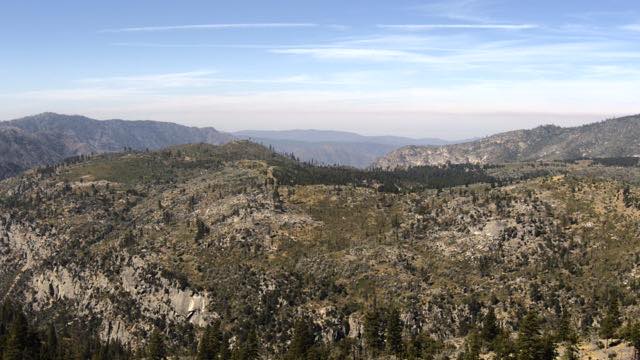
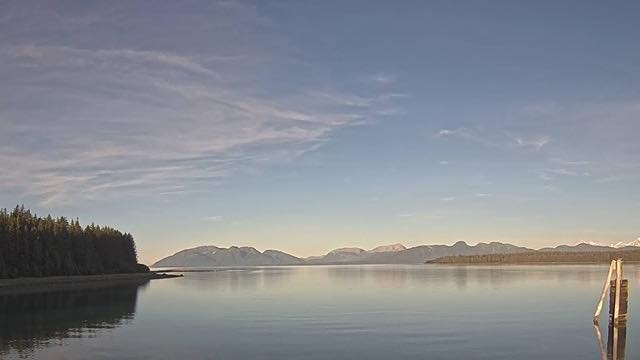
Three cameras on what glaciers left. Hardly any ice shows here; what shows is the shape the ice left behind. Glacier National Park is a range of sharp glacier-carved peaks and lakes, and Yosemite National Park a vast granite valley carved out by glaciers. Glacier Bay National Park is an inlet that was buried under ice 250 years ago, now a sea of sea otters and humpback whales.
The reason to keep these 12 together: a glacier is not only the ice there now, it stays on as the shape of valleys and inlets. You can set a white ice tongue against a carved rock wall on the same day.
Cameras you can watch now: 12
1 video, 11 still. Tap one to open it in the camera list.
-
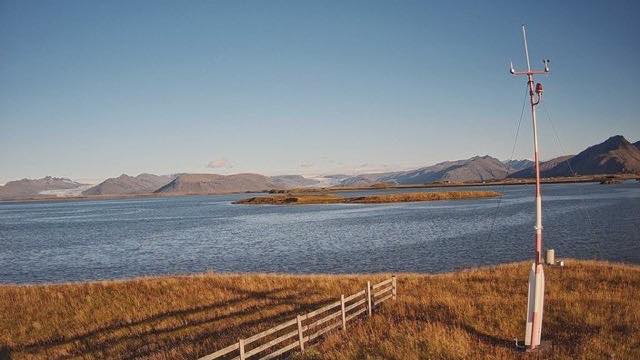 Sample September 2026
Höfn, looking north
Hornafjörður, southeast · Nature · Sea
From the fishing town of Höfn, across the lagoon to the mountains behind. White outlet tongues of the Vatnajökull ice cap fill the gaps between the dark peaks. Grazing land and a weather mast in the foreground.
-
Live video
Mendenhall Glacier and Nugget Falls
Alaska, Juneau · Nature
The Mendenhall Glacier and Mendenhall Lake, with Nugget Falls nearby. Mountain goats sometimes appear on the slope above the falls or higher on Mount Bullard: nannies with kids stay lower, billies tend to be alone and pick higher ground. They live here year-round on lichen and vegetation and grow a thick coat every autumn.
-
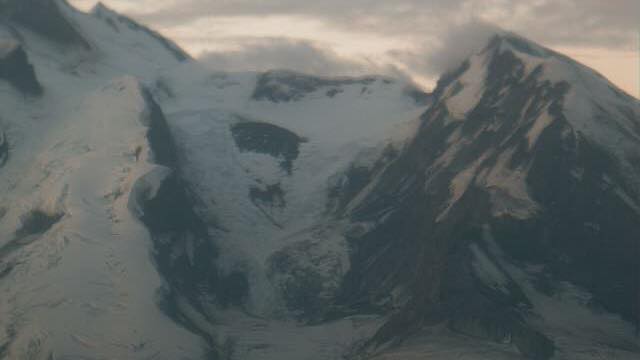 Sample September 2026
Mount Redoubt
Alaska · Volcano
A 3,108 m cone. Its ice-filled summit crater is breached to the north, and the Drift Glacier flows out through the gap.
-
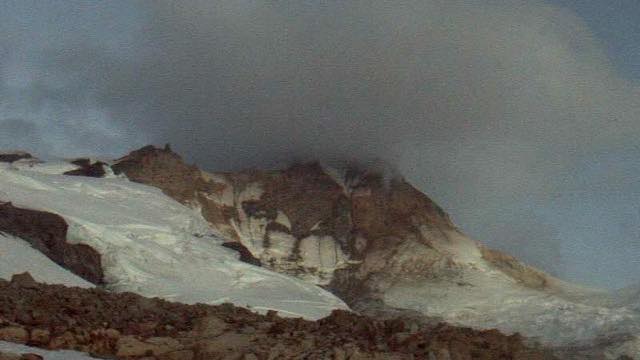 Sample September 2026
Mount Iliamna
Alaska · Volcano
A 3,053 m stratovolcano with glaciers radiating from the summit. There is no record of an eruption, yet steam keeps rising from its flank.
-
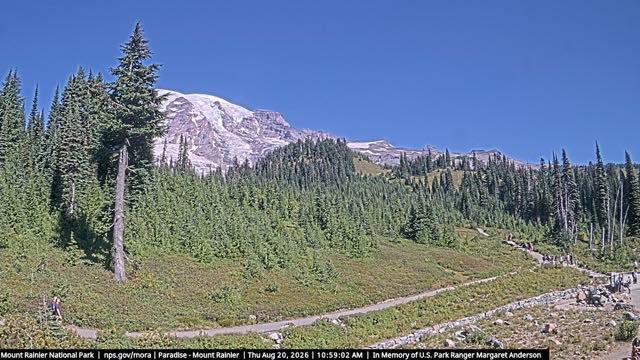 Sample September 2026
Mount Rainier National Park
Washington · Volcano · Nature
An enormous glaciated stratovolcano above forest and meadows. The days when the summit clears the cloud are limited.
-
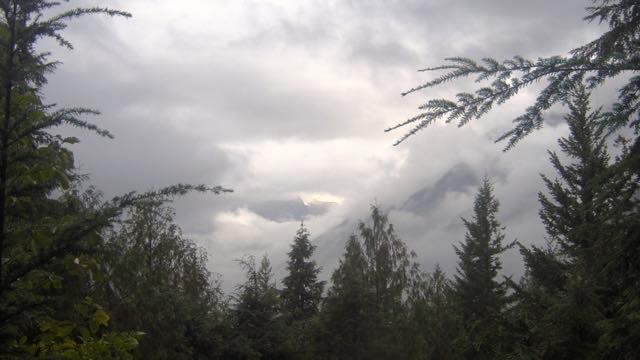 Sample September 2026
North Cascades National Park
Washington · Nature
The Picket Range seen from just outside the visitor center — a row of sharp, glacier-hung peaks.
-
Still image
Mount Veniaminof
Alaska · Volcano
Inside a caldera filled by an icefield stands an active cone rising some 330 m above the ice. Ice and fire share the frame.
-
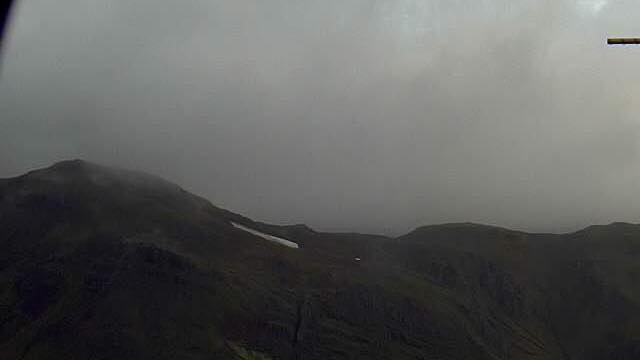 Sample September 2026
Mount Makushin
Alaska · Volcano
An 1,800 m volcano on the same island as Dutch Harbor, one of the busiest fishing ports in the United States. Its summit carries an icefield of about 40 km².
-
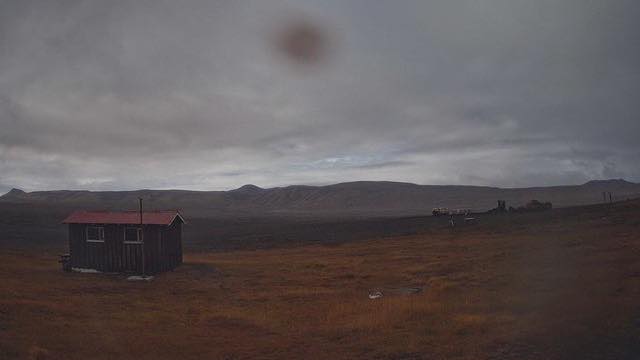 Sample September 2026
Hveravellir
Central Highlands · Nature
A geothermal field at 640 m, on the bare ground between the Langjökull and Hofsjökull ice caps. Apart from the patch of steam vents and hot springs it is lava and gravel desert, and the Kjölur road (35) that passes it is only open from early summer to autumn.
-
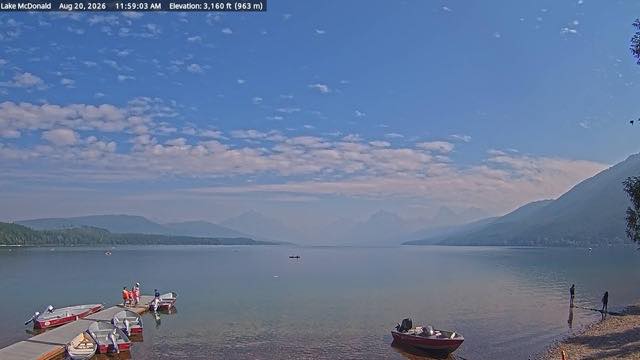 Sample September 2026
Glacier National Park
Montana · Nature
Sharp glacier-carved peaks and lakes. Snow lingers near the summits even in summer, and on clear days the ridgelines run a long way back.
-
 Sample September 2026
Yosemite National Park
California · Nature · World Heritage
A huge granite valley carved by ice. As the sun moves, hard shadows travel across the faces of Half Dome and El Capitan.
-
 Sample September 2026
Glacier Bay National Park
Alaska · World Heritage · Nature · Sea · Wildlife
An inlet that was buried under ice 250 years ago. Now it is a sea of sea otters and humpback whales, covered by four cameras including one on the dock.
When to watch
The operators publish no viewing season, and we will not invent one here. The ice tongues, the size of the icefields and the inlet that was ice 250 years ago all come from the camera descriptions. Nothing is said about when the ice grows or shrinks, so we set nothing.
The time difference depends heavily on where. The 2 cameras in Iceland are 9 hours behind Japan, with no daylight saving time, so evening in Japan is morning there. The 6 in Alaska are 17 hours behind on daylight time and 18 on standard time, the 3 in Washington and California 16 and 17 hours, and the 1 in Montana 15 and 16 hours (calculated 2026-09-17). For the 10 in the United States, their daytime is the middle of the night to dawn in Japan.
The 2 Icelandic cameras refresh every 10 minutes. Mendenhall Glacier is a video stream and keeps moving while it is open. The rest are still cameras, so a black frame comes back while it is night there. White ice melts easily into a white sky, so open these expecting to wait for a day when the outline shows.
If it isn't showing
The cameras come from the Icelandic Meteorological Office, the US National Park Service, the Alaska Volcano Observatory and explore.org. There are no sample images for Mendenhall Glacier or Mount Veniaminof, either because the provider does not allow copies of its images or because no usable frame has been captured yet; see How we handle the camera images.
For the relationship between ice and volcanoes alone, Ice-Clad Volcanoes fits better. Snow through the whole year is on Snow.
Each place in full: Iceland (Höfn, Hveravellir), Alaska Ice and Volcanoes (Mendenhall Glacier), Cook Inlet Volcanoes (Redoubt, Iliamna), Alaska Peninsula Volcanoes (Veniaminof), East Aleutian Volcanoes (Makushin), Cascades and Redwoods (Mount Rainier, North Cascades), Rocky Mountain Parks (Glacier), Parks With No Roads (Glacier Bay) and US and Korean National Parks (Yosemite).
For reading the time difference, see Which cameras are in daylight now.
Where to find Glaciers
Agencies publishing the cameras on this page
- Alaska Volcano Observatory (Free to use with credit) — Official site
- Icelandic Meteorological Office (Free to use with credit) — Official site
- U.S. National Park Service (U.S. government work) — Official site
- explore.org (Deep links and embeds OK, no image reuse) — Official site
The footage belongs to each agency. This site is an unofficial guide, and each sample frame was copied once per camera under that agency's terms of use.