Region
Shiga Live Cameras in Japan — 2 official webcams
Waterbirds on Lake Biwa, and river cameras on the Seta and Yasu. The northern shore of Lake Biwa is one of the main wintering grounds for Bewick's swans in Honshu.
What you can see
One waterbird camera from the Ministry of the Environment and one river camera from the Ministry of Land, Infrastructure, Transport and Tourism. Both connect to Lake Biwa — one shows the birds that come to it, the other the water that leaves it.
Waterbirds of Lake Biwa faces the northern shore near Nagahama, with Mount Ibuki and the ranges behind. Its strength is that it still works as a lake view when there are no birds. The Seta river is the lake's only outlet, and how much water is let through here governs the level of the lake itself. One camera tells you where all the rain that falls on Biwa finally goes.
What the Setagawa camera shows is the first stretch of a river with three names. Water leaving Lake Biwa is called the Seta; entering Kyoto Prefecture it becomes the Uji; and once the Katsura and Kizu join it in Osaka Prefecture it is the Yodo. The same water runs to Osaka Bay under changing names, and this one camera stands at its starting point. That is why regulating the level of Lake Biwa feeds straight through into how much water the prefectures downstream receive.
2 cameras in Shiga
1 video, 1 still. Tap one to open it in the camera list.
-
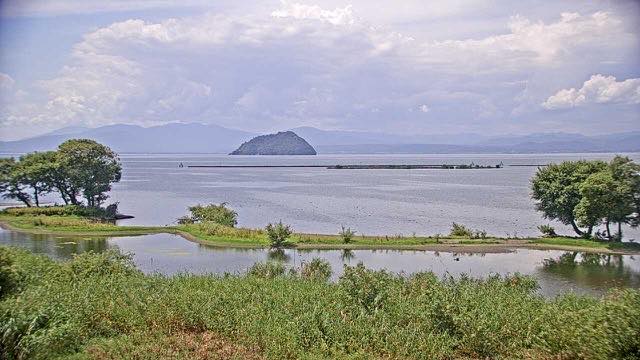 Sample August 2026
Waterbirds on Lake Biwa
Nagahama, Shiga · Wildlife · Nature
The north shore of Japan's largest lake. In winter it becomes a wintering ground for Bewick's swans and ducks; how crowded the water is tells you the season.
-
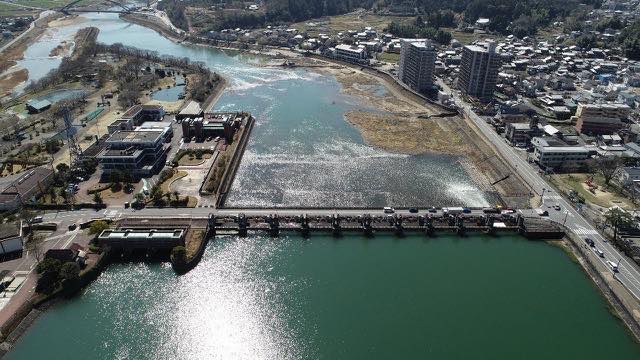 Stream cover
Seta and Yasu Rivers
Shiga · River
The Seta is the only outlet of Lake Biwa. How much water is let through here sets the level of the lake itself.
When to watch
The Lake Biwa camera faces the Nagahama side, with Mount Ibuki and the ranges behind it. Its strength is that it still works as a lake view when there are no birds at all. For Bewick's swans the season is winter, with numbers peaking from December to February.
Compare it with Yonago Waterbird Sanctuary in Tottori, which watches the same species, and the distance these birds travel starts to feel real.
Closer looks at cameras here
Agencies publishing the cameras on this page
- MLIT river live streams (Government Standard Terms 2.0) — Official site
- Ministry of the Environment — Internet Nature Institute (PDL 1.0) — Official site
The footage belongs to each agency. This site is an unofficial guide, and each sample frame was copied once per camera under that agency's terms of use.