Culture
Temple and Shrine Approaches: 23 Live Cameras in Japan
The lane up to Kiyomizu-dera, both approaches to Fushimi Inari, the arcade to Senso-ji. Twenty-three cameras put up to show how busy it is right now.
What you can see
These 23 cameras were not installed to show scenery. They are there to tell you how many people are on the approach right now, before you set off. Twelve of the Kyoto cameras belong to the transport ministry's Kyoto National Highway Office, which watches them for road congestion; four belong to the Kyoto City Tourism Association, which uses them to spread visitors across different times and places. The rest come from the temples and shrines themselves, or from shops at their gates: Senso-ji runs its own two, Higashi Hongan-ji is filmed from the Buddhist-goods shop across the street, Tsurugaoka Hachiman-gu from a shop on the approach, Zenko-ji by the local cable company, Kinpusen-ji by the temple, and Izumo Taisha by the Shimane prefectural tourism federation.
Twenty-two of the 23 are live video. A still image once an hour cannot show a flow of people, so cameras meant to show crowding end up being video. The one exception is Izumo Taisha, a still camera that cycles through three directions roughly every ten seconds.
You can read the crowd because each frame contains something that does not move: the count of stone steps, the gap between torii pillars, the run of roofs down the Senso-ji arcade. On the Kiyomizu lane the paving stones are still visible early on, and the slope fills in as the day goes on. The two Senso-ji cameras face opposite ways from the same height, so you can see the precinct and the arcade one after the other. Fushimi Inari has one camera on each of its two approaches — compare them and you can see which one is moving.
That said, not all 23 are busy places. Ohaharano-jinja's approach runs through woodland, Jakko-in is up a flight of steps deep in Ohara, Zuishin-in is quiet for most of the year outside plum season, and Daikaku-ji has grounds wide enough to disperse its visitors. If you are trying to avoid crowds, those are the more useful views.
Cameras you can watch now: 23
22 video, 1 still. Tap one to open it in the camera list.
-
Live video
Senso-ji, towards Kaminarimon
Taito, Tokyo · World Heritage · City
The same height, turned the other way. Nakamise street runs off in a straight line, and the band of people heading for the Kaminarimon gate can be followed right to the end. The rows of roofs on either side mark the way.
-
Live video
Senso-ji, towards the main hall
Taito, Tokyo · World Heritage · City
The grounds seen from under the eaves. The Hozomon gate stands ahead, and directly below the camera people climb and descend the stone steps of the hall in front.
-
Live video
Dankazura, Tsurugaoka Hachimangu
Kamakura, Kanagawa · World Heritage · City
The raised walkway running down the middle of Wakamiya-oji. Cherry trees line both sides and a vermilion torii stands at the far end. The pavement on the right is the way up to the shrine.
-
Live video
Zenko-ji temple
Nagano, Nagano · World Heritage
Two cameras on the great gate, alternating between a view of the main hall and a view down the shopping street of the approach. The operator says so in the stream description.
-
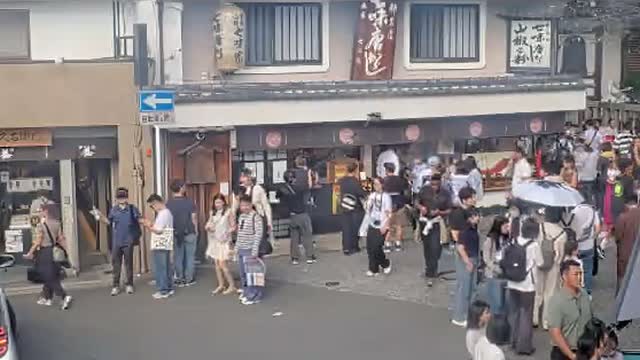 Sample October 2026
Kiyomizu-zaka slope
Higashiyama, Kyoto · World Heritage · City
The approach that climbs to Kiyomizu-dera, souvenir shops packed along both sides. Early in the morning the stone paving is still visible; towards midday the slope fills with a solid band of people.
-
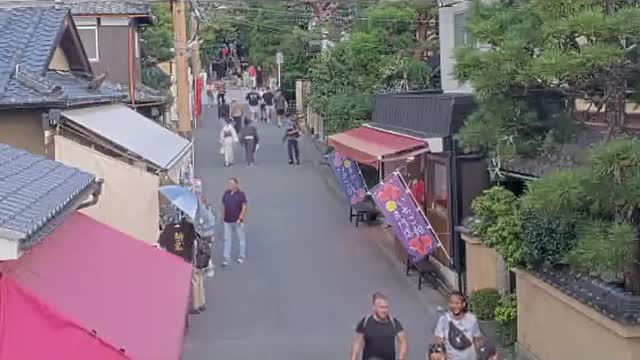 Sample October 2026
Ginkaku-ji, the Silver Pavilion
Sakyo, Kyoto · World Heritage
The gate of Jisho-ji. The approach runs between tall clipped hedges, and the queue for admission forms along it. In autumn the movement stops from morning on.
-
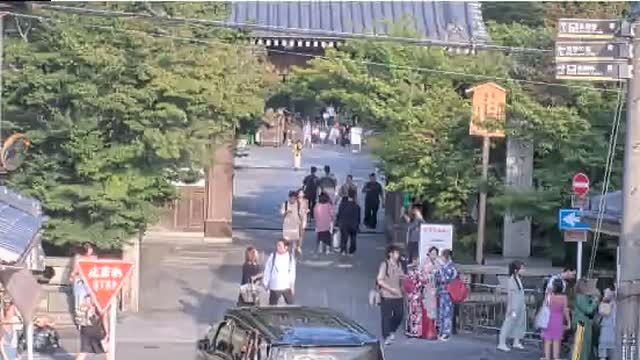 Sample October 2026
Eikan-do temple
Sakyo, Kyoto · World Heritage · Nature
The gate of Zenrin-ji, known as the Eikan-do of the maples. In the second half of November the trees turn all at once and the scene changes inside an unmoving frame.
-
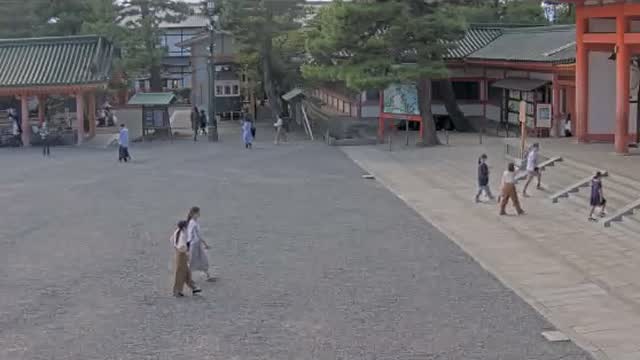 Sample October 2026
Heian Jingu shrine
Sakyo, Kyoto · World Heritage
The great vermilion torii and the Otenmon gate. The approach is wide enough to read the density of the crowd from a distance. In October the Jidai Matsuri procession passes right here.
-
Live video
Kitano Tenmangu shrine, front
Kamigyo, Kyoto · World Heritage
The first torii of the shrine of the god of learning. The plum in February and the market on the 25th of each month draw people, and the queue lengthens through the exam season.
-
Live video
Higashi Hongan-ji
Shimogyo, Kyoto · World Heritage
The great roofs of the Founder's Hall and the Amida Hall, looked down on from the building opposite. The two halls stand side by side, with cars and people moving along the street in front.
-
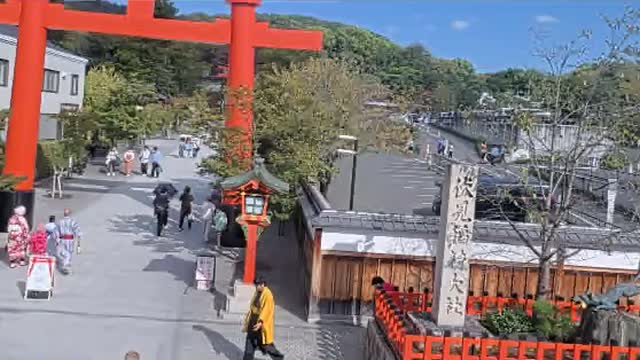 Sample October 2026
Fushimi Inari Taisha, main approach
Fushimi, Kyoto · World Heritage
The approach to the tower gate of the shrine famous for its tunnels of torii. The grounds never close, so there are often people about even in the small hours.
-
Live video
Fushimi Inari Taisha, rear approach
Fushimi, Kyoto · World Heritage · City
The narrow lane of restaurants and stalls that runs to the shrine alongside the main approach. Compare it with the camera on the main approach and you can see at once which way is flowing.
-
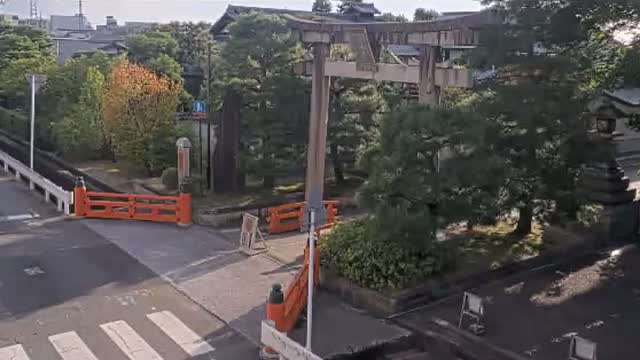 Sample October 2026
Jonangu shrine
Fushimi, Kyoto · World Heritage · Nature
Known as a shrine of protection from misfortune, and famous for its garden of weeping plum. When the blossom opens from late February into March the approach grows visibly busier.
-
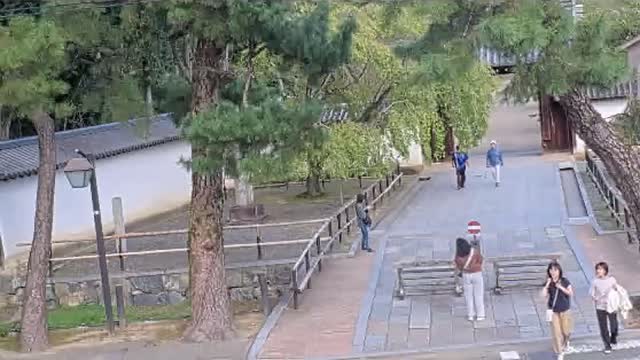 Sample October 2026
Daigo-ji temple
Fushimi, Kyoto · World Heritage
The grounds of the temple where Toyotomi Hideyoshi held his famous blossom viewing. Cherry in spring, colour in autumn: only the background to the halls is repainted by the season.
-
 Stream cover
Zuishin-in temple
Yamashina, Kyoto · World Heritage
A temple associated by tradition with the poet Ono no Komachi. Visitors gather only when the plum garden comes out at the end of March; the rest of the year is long and quiet.
-
Live video
Daikaku-ji temple
Ukyo, Kyoto · World Heritage
An imperial temple in Sagano, its wide grounds holding the Osawa pond. A famous place for viewing the moon; the space spreads people out, so it rarely feels crowded.
-
Live video
Seiryo-ji, the Saga Shakado
Ukyo, Kyoto · World Heritage
The Nio gate of the temple at the heart of Sagano. The ground in front opens out like a square, and the flow of people walking north from Arashiyama slackens here.
-
 Sample October 2026
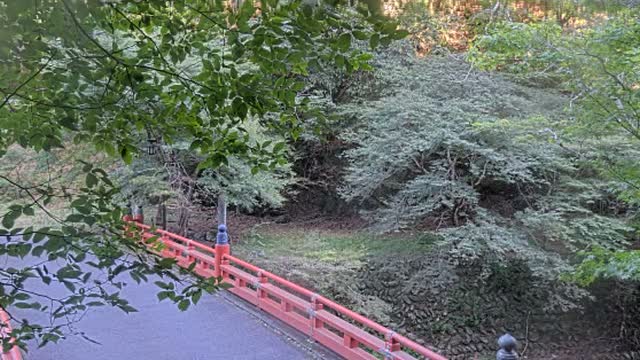
Jingo-ji temple
Ukyo, Kyoto · World Heritage · Nature
A temple in the mountains of Takao, at the top of a long stone stairway from the Kiyotaki river. A noted place for autumn colour: when the valley turns, the whole approach looks different.
-
 Sample October 2026
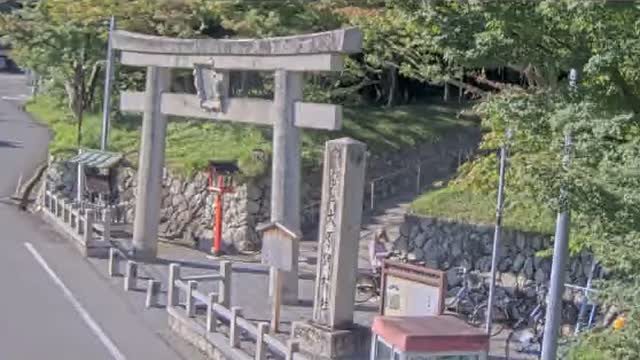
Oharano shrine
Nishikyo, Kyoto · World Heritage · Nature
An old shrine at the foot of the western hills. The approach runs through woods, and with fewer visitors than the famous temples the quiet under the trees lasts a long time.
-
 Sample October 2026
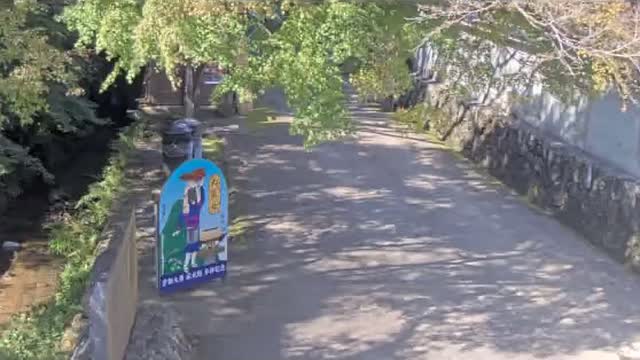
Jakko-in temple
Sakyo, Kyoto · World Heritage · Nature
A convent deep in the village of Ohara, reached by a stone stairway through cedars. High enough above the city that on a snowy day this place alone turns white.
-
 Stream cover
Kifune shrine
Sakyo, Kyoto · World Heritage · Nature
The lantern-lined stone stairway of a shrine set in the Kurama valley. It is cooler here than in the city: in summer people pass on their way to the riverside platforms, and in winter snow can lie here alone.
-
Live video
Kinpusen-ji, the Zao-do
Yoshino, Nara · World Heritage
The hall at the heart of Mount Yoshino, seen head-on. The great roof fills the frame, and the people walking in front of it show how tall it is.
-
Still, every 10 sec
Izumo Taisha, Shinmon-dori
Izumo, Shimane · World Heritage · City
Stills of the approach to Izumo Taisha. Facing south it takes in the great torii at Ukabashi, facing north the great torii at Seidamari, switching between three directions about every ten seconds.
When to watch
A temple camera shows nothing outside visiting hours. Where the gates close, the approach empties once they do. Fushimi Inari is the exception: it never closes its gates, so there are often people on the path even in the small hours.
Early morning is emptiest — the paving on the Kiyomizu lane is still showing. The worst is midday during a seasonal event.
The seasons split cleanly by camera. February and March are plum: Kitano Tenman-gu (which also draws exam-season worshippers and a fair on the 25th of every month), the weeping plums at Jonan-gu from late February, and the plum garden at Zuishin-in at the end of March. Spring is cherry: Daigo-ji, famous for Hideyoshi's blossom party, and the raised centre walk at Tsurugaoka Hachiman-gu, planted with cherries on both sides. October brings the Jidai Matsuri, whose procession passes in front of Heian-jingu. Late November is autumn colour: the gate of Zenrin-ji, known as 'Eikan-do of the maples', Jingo-ji up in Takao where the whole valley turns, and the hedged approach to Ginkaku-ji, where movement stops from morning onward.
The first three days of January are when this page earns its keep. Fushimi Inari, Senso-ji, Zenko-ji and Izumo Taisha all fit the New Year queue inside the frame. Open them before deciding whether to go.
Snow divides by altitude. Kifune-jinja and Jakko-in sit higher than the city, and can be white on a day when central Kyoto has nothing.
If it isn't showing
Kyoto's cameras also cover roads, rivers and station forecourts; all of them together are on Kyoto live cameras. For how to use them, see Reading Kyoto's crowds before you go.
To follow the autumn colour alone, see Autumn Leaves; Mount Yoshino itself is on Mount Yoshino, and the garden beside the old palace is on Kyoto Imperial Garden. The twelve station and crossing cameras are on Shibuya Crossing & Station Fronts.
Where to find Temple and Shrine Approaches
Agencies publishing the cameras on this page
- INC Nagano Cable Television (Links free, no reuse) — Official site
- Kinpusen-ji Temple (Links free, no reuse) — Official site
- Kyoto City Tourism Association (Links free, no reuse) — Official site
- Kyoto National Highway Office, MLIT (PDL1.0) — Official site
- Morishin Saburo Shoho (Non-commercial use only, no reuse) — Official site
- Senso-ji Temple (Links free, no reuse) — Official site
- Shimane Prefecture Tourism Federation (Notify before linking, no reuse) — Official site
- Toshimaya (Links free, no reuse) — Official site
The footage belongs to each agency. This site is an unofficial guide, and each sample frame was copied once per camera under that agency's terms of use.