Nature
First Snowcap: 16 Live Cameras in Japan
For 44 mountains, the Japan Meteorological Agency records hatsukansetsu — the first day each season that the summit is seen turning white from the observatory at its foot. These 16 cameras cover 13 of those mountains, in the order the day usually comes: Mount Asahi on 25 September, Sakurajima on 18 December.
What you can see
Kansetsu means snow or hail lying near the summit so that it looks white. The amount does not matter. The first day it looks that way from the observatory, within the cold-season year that runs from 1 August to 31 July, is that mountain's first snowcap. Nobody climbs up to measure it — it is decided by eye, from the foot of the mountain.
Mount Fuji is the exception. Its first snowcap cannot be counted until after the day the Fuji summit weather station records its highest daily mean temperature of the year. Snow that appears while summer is still peaking does not count, and an early announcement is sometimes withdrawn for exactly that reason.
And the observation itself changes this winter. In a release dated 31 July 2026, the agency said that from the coming cold season it will stop relying on staff looking at the peak and instead report summit snow from analysed snow depth, built out of AMeDAS stations, weather radar and the Himawari satellite. Cloud and darkness will no longer hide the summit — but the older idea of a day someone could see from below reaches its end for these 44 mountains.
Four of the cameras here sit on the mountain rather than below it — Mount Asahi, Midagahara, Jigokunuma on Hakkoda, Okama on Mount Zao. They are already at the height where the snow falls, so they whiten before any observatory could announce it. The distant ones — Mount Gassan, Mount Haku, Mount Asama, Mount Fuji — have the same problem the observers do: on a cloudy morning they show nothing at all. That is why so many of the sample images on this page are hazy.
Cameras you can watch now: 16
All 16 are still images. Tap one to open it in the camera list.
-
 Sample August 2026
Mount Asahi, Daisetsuzan
Higashikawa, Hokkaido · Volcano · Nature
The highest peak in Hokkaido. White steam rises constantly from Jigokudani midway up, seen looking up from the Sugatami area at the top of the ropeway.
-
 Sample August 2026
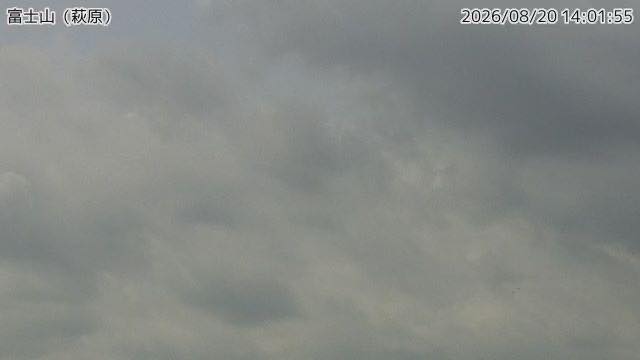
Mount Fuji (JMA camera)
Shizuoka / Yamanashi border · Volcano · Nature
This site also carries the ministry's erosion-control cameras on Fuji; this one was placed by the Meteorological Agency to watch the volcano. Different purpose, different aim.
-
 Sample August 2026
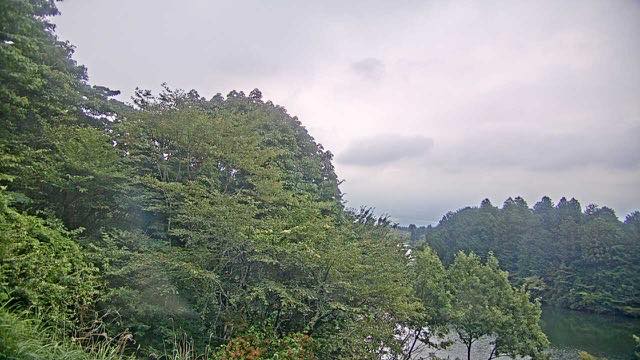
Mount Fuji from Lake Tanuki
Fujinomiya, Shizuoka · Nature
The classic head-on view of Fuji across the water. On a windless morning the whole mountain is mirrored in the lake.
-
 Sample August 2026
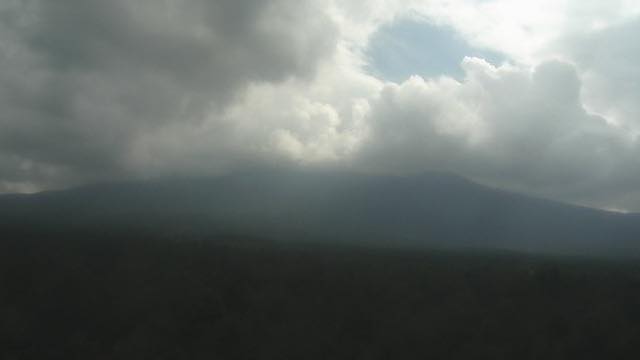
Mount Fuji from the northern flux site
Fujiyoshida, Yamanashi · Nature
A camera at a research site measuring how much carbon dioxide the forest takes up. Fuji through the trees — not the postcard composition.
-
 Sample August 2026
Midagahara
Toyama · Volcano · Nature
A plateau west of Tateyama. The area called Jigokudani vents hydrogen sulphide, and access is still restricted.
-
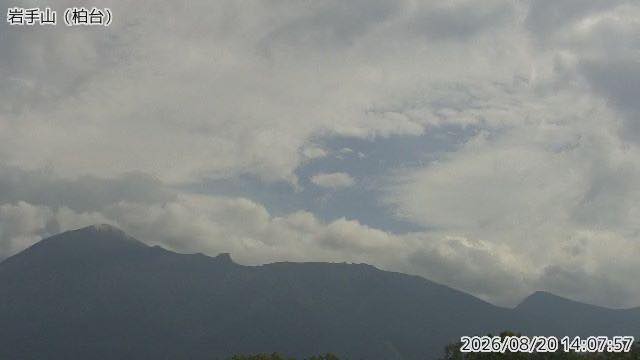 Sample August 2026
Mount Iwate
Iwate · Volcano · Nature
Rising northwest of Morioka, also called Nambu-Fuji. A clean cone from the west, a ragged ridge from the east — the outline is entirely different.
-
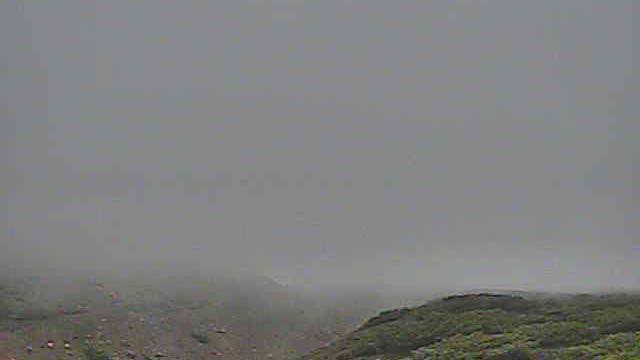 Sample August 2026
Mount Meakan
Ashoro, Hokkaido · Volcano
The one mountain in the Akan group still venting steam from its crater. The view is from the side of the cone-shaped Akan-Fuji next to it.
-
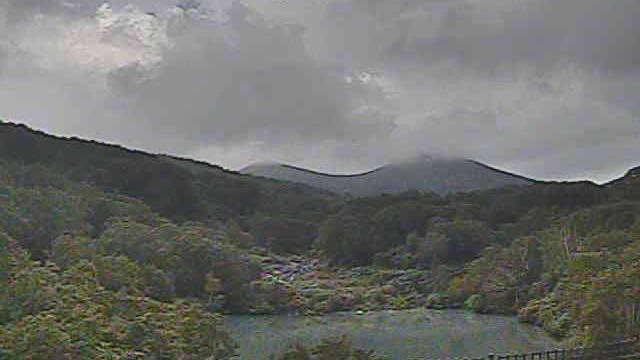 Sample August 2026
Jigokunuma, Hakkoda
Aomori · Volcano · Nature
A pond beside Sukayu hot spring, clouded by steam and hot water. Sulphur hangs in the air, and in winter snow and steam mix together.
-
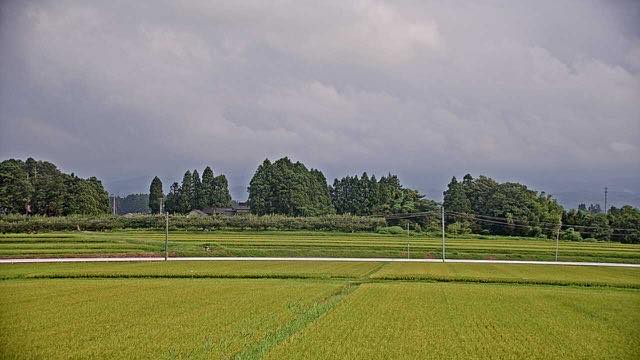 Sample August 2026
Mount Gassan from Haguro
Tsuruoka, Yamagata · Nature
One of the three Dewa mountains seen from the plain. The broad, gentle body of the mountain often keeps streaks of snow into summer.
-
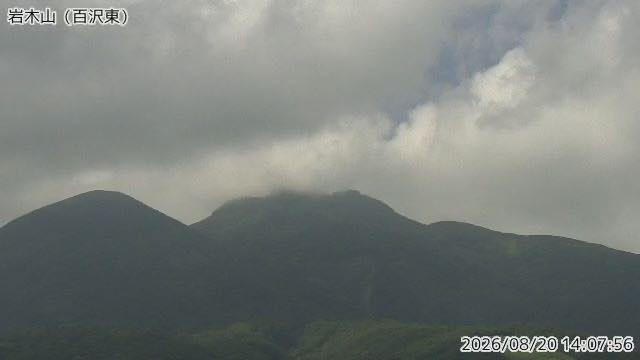 Sample August 2026
Mount Iwaki
Hirosaki, Aomori · Volcano · Nature
A free-standing peak visible from anywhere on the Tsugaru plain. Its long, spreading flanks above the apple orchards are a familiar sight.
-
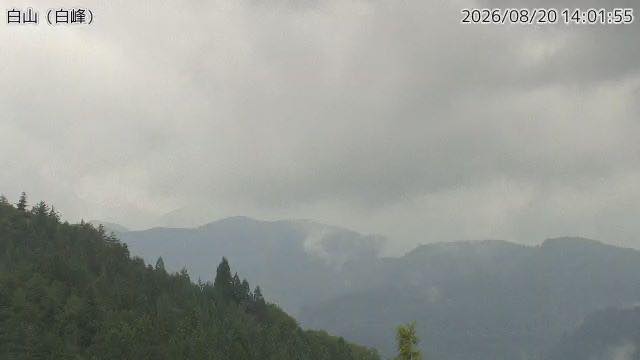 Sample August 2026
Mount Haku
Ishikawa / Gifu border · Volcano · Nature
With Fuji and Tateyama, one of the three mountains of old Japanese religious practice. Its eruption record ends in the Edo period and it has been quiet since.
-
 Sample August 2026
Mount Azuma
Fukushima / Yamagata border · Volcano
Crossed by the Bandai-Azuma Skyline. Oana crater near Jododaira still vents steam, and its activity rises and falls in cycles.
-
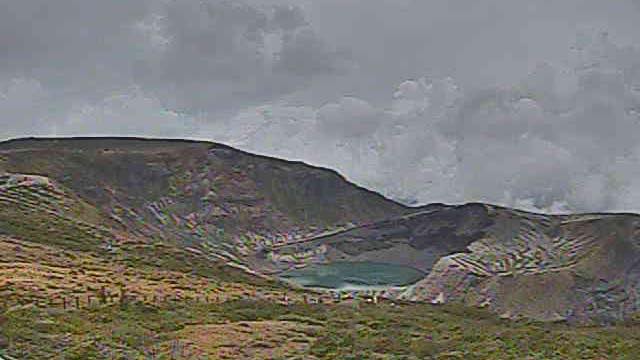 Sample August 2026
Okama, Mount Zao
Miyagi / Yamagata border · Volcano · Nature
Okama sits small in the middle of the frame, beyond the ridge in front. The view is from the Katta side, so when cloud drops the green water disappears. Updated every two minutes by the Japan Meteorological Agency.
-
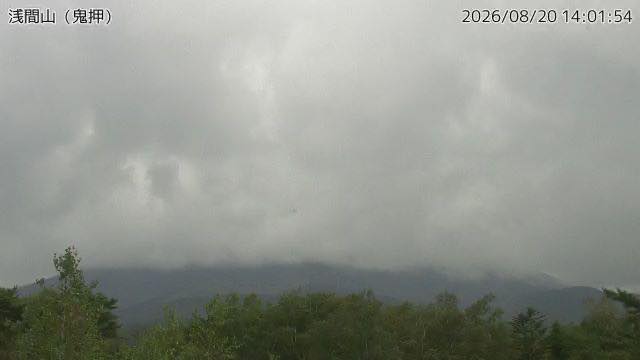 Sample August 2026
Mount Asama
Gunma / Nagano border · Volcano
One of the most frequently erupting volcanoes in Japan. Around the camera at Onioshi, lava from the 1783 eruption is still lying where it stopped.
-
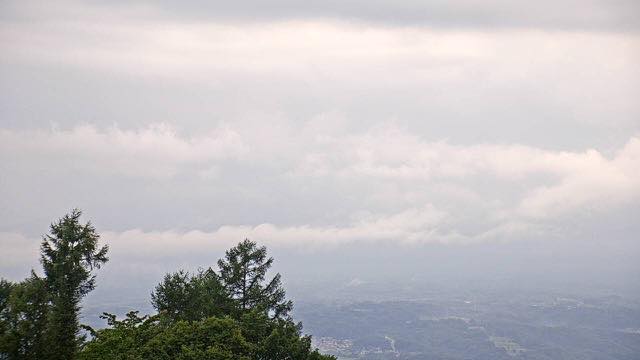 Sample August 2026
Mount Asama from Tsumagoi
Tsumagoi, Gunma · Volcano
An active volcano with long, gentle flanks. The plume and the snow near the summit tell you both the season and how active it is.
-
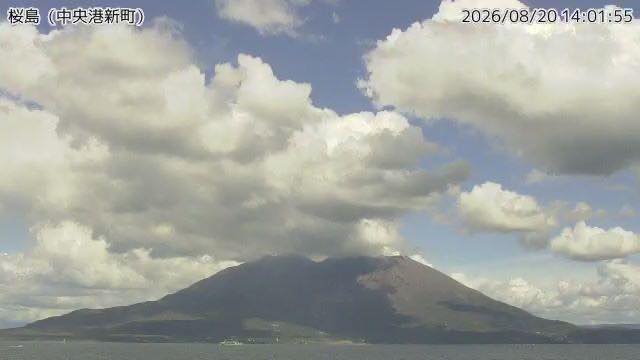 Sample August 2026
Sakurajima (JMA camera)
Kagoshima · Volcano
Across the water from central Kagoshima, one of the most frequently erupting volcanoes in Japan. A different angle on it than the ministry's cameras.
When to watch
The usual dates, averaged over 1991–2020 and taken in order: 25 September Mount Asahi, 2 October Mount Fuji, 12 October Tateyama, 13 October Mount Iwate, 17 October Mount Meakan, 19 October Hakkoda, 20 October Mount Gassan, 21 October Mount Iwaki and Mount Haku, 26 October Mount Azuma, 28 October Mount Zao, 31 October Mount Asama, 18 December Sakurajima. That is 84 days from the first to the last.
Year to year the date moves more than autumn colour does — a month either way is normal — because it depends less on whether snow fell than on whether the summit happened to be visible that day.
Morning is the time to look. Through October and November cloud builds over these mountains before noon, so the distant cameras only have a clear peak early. On the morning after a fall, the white and the bare rock are as separate as they ever get.
Twelve of the cameras belong to the Meteorological Agency and refresh every two minutes; four belong to the Ministry of the Environment and refresh hourly. All 16 are still images, and all of them go dark at night — you need light to see something white.
If it isn't showing
The recorded day is not the day the snow fell. It is the day the snow was seen. Snow can sit on the summit for a week while cloud keeps the announcement waiting for a clear sky, and the cameras on this page wait with it.
Snow has no colour, so there is none of the slow turning that autumn leaves give you. A slope that was brown yesterday is simply white the next time the weather clears. Rather than checking daily, open these on the morning after rain or snow.
The same mountains in colour are on Autumn Leaves; the mountains themselves on Tohoku volcanoes and Midagahara; and the last one of the year on Sakurajima.
Where to find First Snowcap
- Hokkaido17
- Shizuoka5
- Yamanashi2
- Toyama4
- Iwate2
- Aomori4
- Yamagata2
- Ishikawa6
- Fukushima4
- Miyagi2
- Gunma7
- Kagoshima9
Agencies publishing the cameras on this page
- Japan Meteorological Agency — volcano surveillance cameras (PDL 1.0) — Official site
- Ministry of the Environment — Internet Nature Institute (PDL 1.0) — Official site
The footage belongs to each agency. This site is an unofficial guide, and each sample frame was copied once per camera under that agency's terms of use.