World Heritage
Few live cameras are World Heritage
This site files 48 cameras under "World Heritage and landmarks". But only 12 of them stand inside an area actually inscribed by UNESCO. Some, like Mount Yoshino, Kaminosenbon, sit within the inscribed boundary. Others look at a street that runs right past a World Heritage temple without ever showing it. The remaining 36 are places with a different label — National Treasures, Special Places of Scenic Beauty, preservation districts. Here is which is which, checked against the inscription lists themselves.
The 12 that stand on World Heritage ground
5 are in Japan and 7 are abroad, and the split is unusually clean: all 5 Japanese ones are cultural sites, all 7 foreign ones are natural sites. That difference shows on screen. At the cultural sites the subject is people arriving and leaving, so the picture changes with the hour and the day of the week. At the natural sites the subject is weather — the same frame, with only the light and the cloud moving.
The 5 in Japan belong to two inscriptions
Ginkaku-ji and Daigo-ji are component parts of "Historic Monuments of Ancient Kyoto". That inscription is made up of seventeen temples, shrines and a castle, and these two are the only ones a camera points at. Both show a precinct or an approach rather than the building head-on. Note also that the Kyoto feeds, these two included, use a title card as the thumbnail on their streaming page: the temple's name in large type. That card is what you see on the card in our list, not the live picture behind it.
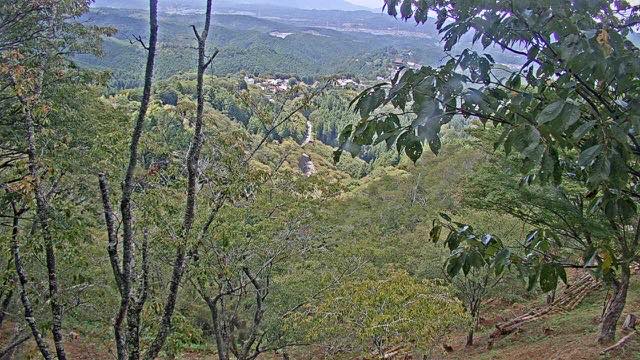
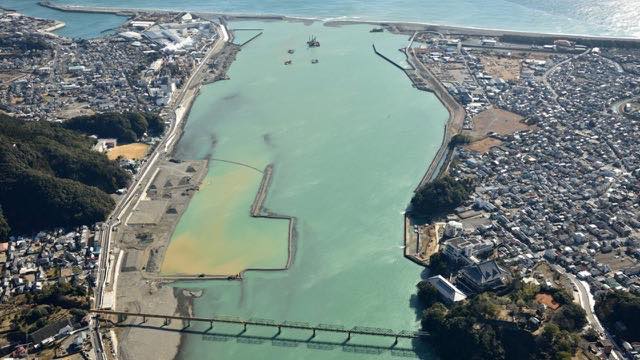
The other three belong to "Sacred Sites and Pilgrimage Routes in the Kii Mountain Range". Mount Yoshino, Kaminosenbon stands inside the inscribed area, Kinpusen-ji faces the National Treasure hall at the centre of the same property, and the Kumano River is the odd one: the river itself is the pilgrimage route. Pilgrims once travelled this stretch by boat, so the water is inscribed as part of the road. That camera was put there by Japan's river bureau to watch the water level, not to show a heritage site.
The 7 abroad are all natural sites
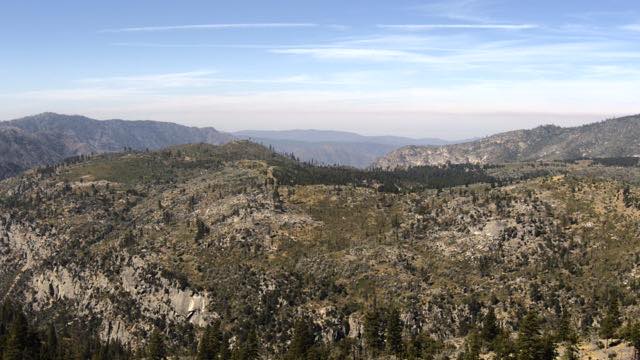
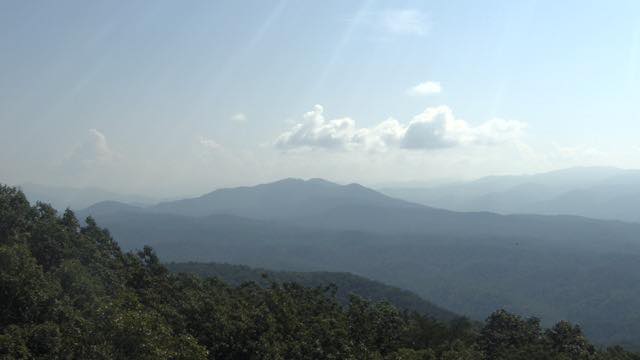
Six are in American national parks. Yosemite was inscribed in 1984, Redwood in 1980, Great Smoky Mountains in 1983, Mammoth Cave in 1981 and Hawaii Volcanoes in 1987. Glacier Bay is not listed on its own: it is inscribed together with Kluane in Canada and Wrangell-St. Elias in Alaska, as one transboundary icefield.
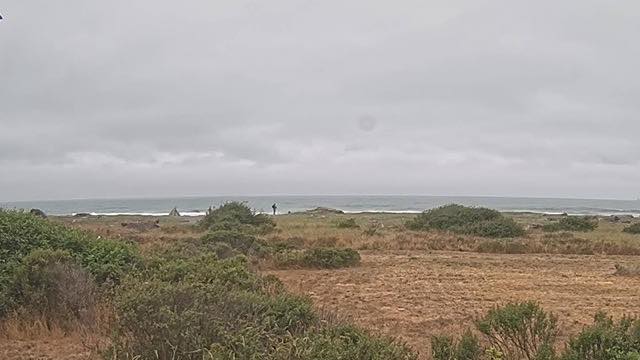
The last one is Surtsey, an island born from an undersea eruption between 1963 and 1967 and inscribed as a natural site in 2008. The reason for the listing is unusual: nobody is allowed to settle there, so the arrival of life on bare lava has been watched from the very beginning. Only researchers with a permit may land. This camera sends one frame an hour, and some days nothing arrives at all.
Next door to World Heritage, but not in the frame
Three cameras were left out of the count. Kiyomizu-zaka looks up the approach to Kiyomizu-dera, and the Togetsukyo bridge and the bamboo grove path are on streets outside Tenryu-ji. Both temples are component parts of the Kyoto inscription, but what is inscribed is the temple ground, not the slope or the bridge in front of it. Once you start counting things because they are close by, there is no place to stop, so the line here is the inscribed boundary.
For a viewer, though, these three may be the better watch. A camera on inscribed ground is usually looking at a building and some trees that do not move. An approach or a bridge has people flowing through it, so the picture changes by the hour. Choosing Kyoto cameras by how crowded they are is covered in Checking the crowds in Kyoto before you go.
The other 36 carry a different label
Not being World Heritage says nothing about rank. Kenroku-en is a Special Place of Scenic Beauty, the main hall of Zenko-ji is a National Treasure, and so is the main sanctuary of Izumo Taisha. Saga Toriimoto is a preservation district for groups of historic buildings, a single block of thatched houses kept as it was. In the Japanese system World Heritage and National Treasure are separate mechanisms: a National Treasure may sit inside a World Heritage property, or well outside one.
Some of these cameras carry no sample image. The operator of the Izumo Taisha feed does not permit its pictures to be reproduced, so that card stays blank. Which feeds we copy a single frame from, and on what terms, is set out in How we handle the camera images.
Some places are still waiting
the Alishan Forest Railway was cut in 1912 to bring cypress down the mountain. Taiwan put it on its own list of World Heritage candidates in 2003, and in 2019 it became a national cultural landscape. It is still not inscribed, and the reason is not that it falls short: Taiwan is not a member of UNESCO and so cannot enter the nomination process at all. For the same reason a place like Emei Lake at Shitoushan will never appear on the list. "Not on the World Heritage list" and "not worth watching" are completely different statements.
Where to start
The full list of 48 is under World Heritage and landmarks. For temples and shrines together there is Temples, shrines and their approaches; within Kyoto, Arashiyama and Sagano, Gion and Higashiyama and The Kyoto hills; in Kanazawa, Kanazawa Castle Park. The foreign natural sites are gathered in National parks abroad, and what to look for is in What to watch in the US national park cameras.
Temple cameras follow visiting hours. Park cameras abroad show nothing while it is night there. To see where it is daylight right now, use Picking a camera that is in daylight — reading the time difference. If you open one and see nothing at all, What is happening when a camera shows nothing explains why.