River
The Yodo River System: 6 Live Cameras in Japan
One river from Lake Biwa to Osaka Bay, changing its name three times on the way, plus its tributaries. Six cameras — live video streams, not still images.
What you can see
Lake Biwa, the largest lake in Japan, drains through exactly one river. That river changes name three times on its way to the sea: the Seta in Shiga, the Uji once it crosses into Kyoto, and the Yodo from the point where the Katsura and Kizu join it. They look like separate rivers on a map. They are one.
The cameras run upstream to downstream. Seta and Yasu covers the lake's outlet, where a barrage decides the water level of Lake Biwa itself. The Katsura passes under the Togetsukyo bridge at Arashiyama — a sightseeing view, but it also broke its banks in the 2013 typhoon and put that area under water. The Kizu comes down from the Iga hills through southern Kyoto, with wide sandy beds where the channel shifts with the flow. Above the Kizu sit the Nabari and Uda, cutting through the hills of Iga and Nabari in Mie and Uda in Nara — narrow valleys that look nothing like the wide beds downstream. Yodo and Uji is the main stem below the confluence. The last tributary to join, just short of the mouth at Amagasaki, is the Ina and Mo, which comes down the Hyogo–Osaka border and passes just west of Osaka's Itami airport. It belongs to the Yodo system, but people on both sides of that border call it their own river.
Unlike the Arakawa cameras, which are stills every minute, these are live video streamed on YouTube by the Ministry of Land, Infrastructure, Transport and Tourism. You can see how fast the water is moving and how much silt it is carrying. The trade-off is that a stream is sometimes down.
Cameras you can watch now: 6
All 6 are live video. Tap one to open it in the camera list.
-
 Stream cover
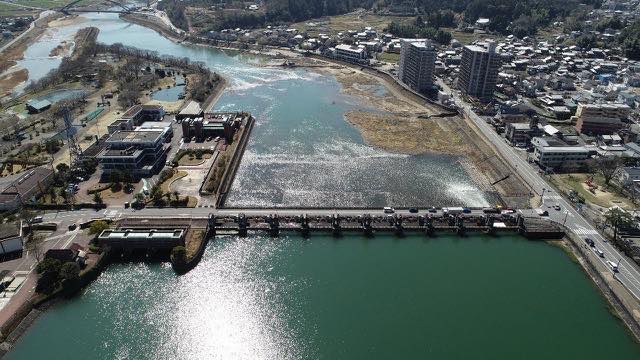
Seta and Yasu Rivers
Shiga · River
The Seta is the only outlet of Lake Biwa. How much water is let through here sets the level of the lake itself.
-
 Stream cover
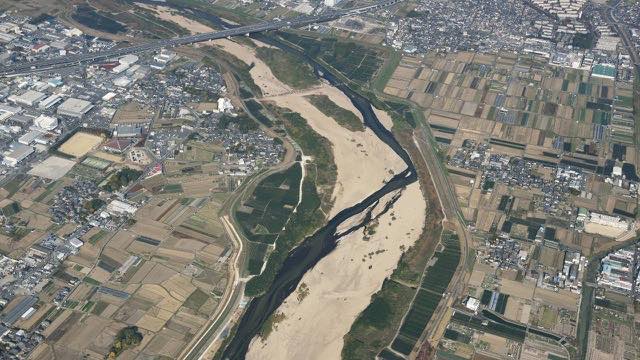
Kizu River
southern Kyoto · River
From the Iga highlands through the south of Kyoto Prefecture. Broad sandy bars, and the channel shifts with the volume of water.
-
 Stream cover
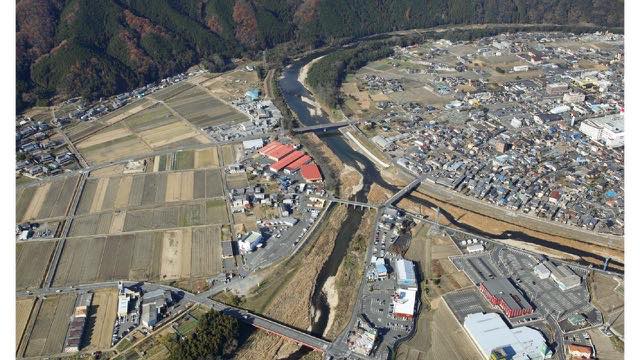
Nabari and Uda Rivers
Mie / Nara · River
Tributaries draining the Iga and Nabari basins into the Kizu. The valleys are deep, so a rise arrives fast.
-
 Stream cover
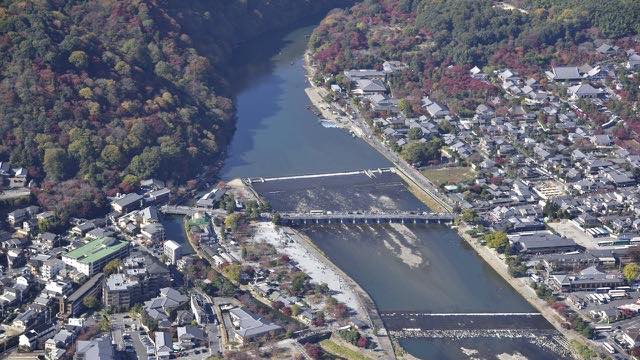
Katsura River
Arashiyama, Kyoto · River
It passes under the Togetsukyo bridge at Arashiyama and joins the Yodo. Both a sightseeing view and a river people watch for floods.
-
 Stream cover
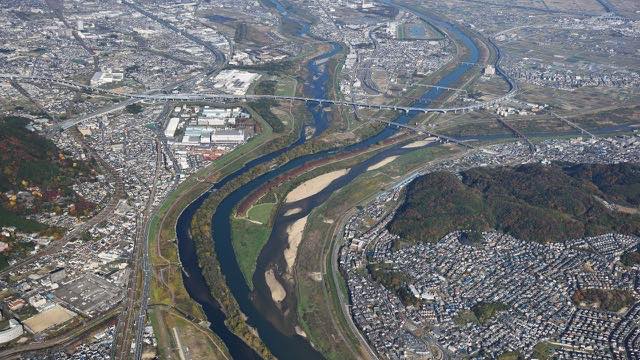
Yodo and Uji Rivers
Osaka / Kyoto · River
The main channel carrying Lake Biwa's water to Osaka Bay. Wide enough that the far bank and its buildings fit in frame.
-
 Stream cover
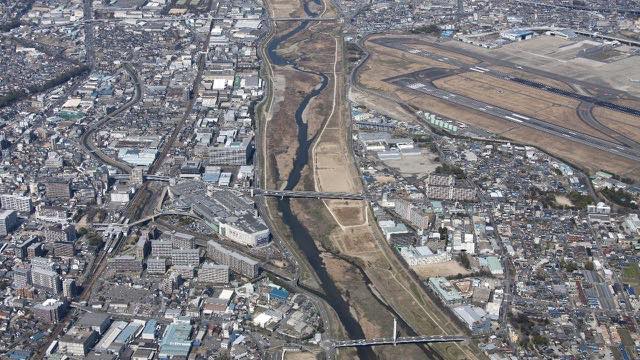
Ina and Mo Rivers
Hyogo / Osaka · River
An urban river running right beside Osaka Airport. Built-up on both banks, with the levees up against where people live.
When to watch
These earn their keep in heavy rain and typhoons. The system has an enormous reservoir sitting at the top of it, so water keeps coming long after the rain has stopped. Work down from the Seta and you can judge how far it has come.
The Nabari and the Ina break that order. The Nabari is above the Kizu, so it rises before the main stem does; the Ina has nothing to do with Lake Biwa at all and swells purely on rain falling over the Rokko and Hokusetsu hills. The main stem can be quiet while the Ina alone runs brown.
Evacuation decisions belong to your local authority, not to a camera. These are for seeing what things look like.
On a calm day, the Katsura is the one. Arashiyama changes colour twice a year — cherry blossom in early April and maples in late November — and because this is live video you can watch people crossing the bridge.
Morning and evening are better than midday. Much of the channel runs east-west and the water surface blows out white under a high sun.
If it isn't showing
All six are rotating streams that cycle through several cameras along the river. You wait for the point you want, and the order is not yours to choose. At night it is dark, and rough weather smears the picture.
The six split up as one on Shiga, two on Kyoto, one on Mie and one on Hyogo. The main stem, the Yodo and Uji, is counted in Osaka, and Osaka has only this one camera on the site, too few for a prefecture page, so this is the only page that leads to it.
It is also the only page that lays the system out in one line, from the outlet of Lake Biwa to Osaka Bay. The Katsura camera is on the Autumn Leaves page as well: it covers the reach under the Togetsukyo bridge at Arashiyama, where a sightseeing view and a flood-control river share the same frame. The neighbouring basins are The Yamato River, The Yura River and The Rivers of the Kii Peninsula.
Where to find The Yodo River System
Agencies publishing the cameras on this page
- MLIT river live streams (Government Standard Terms 2.0) — Official site
The footage belongs to each agency. This site is an unofficial guide, and each sample frame was copied once per camera under that agency's terms of use.