Region
Hokkaido Live Cameras in Japan — 17 official webcams
Nine monitored volcanoes, six cameras on Hokkaido's marshes and lakes, and two river live streams working through thirteen river systems. Nowhere else in Japan follows cranes and swans on separate cameras.
What you can see
The seventeen break down as nine monitored volcanoes run by the Japan Meteorological Agency, six marsh and lake cameras run by the Ministry of the Environment, and two river live streams run by the Hokkaido Regional Development Bureau. The volcanoes ring the island: Atosanupuri and Mount Meakan in the east, Asahidake and Tokachidake through the centre, Tarumae, Usu and Hokkaido Komagatake to the southwest, and Esan out on the headland above the Tsugaru Strait. Some show steam directly — Atosanupuri, the Noboribetsu Jigokudani valley — while others give you only the outline of a mountain.
The six water cameras are a different proposition. Lake Kussharo and Lake Shikotsu sit in calderas, Sarobetsu Mire runs flat to the horizon, and Kushiro Marsh and Lake Kutcharo exist to watch birds. In one prefecture you can open a steaming crater and a crowded shoreline side by side.
The remaining two are the rivers of Hokkaido live streams. The Hokkaido Regional Development Bureau splits 32 camera points across thirteen river systems — the Ishikari, the Teshio, the Tokachi, the Kushiro and more — between two streams that cycle through them in turn. Where the other fifteen hold one view, these change the place while you wait.
17 cameras in Hokkaido
2 video, 15 still. Tap one to open it in the camera list.
-
 Sample August 2026
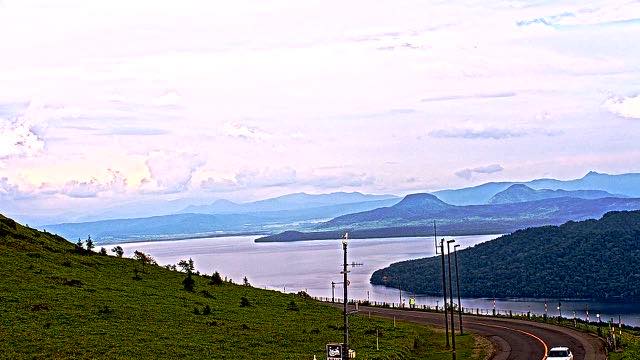
Lake Kussharo from Bihoro Pass
Bihoro, Hokkaido · Nature
Japan's largest caldera lake seen from the pass above. It freezes in winter, and under the right conditions the ice cracks and buckles into ridges.
-
 Sample August 2026
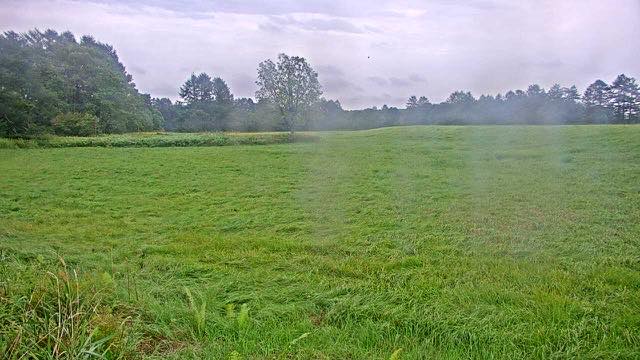
Red-crowned cranes, Kushiro Marsh
Kushiro, Hokkaido · Nature · Wildlife
A vast wetland home to a protected species. With luck you catch one walking the grass, or the moment it takes off.
-
 Sample August 2026
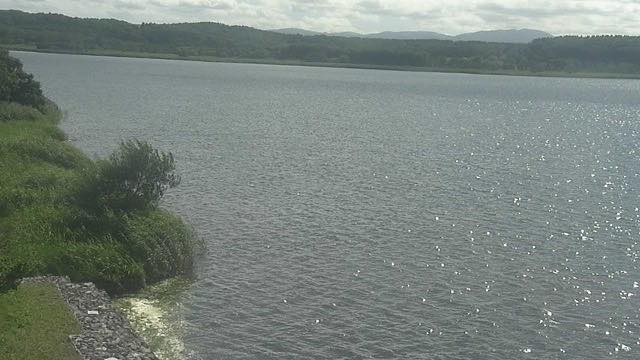
Whooper swans, Lake Kuccharo
Hamatonbetsu, Hokkaido · Nature · Wildlife
A brackish lake near the Sea of Okhotsk. During spring and autumn migration the flocks cover the surface.
-
 Sample August 2026
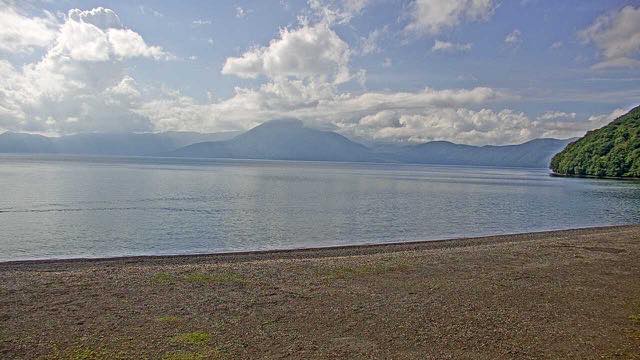
Lake Shikotsu and the surrounding peaks
Chitose, Hokkaido · Nature
A lake deep enough that it barely freezes. Ringed by Mount Eniwa and Mount Fuppushi, and known for how clear the water is.
-
 Sample August 2026
Sarobetsu Mire
Toyotomi, Hokkaido · Nature
One of Japan's largest raised bogs, running to the horizon. On a clear day Mount Rishiri floats beyond the sea.
-
 Sample August 2026
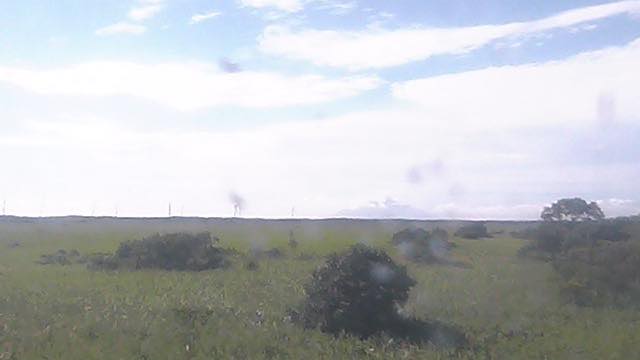
Sarobetsu Mire from the Horonobe visitor centre
Horonobe, Hokkaido · Nature
A huge wetland of boardwalks and bog pools. On a clear day Mount Rishiri floats beyond the sea to the west.
-
 Sample August 2026
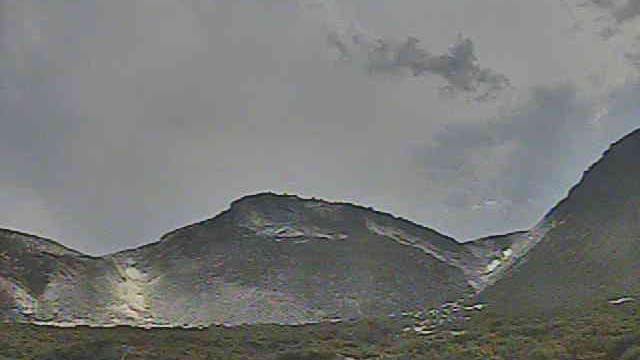
Atosanupuri (Mount Io)
Teshikaga, Hokkaido · Volcano · Nature
Steam rises from all over this hillside, which is why it is locally called the sulphur mountain. The camera faces the vent field just behind the car park.
-
 Sample August 2026
Mount Meakan
Ashoro, Hokkaido · Volcano
The one mountain in the Akan group still venting steam from its crater. The view is from the side of the cone-shaped Akan-Fuji next to it.
-
 Sample August 2026
Mount Asahi, Daisetsuzan
Higashikawa, Hokkaido · Volcano · Nature
The highest peak in Hokkaido. White steam rises constantly from Jigokudani midway up, seen looking up from the Sugatami area at the top of the ropeway.
-
 Sample August 2026
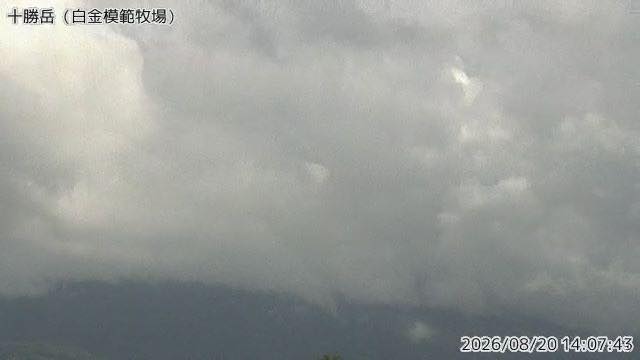
Mount Tokachi
Biei, Hokkaido · Volcano · Nature
The 1926 eruption melted the snow all at once into a mudflow that did great damage below. The summit is seen over the gentle pastureland on the Biei side.
-
 Sample August 2026
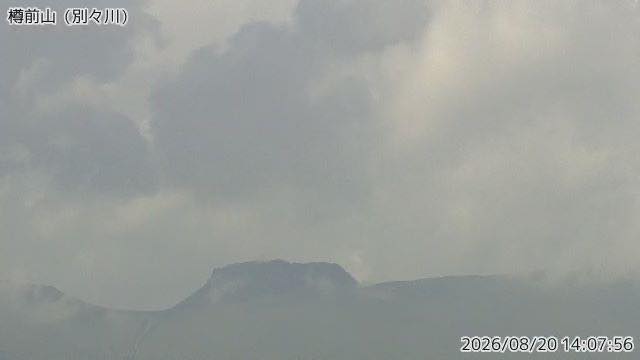
Mount Tarumae
Tomakomai, Hokkaido · Volcano
A lava dome sits on the summit, giving it a shape you recognise from a distance. It stands south of Lake Shikotsu and is clearly visible from Tomakomai.
-
 Sample August 2026
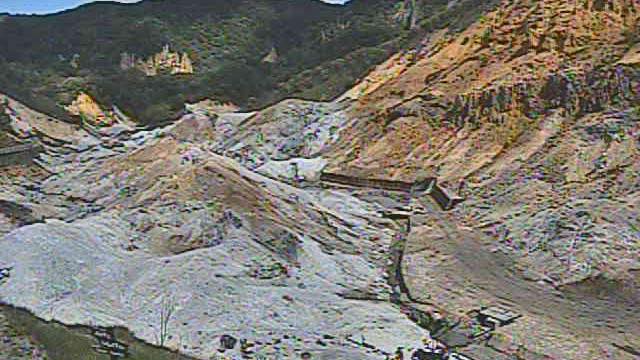
Kuttara, Noboribetsu Jigokudani
Noboribetsu, Hokkaido · Volcano · Nature
The valley the Noboribetsu hot springs come from. Steam fills an old explosion crater, crossed by a boardwalk. The colder it gets, the thicker the white.
-
 Sample August 2026
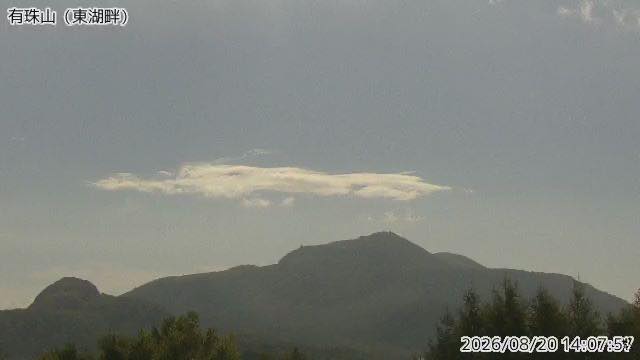
Mount Usu
Toyako, Hokkaido · Volcano · Nature
It has erupted four times since 1910, each time raising new hills and craters. The camera looks across Lake Toya from the eastern shore.
-
 Sample August 2026
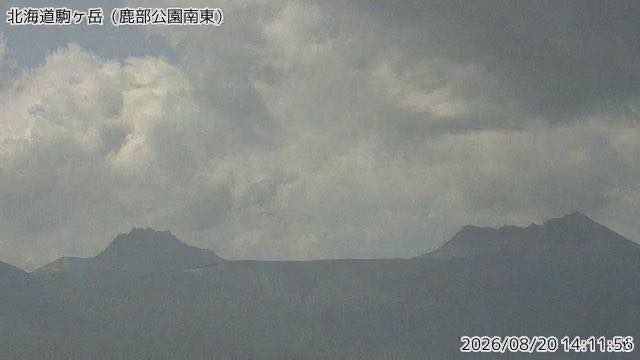
Hokkaido Komagatake
Shikabe, Hokkaido · Volcano
The 1640 eruption collapsed the summit into the pointed outline it has now. Seen head-on from Shikabe on Uchiura Bay, bare rock at the top.
-
 Sample August 2026
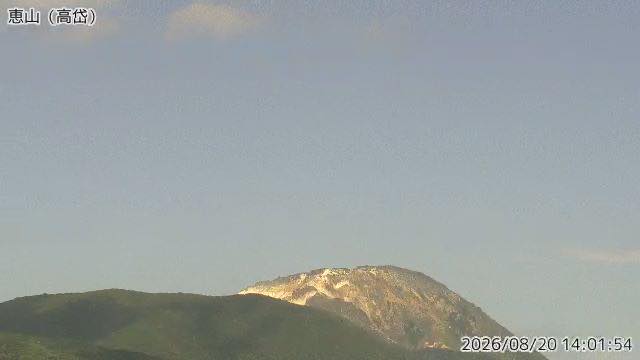
Mount Esan
Hakodate, Hokkaido · Volcano · Sea
At the eastern tip of the Oshima Peninsula, jutting into the Tsugaru Strait. The vent field on its flank is still active, and azaleas redden the slope in early summer.
-
 Stream cover
Hokkaido rivers 1
Hokkaido · River
The first of two streams from the Hokkaido Regional Development Bureau. Between them they cycle through cameras at 32 points on 13 river systems, among them the Ishikari, Teshio, Tokachi and Kushiro. Levels rise with the spring melt and again at the end of summer, when the typhoons arrive.
-
 Sample September 2026
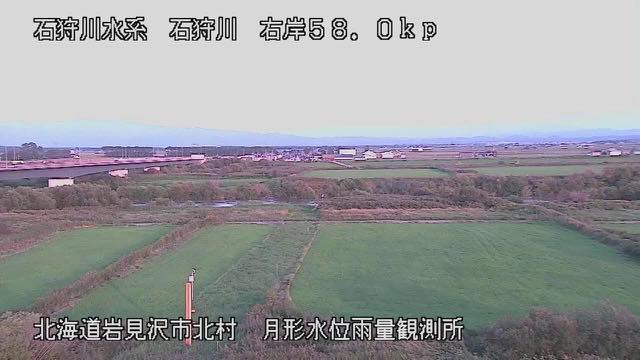
Hokkaido rivers 2
Hokkaido · River
The second of the two. Together with the first it works through 13 river systems, including the Abashiri, Tokoro, Yubetsu, Shokotsu, Rumoi, Shiribetsu, Shiribeshi-Toshibetsu, Mu and Saru.
When to watch
The wetland and lake cameras become different places with the seasons. Lake Kutcharo is a stopover rather than a wintering ground for its whooper swans, so numbers swing sharply in spring and autumn, and the lake can freeze over in midwinter. The red-crowned cranes of Kushiro Marsh do not migrate and are there year-round, but they are easiest to spot in winter, once the grass has died back and snow has fallen. The camera watches one point of a very large marsh, so open it expecting to search the frame. Sarobetsu Mire comes into flower from June into July.
The nine volcano cameras look much the same all year, but winter days are short here: in December it is already dark by mid-afternoon. If you want a Hokkaido morning, open it about an hour earlier than you would for Honshu.
The two rivers of Hokkaido streams run on a different calendar from Honshu. The water rises most from April to May with the snowmelt, then again from late August into September with the typhoons. With no rainy season here, June and July are comparatively quiet.
Closer looks at cameras here
- Asahidake, Daisetsuzan1
- Sarobetsu Mire2
- The cranes of Kushiro Marsh1
- JMA Volcano Watch Cameras49
- Mount Usu1
- Shikotsu-Toya4
- Mount Tarumae1
- Akan-Mashu3
- Mount Meakan1
- Wintering Swans6
- Mount Tokachi1
- Autumn Leaves16
- First Snowcap16
- Volcanoes of the Oshima Peninsula2
- The Rivers of Hokkaido2
- Volcanic lakes11
- Snow23
- Geothermal Areas16
Agencies publishing the cameras on this page
- Japan Meteorological Agency — volcano surveillance cameras (PDL 1.0) — Official site
- MLIT river live streams (Government Standard Terms 2.0) — Official site
- Ministry of the Environment — Internet Nature Institute (PDL 1.0) — Official site
The footage belongs to each agency. This site is an unofficial guide, and each sample frame was copied once per camera under that agency's terms of use.