Nature
Akan-Mashu: 3 Live Cameras in Japan
Three cameras in Akan-Mashu National Park in eastern Hokkaido: Lake Kussharo seen from the Bihoro Pass, the steaming Atosanupuri, and Mount Meakan.
What you can see
Lake Kussharo is the largest caldera lake in Japan. The ground collapsed in a huge eruption and filled with water. The Bihoro Pass camera looks down from high on the rim, taking in the lake and the island at its centre. On a clear day you see the far shore; when the weather turns, only the slope in front.
Atosanupuri means bare mountain in Ainu, and it is also called Iozan, sulphur mountain. Steam comes out of the slope in many places and the treeless ground reads yellow and grey. The hot springs at Kawayu below are fed from here.
Mount Meakan stands between Lake Akan and Lake Onneto and is the most active volcano in this area, with small eruptions in recent years.
Lake Mashu, which gives the park half its name, has no camera this site can point you to. Kussharo is the nearest thing.
Cameras you can watch now: 3
All 3 are still images. Tap one to open it in the camera list.
-
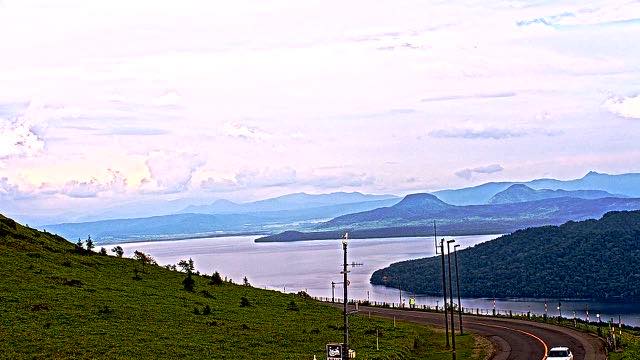 Sample August 2026
Lake Kussharo from Bihoro Pass
Bihoro, Hokkaido · Nature
Japan's largest caldera lake seen from the pass above. It freezes in winter, and under the right conditions the ice cracks and buckles into ridges.
-
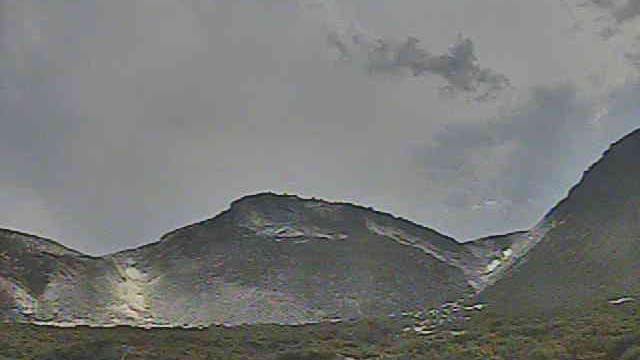 Sample August 2026
Atosanupuri (Mount Io)
Teshikaga, Hokkaido · Volcano · Nature
Steam rises from all over this hillside, which is why it is locally called the sulphur mountain. The camera faces the vent field just behind the car park.
-
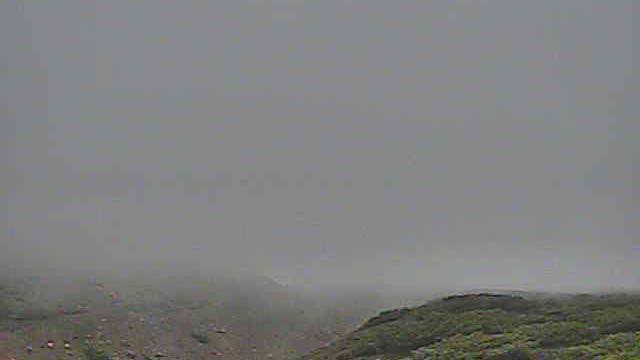 Sample August 2026
Mount Meakan
Ashoro, Hokkaido · Volcano
The one mountain in the Akan group still venting steam from its crater. The view is from the side of the cone-shaped Akan-Fuji next to it.
When to watch
June to September for Kussharo. The Bihoro Pass is high, and in these months you get more days when the lake is visible all the way across. In spring and autumn mornings the opposite happens: fog rises off the lake and, seen from the pass, fills the basin like a sea of cloud. Worth watching for, though whether it appears is luck.
In winter part of Kussharo freezes and pressure ridges can form across the ice. But the pass also blows over — snow sticks to the lens and nothing is visible for days.
Steam reads whiter and thicker on cold days. If Atosanupuri looks suddenly more active, it is usually just the temperature.
The two volcano cameras refresh every two minutes, the Bihoro Pass once an hour. This is the eastern edge of Japan, so sunrise is early — light before 4am in summer.
If it isn't showing
The two volcano cameras refresh every two minutes; Bihoro Pass once an hour. When it blizzards at the pass, snow sticks to the lens and the frame can stay white for days. All three are stills and none shows anything at night.
Lake Mashu, which gives the park half its name, has no camera this site can point you to. The Lake Kussharo camera is the nearest thing to it.
Every camera in the prefecture is on the Hokkaido page. Elsewhere in Hokkaido the caldera lakes are on Shikotsu-Toya, the marshes on Sarobetsu Mire and The cranes of Kushiro Marsh, and the volcanoes on Mount Tokachi and Asahidake, Daisetsuzan. Mount Meakan is also listed under First Snowcap.
Where to find Akan-Mashu
Agencies publishing the cameras on this page
- Japan Meteorological Agency — volcano surveillance cameras (PDL 1.0) — Official site
- Ministry of the Environment — Internet Nature Institute (PDL 1.0) — Official site
The footage belongs to each agency. This site is an unofficial guide, and each sample frame was copied once per camera under that agency's terms of use.