Volcano
Mount Nasu: 1 Live Camera in Japan
The active volcano on the Tochigi–Fukushima border, seen from the Nasu highlands on one Meteorological Agency camera refreshing every two minutes. It also sits on the line where the weather of northern Japan divides.
What you can see
Mount Nasu is a group of peaks, of which Chausu is the one still active. Steam rises near the summit, and because a ropeway runs to just below the top, it is one of the more approachable active volcanoes in Japan.
The mountain also matters as a weather boundary. Snow clouds blowing in off the Sea of Japan in winter lose their force on crossing this ridge, which produces days when it is snowing on the far side and clear on this one. The cold wind that pours down onto the Kanto plain — the Nasu-oroshi — comes from the same geography.
In March 2017 an avalanche on this mountain killed eight people, high-school students and a teacher on a winter climbing course. Early spring at Nasu is when the snow starts to loosen.
The camera looks up from below. Steam is normally visible, so its presence is not a sign of anything. Check the alert level with the Meteorological Agency.
Among the same agency's cameras, Oku-Nikko lies to the west and Mount Bandai to the north. Open all three and you see how the weather splits along the northern edge of Kanto.
Cameras you can watch now: 1
All 1 are still images. Tap one to open it in the camera list.
-
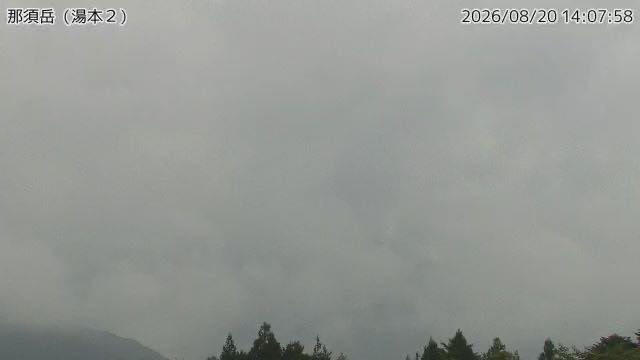 Sample August 2026
Mount Nasu
Tochigi / Fukushima border · Volcano
Steam rises continuously near the summit of Chausudake. A ropeway makes it easy to reach, though it is also known for its wind.
When to watch
Winter is the clearest season. The mountain goes white and only the steam rises. Open a Kanto-side camera the same day and find it sunny, and you are looking straight at the mountain holding the snow clouds back.
Early October is the autumn colour. It starts near the summit and works down to the foot over about a week, so opening the camera daily shows the line descending.
June is the shiro-yashio azalea season. A distant camera cannot resolve individual flowers, but the slopes take on a pale cast for a while.
Go in the morning. Nasu is a windy mountain and afternoon cloud moves fast, uncovering and re-covering the summit. For a reliable look at the shape of it, the first few hours after sunrise are best.
Where Mount Nasu is
Agencies publishing the cameras on this page
- Japan Meteorological Agency — volcano surveillance cameras (PDL 1.0) — Official site
The footage belongs to each agency. This site is an unofficial guide, and each sample frame was copied once per camera under that agency's terms of use.