Volcano
Geothermal Areas: 15 Live Cameras — steam and sulphur
15 cameras where steam rises straight from the ground: 4 valleys and ponds named 'hell', 6 sulphur slopes that never stop venting, and 5 where hot water wells up or erupts. 10 in Japan, plus Taiwan, the US and Iceland.
What you can see
Most volcano cameras watch the plume at the summit. These 15 watch steam rising directly from valley floors and mountainsides, which is why so many of them sit right next to hot spring towns.
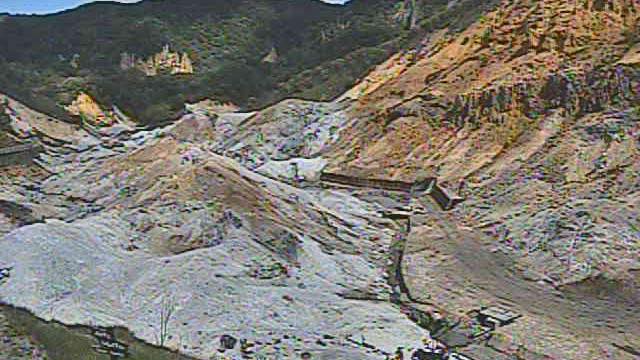
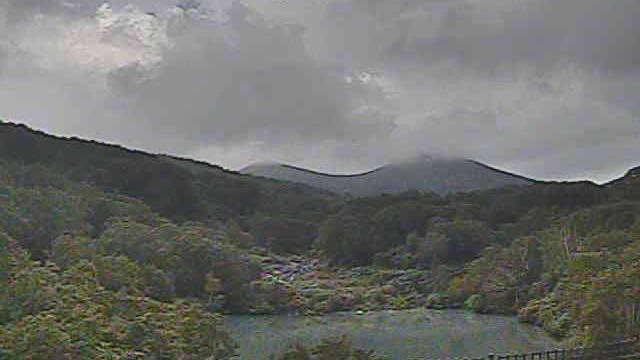
Four places named 'hell' (jigoku). Noboribetsu Jigokudani is the valley where the water of Noboribetsu Onsen wells up: steam fills an old explosion crater and a boardwalk runs through it. At Mount Asahi, Daisetsuzan, white steam rises without pause from the Jigokudani on its flank, seen from the Sugatami area the ropeway climbs to. At Midagahara on Tateyama, the area called Jigokudani gives off steam containing hydrogen sulphide, and access is still restricted. Jigokunuma, Hakkoda is a pond clouded by steam and hot water beside Sukayu Onsen.
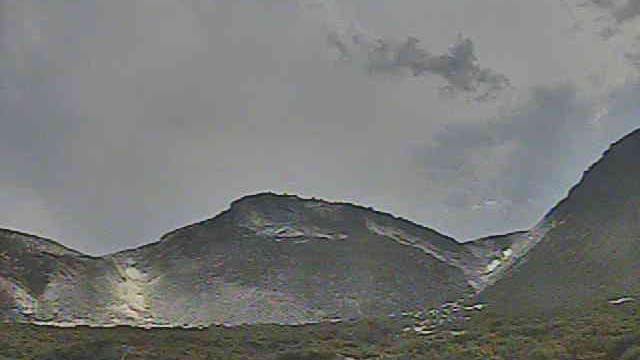
Six slopes that keep venting. Atosanupuri is known locally as Mount Io (sulphur mountain); the camera faces the fumarole field just behind the car park. Mount Kuju has the Iwoyama steaming ground on the north slope of Hosshozan, where white steam creeps down the hillside. Manza Karafuki, on the flank of Kusatsu-Shirane, is a patch of mountainside that steams without a break. Owakudani, Hakone is a valley of constant steam; activity rose in 2015, access was restricted, and it has since reopened within limits. At Xiaoyoukeng in Taiwan, white steam roars out of cracks in the rock and sulphur crystallises yellow. Above it, Mount Qixing, at 1,120 m the highest point in Taipei, is a dormant volcano whose vents still give off steam.
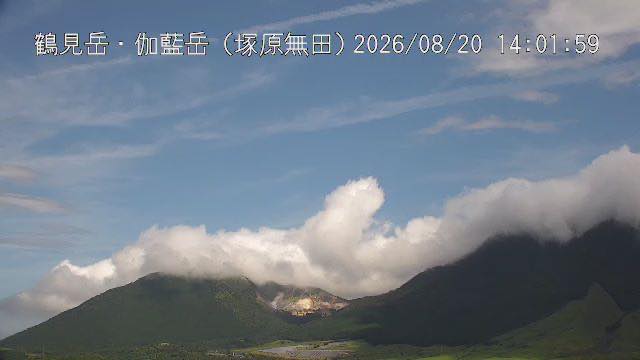
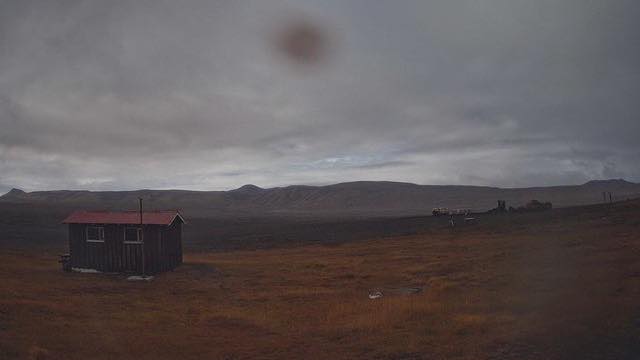
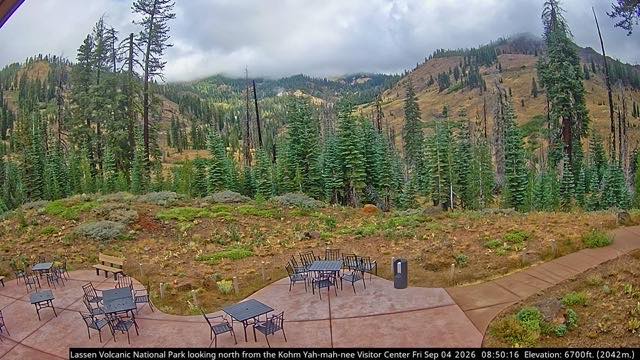
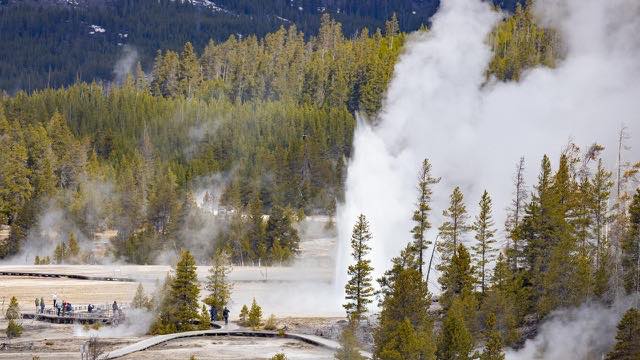
Five where hot water wells up or erupts. Akita Yakeyama holds strong springs such as Tamagawa and Goshogake; hot pools and vents dot the summit and steam comes straight out of the ground. Mount Tsurumi and Mount Garan feed the hot springs of Beppu; at Tsukahara Onsen on Garan's flank, steam and strongly acidic water still come out of an old crater. Hveravellir in Iceland is a geothermal field of steam vents and hot springs at 640 m between two ice caps. At Lassen Volcanic National Park steam from the fumarole field shows at the foot of Diller Mountain. Old Faithful Geyser erupts almost like clockwork, with only quiet steam in between, and the waiting is the attraction.
The reason to keep these 15 together: the same steam behaves completely differently when it pools in a valley, runs down a slope, or shoots straight up.
Cameras you can watch now: 15
3 video, 12 still. Tap one to open it in the camera list.
-
 Sample September 2026
Kuttara, Noboribetsu Jigokudani
Noboribetsu, Hokkaido · Volcano · Nature
The valley the Noboribetsu hot springs come from. Steam fills an old explosion crater, crossed by a boardwalk. The colder it gets, the thicker the white.
-
 Sample September 2026
Mount Asahi, Daisetsuzan
Higashikawa, Hokkaido · Volcano · Nature
The highest peak in Hokkaido. White steam rises constantly from Jigokudani midway up, seen looking up from the Sugatami area at the top of the ropeway.
-
 Sample August 2026
Midagahara
Toyama · Volcano · Nature
A plateau west of Tateyama. The area called Jigokudani vents hydrogen sulphide, and access is still restricted.
-
 Sample September 2026
Jigokunuma, Hakkoda
Aomori · Volcano · Nature
A pond beside Sukayu hot spring, clouded by steam and hot water. Sulphur hangs in the air, and in winter snow and steam mix together.
-
 Sample September 2026
Atosanupuri (Mount Io)
Teshikaga, Hokkaido · Volcano · Nature
Steam rises from all over this hillside, which is why it is locally called the sulphur mountain. The camera faces the vent field just behind the car park.
-
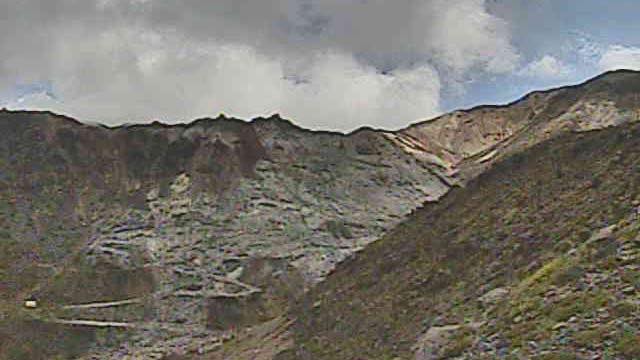 Sample September 2026
Mount Kuju
Oita · Volcano · Nature
A cluster of peaks. The northern slope of Mount Hossho holds the Iozan vent field, where white steam creeps down the hillside.
-
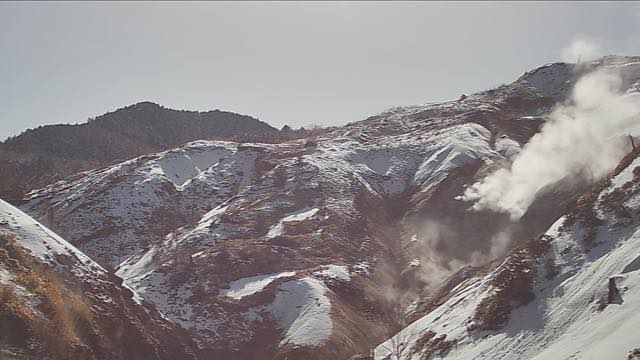 Sample September 2026
Manza Karafuki
Tsumagoi, Gunma · Volcano
A spot midway up Kusatsu-Shirane where steam vents continuously from the hillside. Raw enough that you can almost smell the sulphur.
-
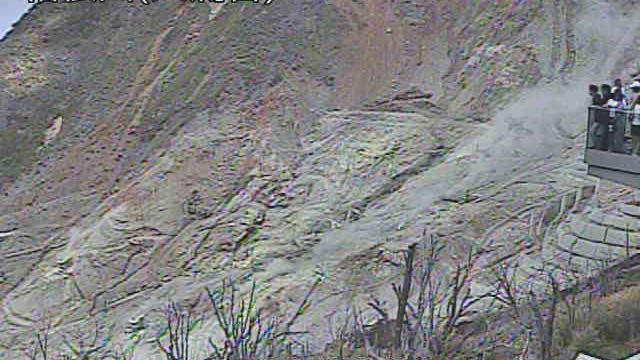 Sample September 2026
Owakudani, Hakone
Hakone, Kanagawa · Volcano · Nature
A valley venting steam without pause. Activity rose in 2015 and the area was closed; part of it has since reopened.
-
Live video
Xiaoyoukeng fumaroles
Yangmingshan, Taipei · Volcano
White steam roars out of cracks in the rock. Sulphur crystallises yellow around the vents, and the trail up Mount Qixing starts here.
-
Live video
Mount Qixing
Yangmingshan, Taipei · Volcano · Nature
At 1,120 m the highest point in Taipei, and a dormant volcano. Steam still rises from vents on its flanks, and in winter silver grass covers the slopes.
-
 Sample September 2026
Akita Yakeyama
Akita · Volcano
The mountain behind the strong hot springs at Tamagawa and Goshogake. Hot pools and vents are scattered over the summit, with steam coming straight out of the ground.
-
 Sample September 2026
Mount Tsurumi and Mount Garan
Oita · Volcano
The mountains that feed the Beppu hot springs. Tsukahara spa lies partway up Garan, where an old crater still gives off steam and strongly acidic water.
-
 Sample September 2026
Hveravellir
Central Highlands · Nature
A geothermal field at 640 m, on the bare ground between the Langjökull and Hofsjökull ice caps. Apart from the patch of steam vents and hot springs it is lava and gravel desert, and the Kjölur road (35) that passes it is only open from early summer to autumn.
-
 Sample September 2026
Lassen Volcanic National Park
California · Volcano · Nature
A camera facing north from the visitor center. On cool days you can see steam rising from the Sulphur Works hydrothermal area at the foot of Mt. Diller, to the left.
-
 Stream cover
Old Faithful Geyser
Wyoming · Nature
A geyser that erupts on an almost dependable schedule. Between eruptions there is only quiet steam, and the waiting is half the attraction.
When to watch
The operators publish no viewing season, and we will not invent one here.
Some descriptions do say how the steam shows. At Noboribetsu Jigokudani it turns whiter the colder it gets, and at Lassen the steam is visible on cool days. At Jigokunuma, Hakkoda, snow and steam mix in winter. No camera gives a set date or hour.
Refresh rates differ by provider. The 9 Japan Meteorological Agency cameras update every 2 minutes, Manza Karafuki from the Ministry of the Environment every hour, and the Icelandic Met Office camera every 10 minutes. The 2 in Taiwan are video streams.
Mind the time difference abroad. The 2 in Taiwan are 1 hour behind Japan and the 1 in Iceland 9 hours behind, with no daylight saving time. In the US, Lassen in California is 16 hours behind on daylight time and 17 on standard time, and Old Faithful in Wyoming 15 and 16 hours (calculated 2026-09-17), so their daytime is the middle of the night to dawn in Japan.
Access to Owakudani and Midagahara is restricted. Check local and municipal information before you go.
If it isn't showing
The cameras come from the Japan Meteorological Agency, the Ministry of the Environment, Yangmingshan National Park, the Icelandic Meteorological Office and the US National Park Service. There are no sample images for Xiaoyoukeng or Mount Qixing, either because the provider does not allow copies of its images or because no usable frame has been captured yet; see How we handle the camera images.
What volcano cameras are for in the first place is in What volcano cameras are looking at.
Each place in full: Shikotsu-Toya (Noboribetsu Jigokudani), Asahidake, Daisetsuzan, Midagahara, Tateyama, The Volcanoes of Tohoku (Hakkoda, Akita Yakeyama), Akan-Mashu (Atosanupuri), Kuju and Tsurumi, Mount Kusatsu-Shirane (Manza Karafuki), Owakudani, Hakone, Yangmingshan (Xiaoyoukeng, Qixing), Glaciers (Hveravellir), Cascades and Redwoods (Lassen) and US and Korean National Parks (Old Faithful).
The volcanoes themselves are under Volcano.
Where to find Geothermal Areas
Agencies publishing the cameras on this page
- Icelandic Meteorological Office (Free to use with credit) — Official site
- Japan Meteorological Agency — volcano surveillance cameras (PDL 1.0) — Official site
- Ministry of the Environment — Internet Nature Institute (PDL 1.0) — Official site
- U.S. National Park Service (U.S. government work) — Official site
- Yangmingshan National Park (Taiwan open government data) — Official site
The footage belongs to each agency. This site is an unofficial guide, and each sample frame was copied once per camera under that agency's terms of use.