Wildlife
Bird migration live cameras by month
With bird cameras, when you open them changes everything. Open a swan lake in midsummer and what you get is an empty sheet of water. This is a month-by-month, hour-by-hour guide to the ten wildlife cameras the Japanese Environment Ministry runs, lake by lake. The full set of twelve under Wildlife also includes a bald eagle nest in the United States and a deep-sea exploration robot — two video feeds that care about neither season nor time of day.
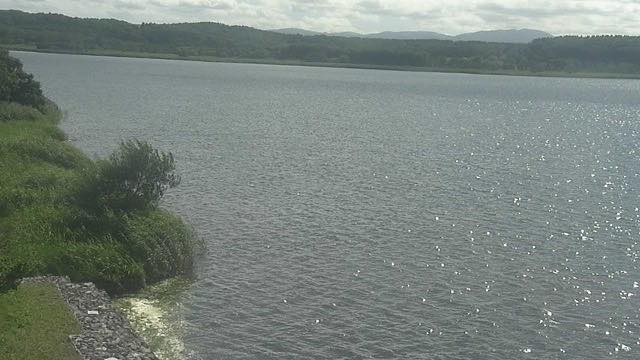
Migratory bird cameras are a seasonal gamble
A scenery camera has something to show all year. A migratory bird camera does not. When the birds are not there, there is genuinely nothing. Being disappointed is not your fault — the timing is simply wrong.
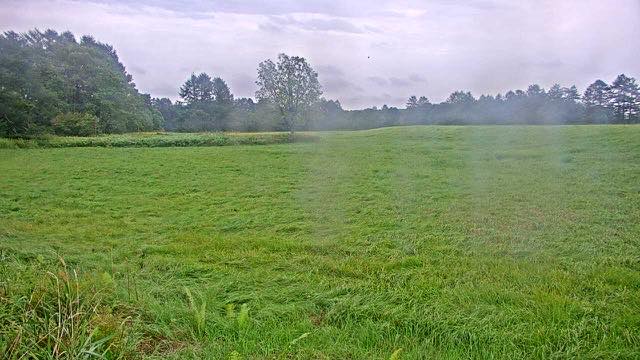
The rough pattern for winter visitors to Japan is this: they arrive from the north around October, peak in number from December to February, and head back north in March. So the season is winter. Through the summer, most of these become cameras pointed at a lake.
There is a time of day as well. Most waterbirds leave their night roost in the morning for feeding grounds and return in the evening. The lake can be emptier at midday; the numbers move at dawn and dusk. Aim for around sunrise and around sunset and you are more likely to catch a flock on the move.
The swan lakes
Four cameras show swans. Taken from north to south, you can begin to make out the shape of the migration.
- Whooper swans, Lake Kuccharo (Hokkaido, Hamatonbetsu) — a lake near the Sea of Okhotsk, and a Ramsar site. Hokkaido lakes are less a wintering ground than a staging post partway along the migration, so numbers swing hard in spring and autumn. In midwinter the lake can freeze.
- Swans at Kominato beach (Aomori, Hiranai) — a shallow shore on Mutsu Bay, known as a swan arrival site for a very long time. The unusual part is that it is sea rather than lake: white birds lined up along the surf.
- Waterbirds on Lake Biwa (Shiga, Nagahama) — the northern shore of Lake Biwa is one of the major Bewick's swan wintering grounds on Honshu. Mount Ibuki and the ranges behind it are in frame, so it works as a lake view even out of season.
- Bewick's swans, Yonago Waterbird Sanctuary (Tottori, Yonago) — wetland on Nakaumi, and a wintering ground in western Japan. Compare it with Kuccharo in the far north and you get a feel for how far the same species travels.
All four, and two more, are gathered on the Wintering Swans page.
Geese and ducks — the numbers are the point
Geese and ducks at Izunuma (Miyagi, Kurihara) is a shallow marsh and a Ramsar site. What you come for is not the individual bird but the quantity. In winter, white-fronted geese and other waterbirds gather in enormous numbers, and the site is famous for the whole roost lifting off together at first light.
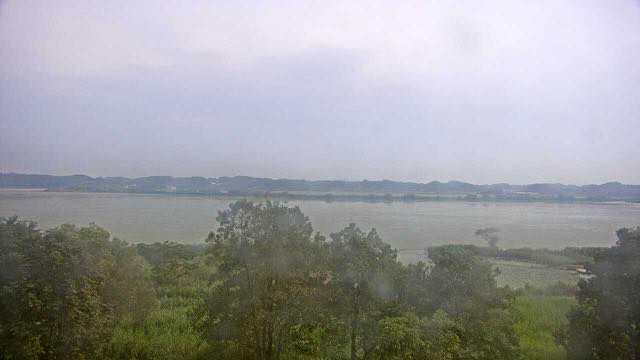
That lift-off happens around sunrise — roughly 6am Japan time, closer to 6:30 in winter, though the weather on the day moves it. If you are trying to time it, open early and wait.
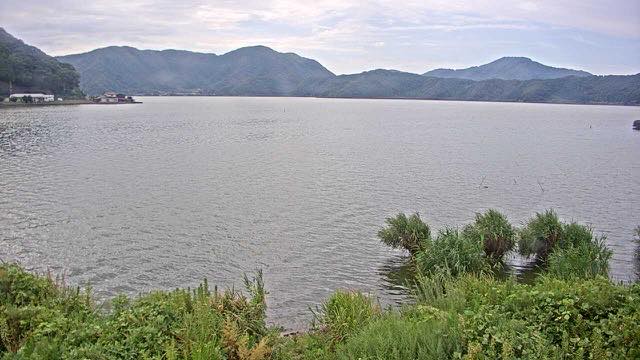
Waterbirds on Lake Mikata (Fukui, Wakasa) is one of the Mikata Five Lakes — an unusual place where lakes of different character, fresh through brackish, sit side by side. Waterbirds gather here in winter too.
Cranes
Cranes on the Izumi plain (Kagoshima, Izumi) is the exceptional one among the bird cameras on this site. This is where most of the world's hooded cranes spend the winter — nowhere else in Japan gathers anything like these numbers. They arrive from late October into November and start back north around February.
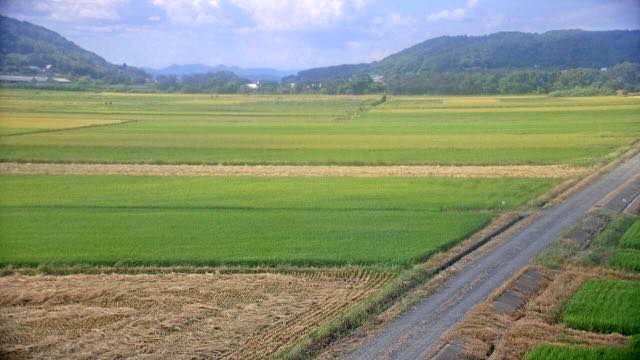
Red-crowned cranes, Kushiro Marsh (Hokkaido, Kushiro) is the opposite: a bird that does not migrate and stays in eastern Hokkaido year-round. Winter is easier for watching, but you have a chance in summer too. The camera covers one point in a very wide marsh, so open it expecting to hunt for them in the frame.
Two that ignore the season
Kushimoto Marine Park (Wakayama, Kushimoto) is underwater. The sea at Kushimoto is known as close to the northern limit for growing coral; fish are more active through the warmer water of summer and autumn, but the seasonal swing is nothing like the birds. What does spoil it is high waves or rain — the water clouds and you see nothing.
Tsushima leopard cat (Fukuoka Zoo) shows a captive animal, not a wild one. It is a wild cat that survives only on Tsushima, and the camera is part of the effort to increase the population. Being a cat, it sleeps through much of the day, so this is a question of luck rather than timing. Catching it moving means you are doing well.
Month by month
A rough guide. It shifts from year to year, and a cold winter moves it too.
- October–November — arrival. The Izumi cranes come in and the swans start to show.
- December–February — peak numbers. Izunuma, Lake Biwa and Yonago are at their best.
- March–April — heading north. Lake Kuccharo in Hokkaido gets busier again as flocks pass through.
- May–September — almost no waterbirds. This is the season to watch them as lake views. Kushimoto, the Kushiro cranes and the Tsushima leopard cat still work.
With bird cameras you miss more often than you hit. But when you have picked the month and the hour and the flock is actually there, there is an odd satisfaction in having read it right. Through the summer, the volcano cameras may be the easier place to watch something change.