Region
Fukui Live Cameras in Japan — 13 official webcams
Eleven live streams of the towns and station fronts of Fukui - six news cameras from a local broadcaster and five put up by the taxi association - covering the prefecture from the north down to the coast of Wakasa Bay.
What you can see
Eleven of the thirteen are live video, from two operators. FBC Fukui Broadcasting streams six of the news cameras it uses on air, and the Fukui Prefecture Taxi Association streams five cameras at station taxi ranks.
The broadcaster's six are spread across the prefecture. Three are in Fukui city: Daimyocho crossing, where a tram line runs through; near Fukui station, looking down on the river that crosses the centre; and Owada, where the shinkansen viaduct runs beside rice fields. The others are Ono, with a castle on the ridge above the town, Echizen on the fishing coast, and Obama on Wakasa Bay.
The taxi association's five line up the station fronts along the extended shinkansen route: Fukui Station East, Tsuruga Station West, Awara-Onsen Station (the plaza and the local-line platform, two cameras) and Echizen-Takefu Station. They exist so that people can see whether a cab is waiting, which is why each frames the whole plaza.
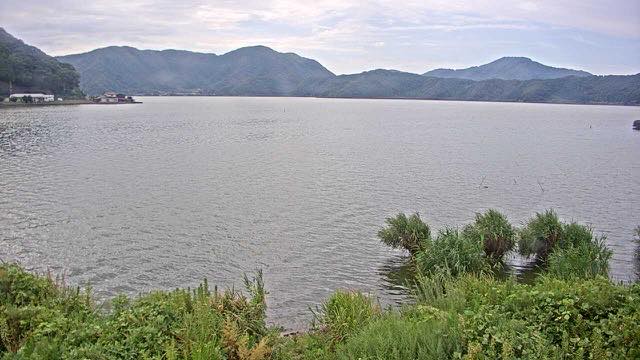
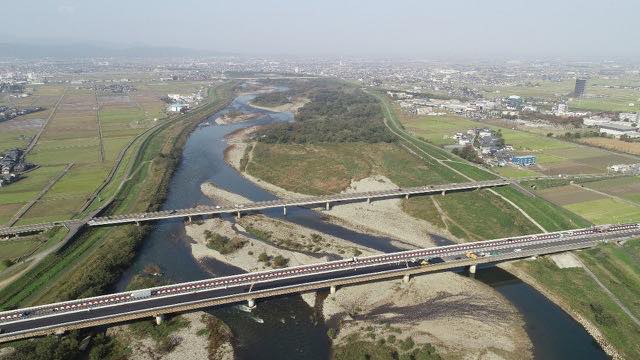
The remaining two are the Ministry of the Environment's Lake Mikata and the Ministry of Land, Infrastructure, Transport and Tourism's Kuzuryu and Hino rivers. Lake Mikata is one of the Mikata Five Lakes, an unusual place where lakes of different character - fresh through to brackish - sit side by side.
13 cameras in Fukui
12 video, 1 still. Tap one to open it in the camera list.
-
 Sample August 2026
Waterbirds on Lake Mikata
Wakasa, Fukui · Wildlife · Nature
One of the Mikata Five Lakes, where fresh and brackish water sit side by side. Waterbirds gather in winter.
-
 Stream cover
Kuzuryu and Hino Rivers
Fukui · River
They carry snowmelt from Mount Haku onto the Fukui plain. Levels rise easily in early spring as the snow goes.
-
Live video
Daimyocho crossing
Fukui, Fukui · City
A large crossing near the west exit of Fukui station. A tram line runs straight across it, with cars and people passing over the rails.
-
Live video
Near Fukui Station
Fukui, Fukui · City · River
The river that cuts across the city centre, seen from a rooftop. Green levees run down both banks, and the town and the mountains stack up beyond the bridge. After rain the colour of the water changes at once.
-
Live video
Owada, Fukui
Fukui, Fukui · City
The newer district on the north side of the city. Shopping centres and the shinkansen viaduct run side by side, with rice fields spreading out behind. A good place to see where the town stops and the fields begin.
-
Live video
Ono
Ono, Fukui · City · World Heritage
The town on the basin floor and the ridge that rises above it. Echizen Ono castle stands in outline on that ridge, and on a misty morning it is the only thing left above the cloud.
-
Live video
Echizen
Echizen, Fukui · Sea
A fishing harbour on the Echizen coast, seen from above. Boats lie tied up inside the breakwater; beyond it is the Sea of Japan. On a rough winter day the height of the waves shows plainly.
-
Live video
Obama
Obama, Fukui · City · Sea
The town on Wakasa Bay, looked down on from above. The bay opens out beyond the rows of roofs, and on a clear day you can see all the way to the mountains on the far shore.
-
Live video
Fukui Station East
Fukui, Fukui · City
The station forecourt under its arched canopy. A tiled plaza spreads across the foreground, with tall buildings standing beyond it.
-
Live video
Tsuruga Station West
Tsuruga, Fukui · City
The station front under a long timber canopy, seen from high up. Local buses pull into the circle at the back, and the town of Tsuruga spreads out past it.
-
Live video
Awara-Onsen Station, plaza
Awara, Fukui · City
The elevated shinkansen station seen side-on across the plaza. The long station building stretches the width of the frame, with cars coming and going in the circle in front.
-
Live video
Awara-Onsen Station, local platform
Awara, Fukui · City
The same station from close up. Trains pull into the conventional-line platform under the station building, pale blue and pink carriages lining up beneath the roof.
-
Live video
Echizen-Takefu Station
Echizen, Fukui · City
A station of unusual shape, a white ring of canopy running right around the forecourt. Beyond it are factories and paddy fields, and in good weather the mountains at the back.
When to watch
The town cameras work well as a way of checking the weather. Fukui spends its winters under snow and leaden skies, and on the same day Ono in the north can be white while Obama on the coast is merely wet. Open the six together and the difference is immediate.
The five station cameras follow the timetable. People and cars gather just after a limited express or a shinkansen arrives, then thin out again. Awara-Onsen Station (local platform) reaches down to the platform below the station building, so trains themselves come to a stop in the frame.
Lake Mikata gathers waterbirds in winter: arrival around October, peak numbers from December to February, departure north in March. The Kuzuryu and Hino camera is there for water levels, and levels rise easily in early spring as the snow goes. Note that these systems come under load exactly when flooding is worst, so there is a case for staying off them and leaving capacity to the people who need them.
Closer looks at cameras here
- Wintering Swans6
- Shibuya Crossing & Station Fronts12
- The Kuzuryu River1
- Fukui's towns and coast5
- Snow23
- Seas of Clouds and Fog13
Agencies publishing the cameras on this page
- FBC Fukui Broadcasting (Links free, no reuse) — Official site
- Fukui Prefecture Taxi Association (Links free, no reuse) — Official site
- MLIT river live streams (Government Standard Terms 2.0) — Official site
- Ministry of the Environment — Internet Nature Institute (PDL 1.0) — Official site
The footage belongs to each agency. This site is an unofficial guide, and each sample frame was copied once per camera under that agency's terms of use.